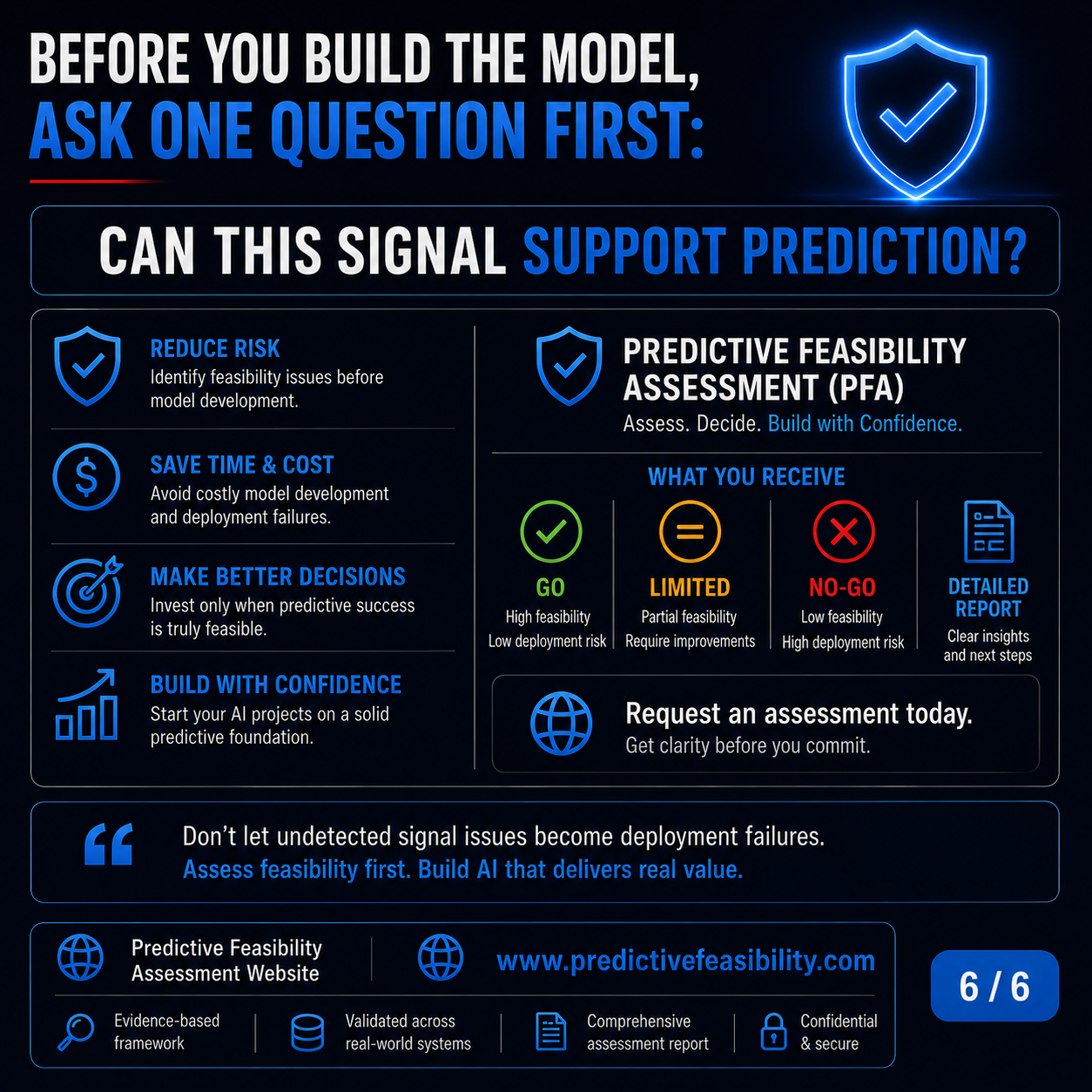
Before You Build the Model,
Ask One Question First:
Can This Signal Support Prediction?
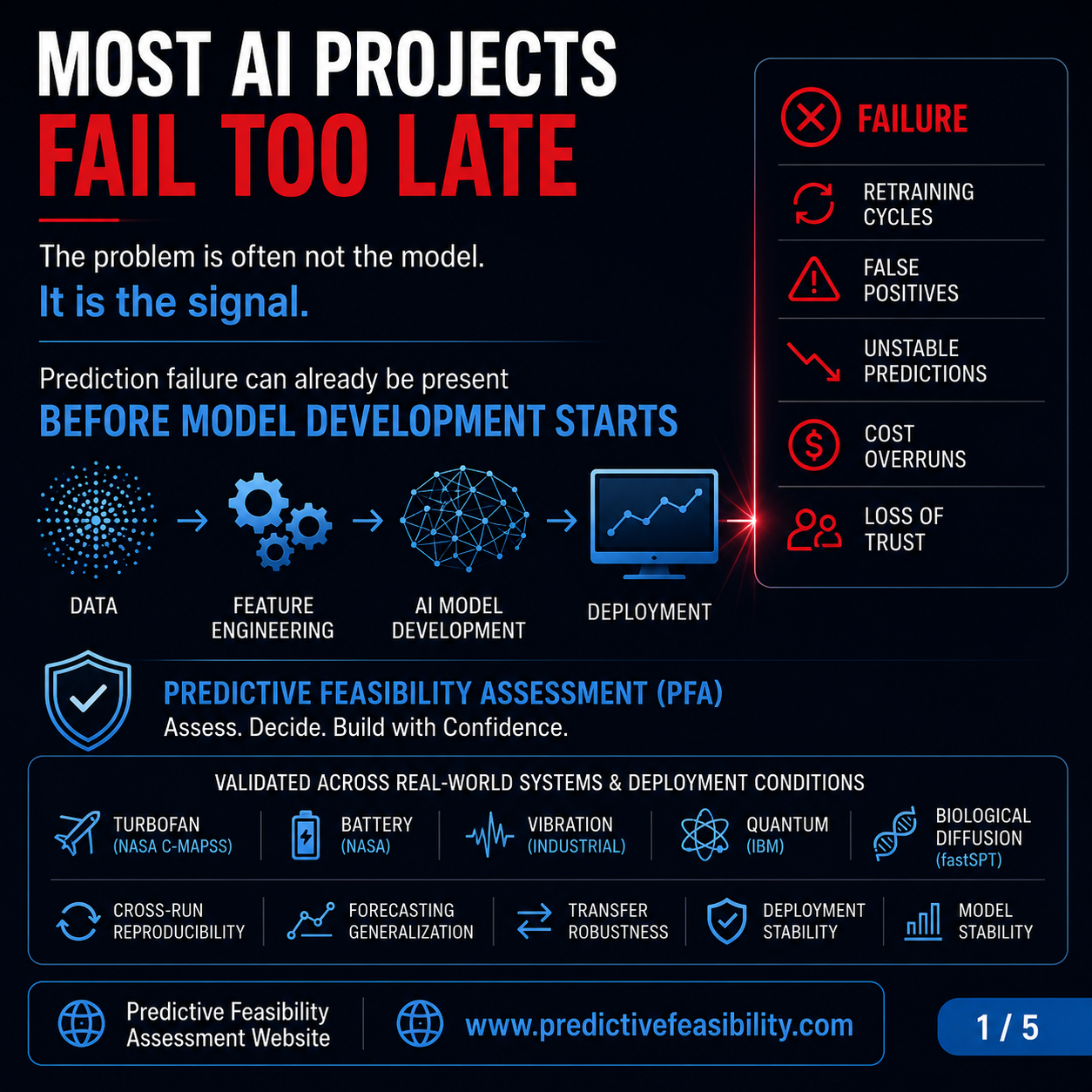
Many AI projects fail because prediction failure is already present before the first model is built.
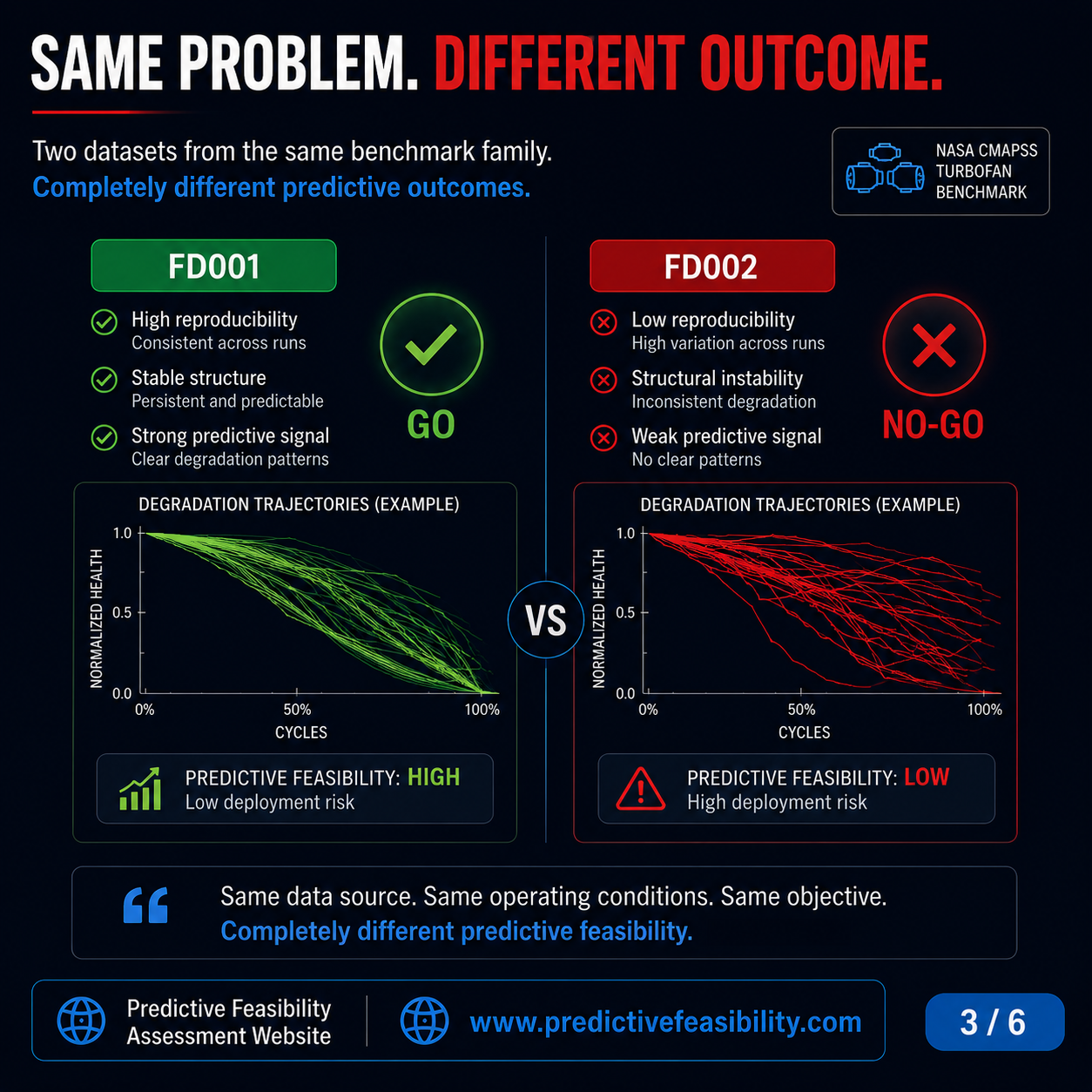
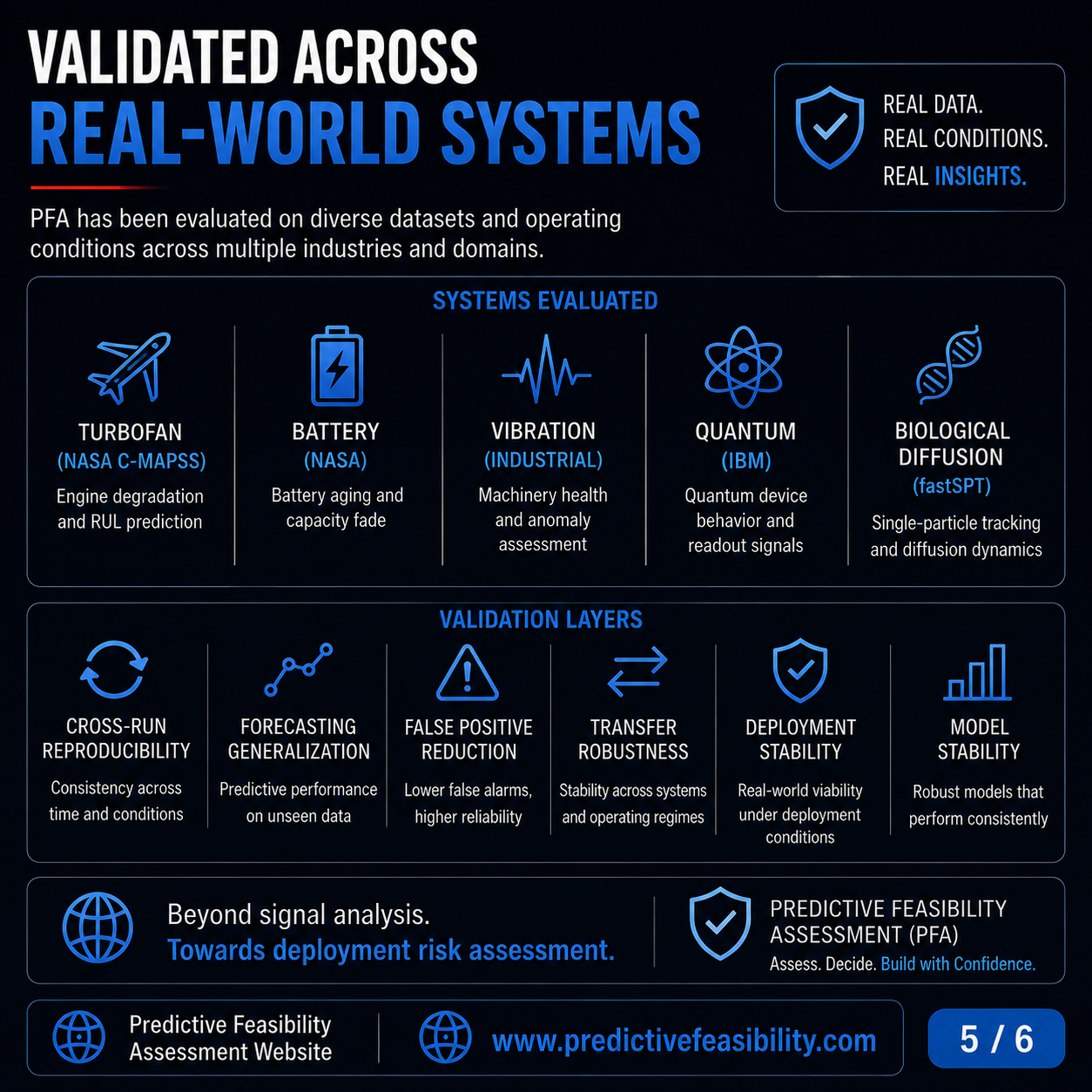
Request Assessment → Research LibraryAfter evaluating NASA turbofan degradation data, battery aging datasets, industrial vibration signals, quantum calibration data, and biological diffusion systems, we repeatedly observed the same pattern.
The limitation is often not the model.
The limitation is already present in the signal.
What makes this observation particularly important is that it remained visible across multiple validation layers, including:
- cross-run reproducibility
- forecasting generalization
- false-positive reduction
- transfer robustness
- deployment stability
- model stability and model-selection behavior
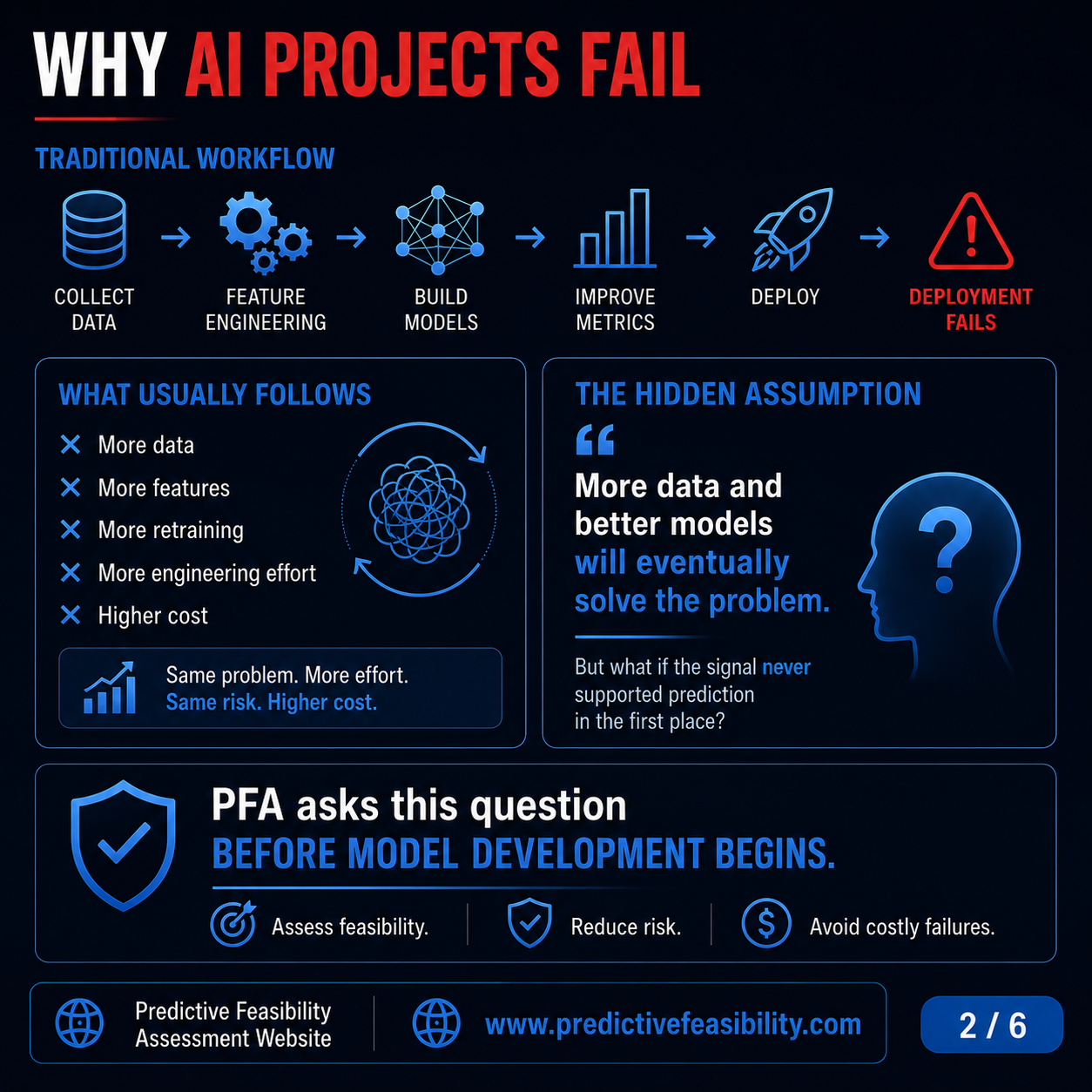
Many AI projects follow a familiar path: more data, more feature engineering, more model complexity, and more retraining. Yet deployment instability, false positives, and unreliable predictions often remain.
The critical question may be: "Can this signal support prediction at all?"
That is the purpose of Predictive Feasibility Assessment (PFA).
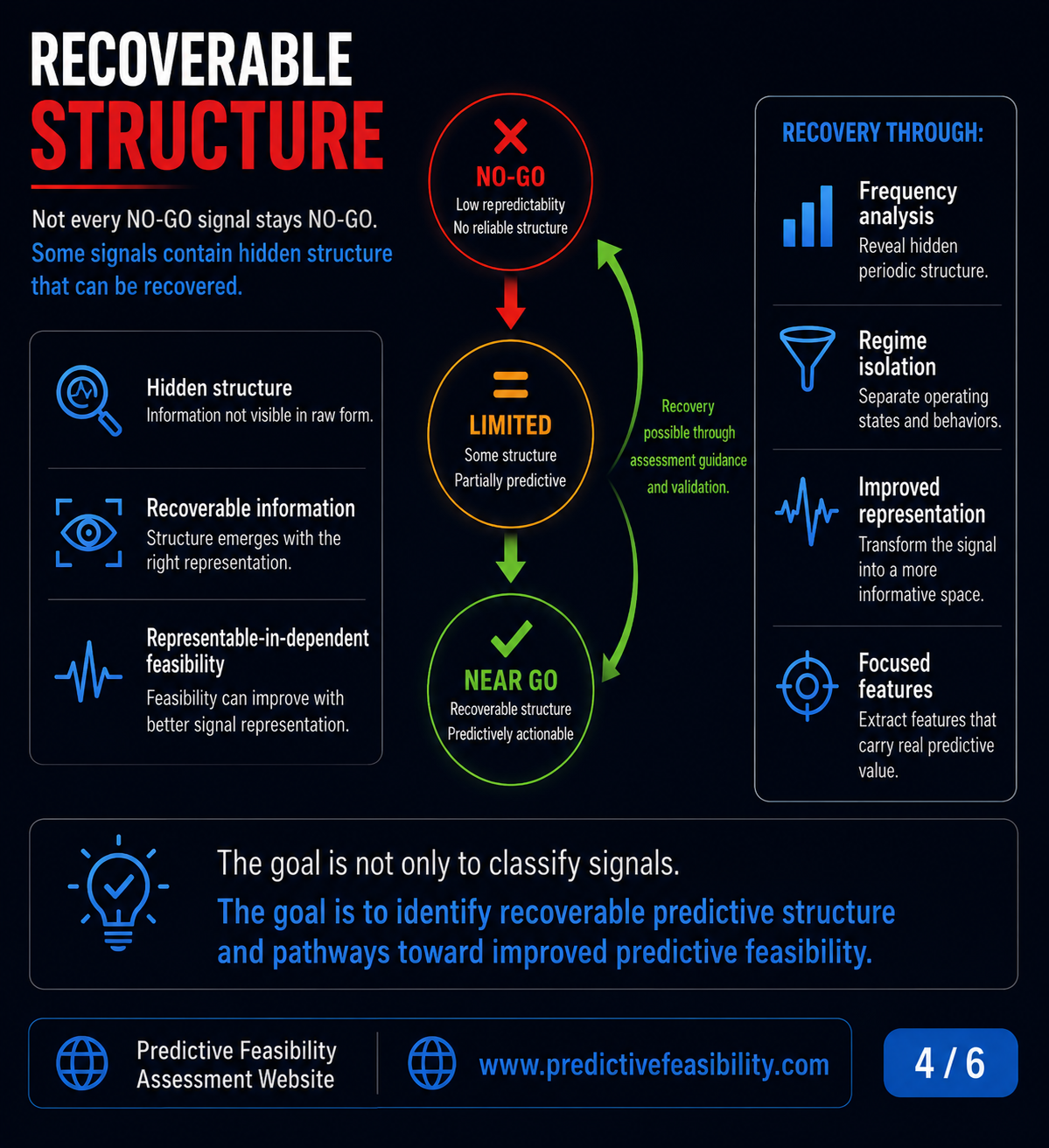
Importantly, PFA does not only identify GO, LIMITED, or NO-GO conditions.
In many cases, the framework can also help identify which structural factors are driving the outcome and which changes may improve predictive feasibility.
The goal is not merely to classify signals.
The goal is to identify pathways toward more stable and reliable prediction whenever recoverable structure exists.