Recoverable Structure Hidden Inside a Non-Predictive Signal
Can a signal that initially appears non-predictive become suitable for predictive modeling after representation recovery?
Classification Summary
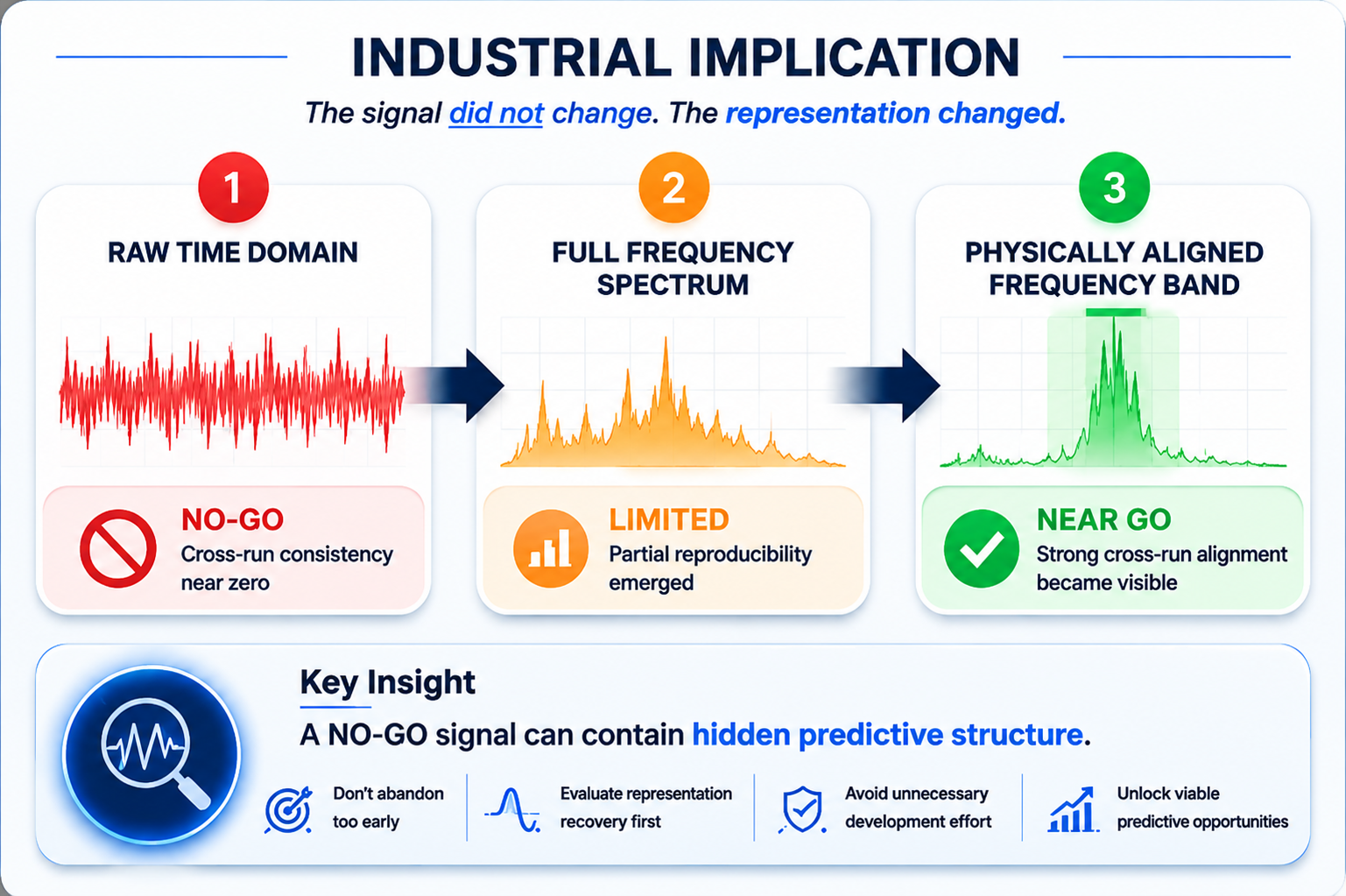
Raw Time Domain → NO-GO
Full Frequency Spectrum → LIMITED
Physically Aligned Frequency Band → Near GO
Key Insight
The signal did not change.
The representation changed.
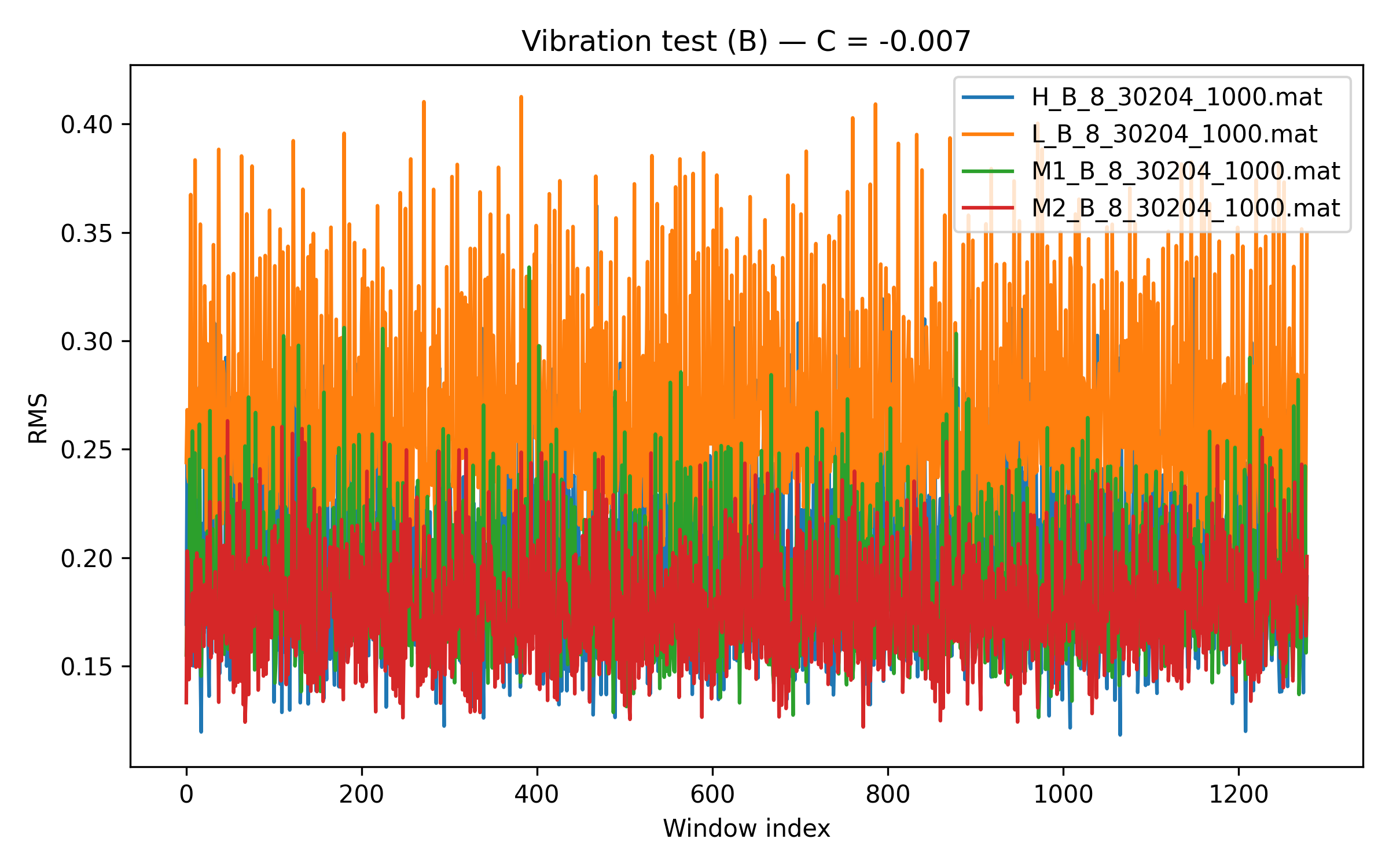
Figure 1 — Recovery of Predictive Structure
Despite visible structure and high signal energy, cross-run consistency collapses, indicating absence of a stable predictive mapping.
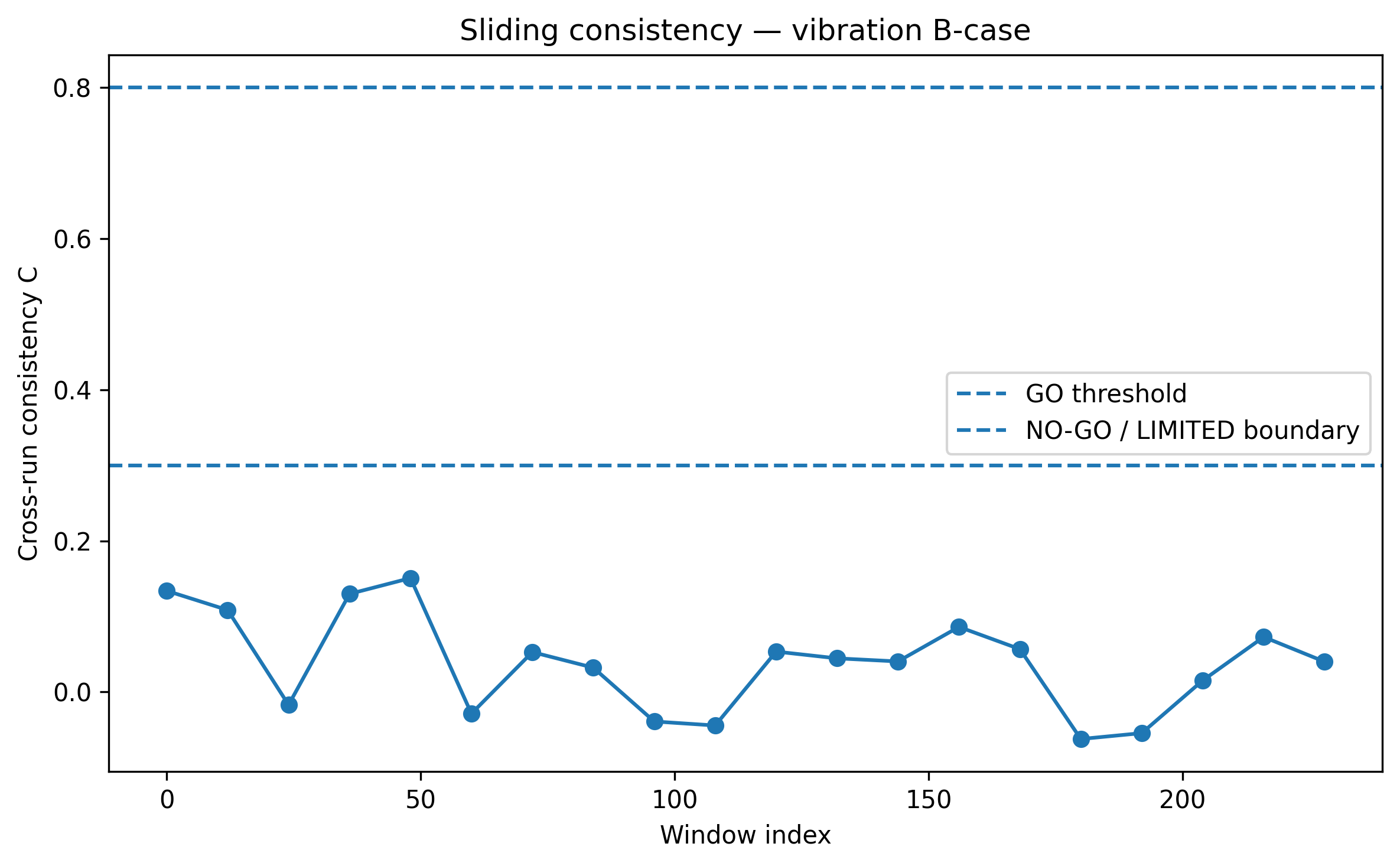
Figure 2 — Absence of Stable Regimes
Sliding consistency remains near zero across all evaluated windows, confirming that instability is structural rather than local or transient.
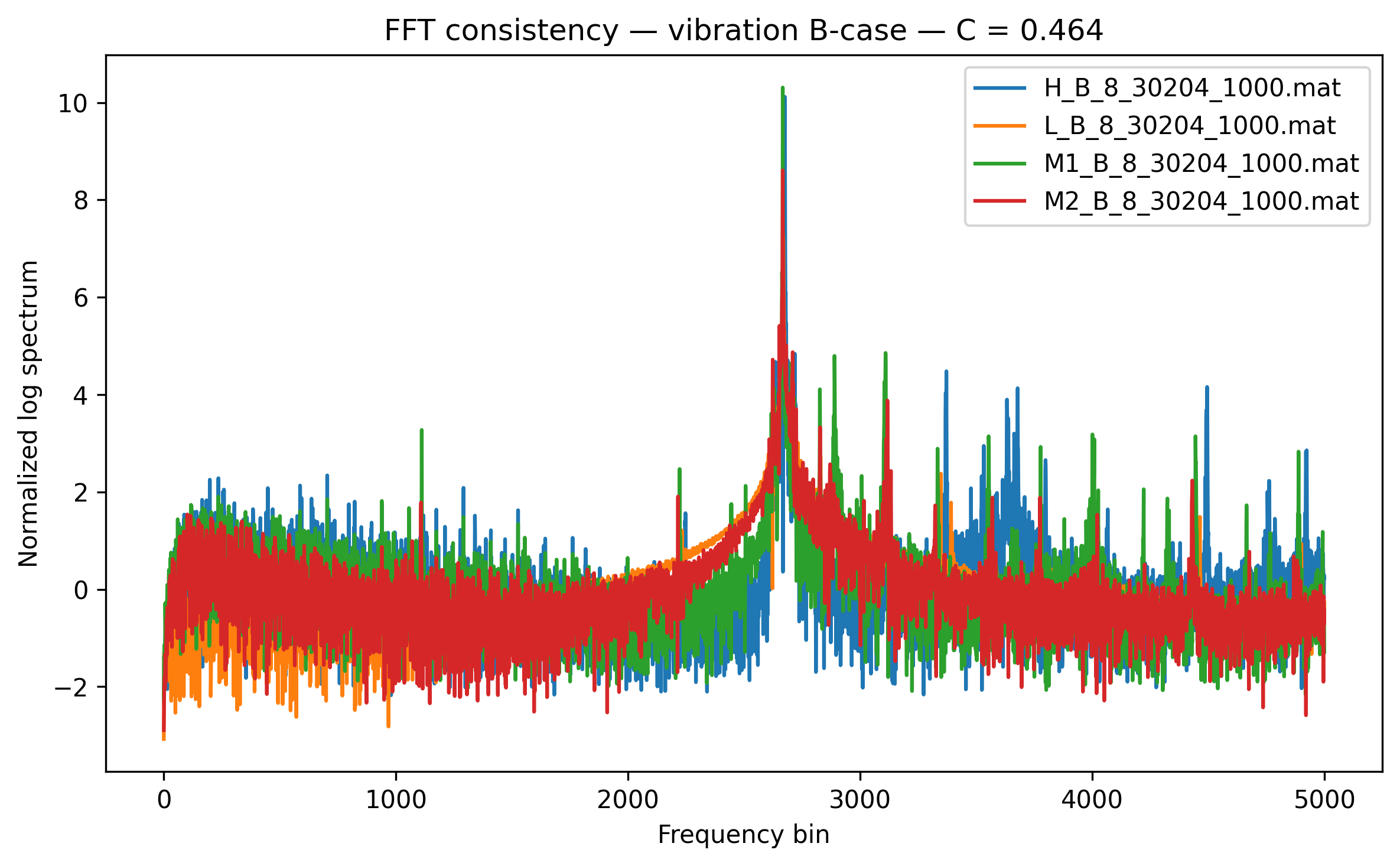
Figure 3 — Frequency-Domain Recovery
Moving into the frequency domain reveals partial reproducibility. Predictive structure exists but remains unstable.
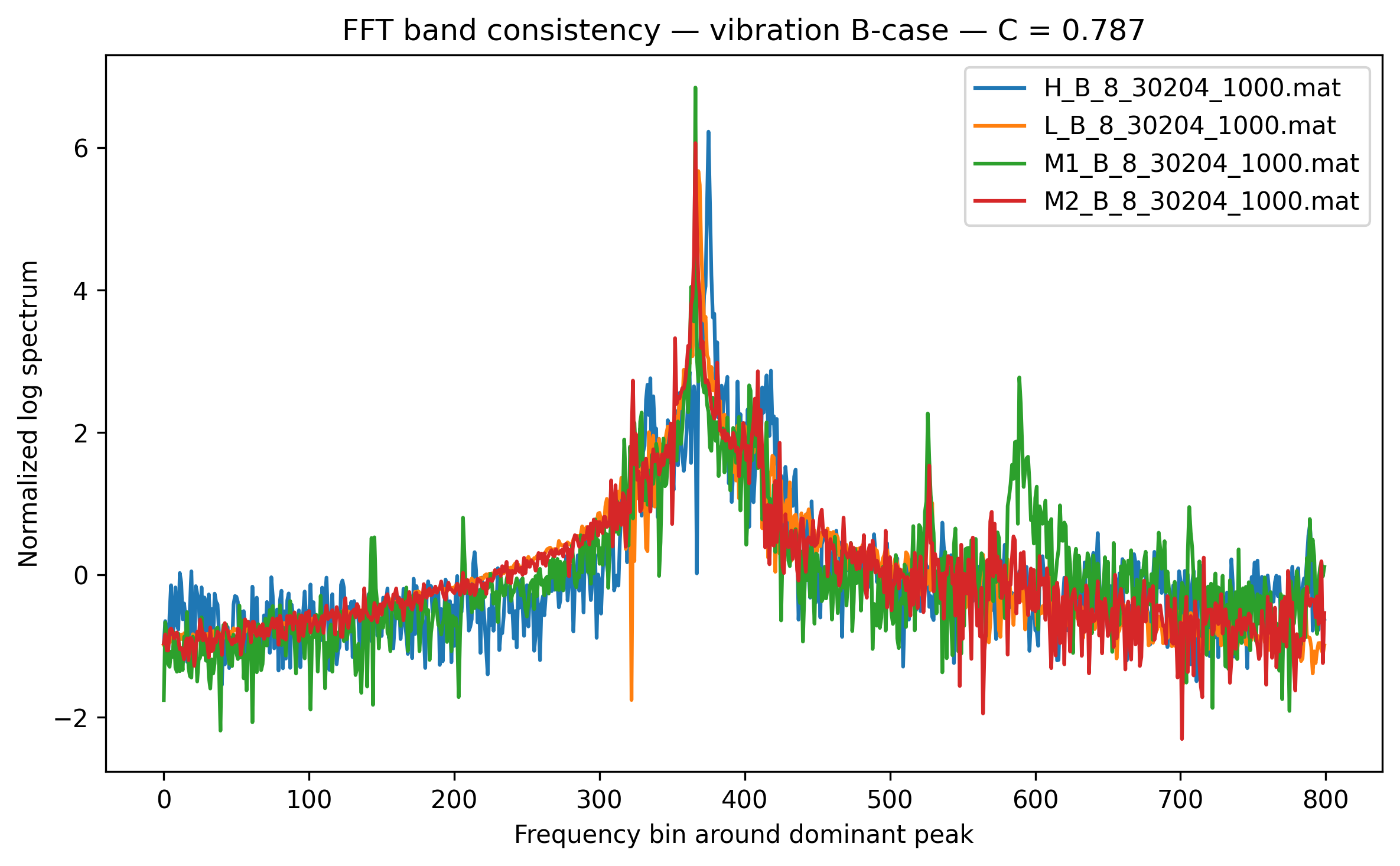
Figure 4 — Physically Aligned Frequency Band
Focusing on a physically meaningful frequency band significantly increases cross-run alignment and reveals near-stable predictive structure.
Industrial Implication
A signal that initially appears unusable may still contain valuable predictive information. Evaluating representation recovery before abandoning a signal can prevent the loss of viable predictive opportunities.
Why This Matters
Many predictive systems are abandoned too early.
A signal that appears non-viable in one representation may become operationally useful when evaluated through a representation that better reflects the underlying physics of the system.
Predictive structure was not recovered by a better model.
Predictive structure was recovered by a better representation.