Similar Systems. Different Predictive Feasibility.
Do similar physical systems necessarily support the same predictive strategy?
Classification Summary
B0053 → LIMITED
B0054 → NO-GO
B0055 → LIMITED
B0056 → LIMITED
Key Insight
Physical similarity does not guarantee predictive similarity.
Question
To investigate this question, multiple cells from the NASA Battery Aging dataset were evaluated using the Predictive Feasibility Assessment framework.
At first glance, the cells appear highly similar:
- Same dataset family
- Similar degradation behavior
- Similar operating conditions
However, the underlying predictive structure proved significantly different.
What Was Evaluated?
The analysis focused on:
- Structural behavior
- Cross-run consistency
- Prediction stability
- Predictive feasibility
Each cell was evaluated independently.
Result
Different cells occupied different predictive regimes.
B0053
High consistency.
Classification: LIMITED
B0054
Low consistency.
Classification: NO-GO
B0055
Moderate consistency.
Classification: LIMITED
B0056
Borderline consistency.
Classification: LIMITED
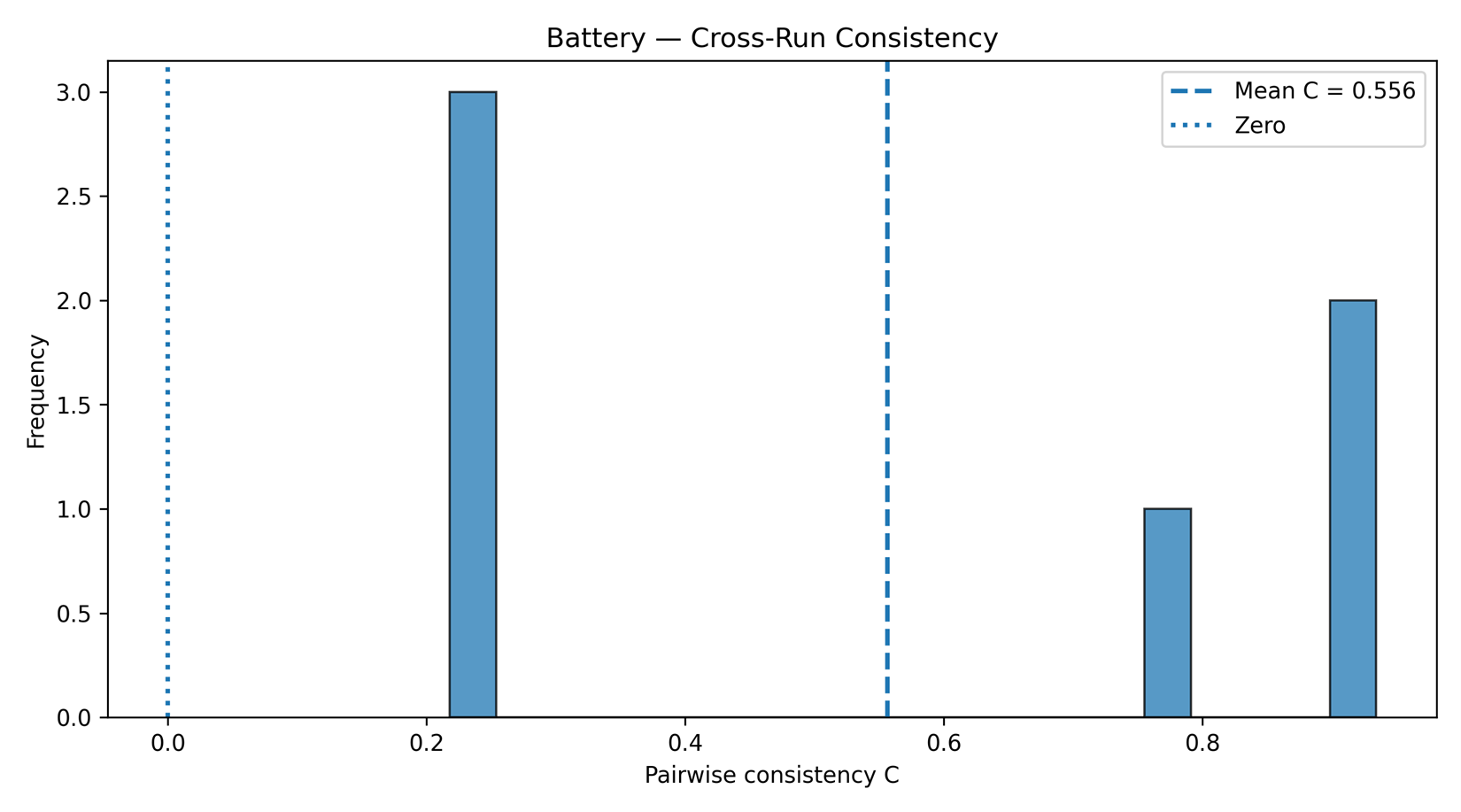
Figure 1 — Predictive Feasibility Across Battery Cells
Predictive feasibility across multiple NASA battery aging trajectories.
Although all cells belong to the same physical system class, substantial differences emerge in structural consistency and predictive behavior.
The figure illustrates that predictive feasibility is not uniform even within a single dataset family. Similar systems can produce fundamentally different predictive outcomes.
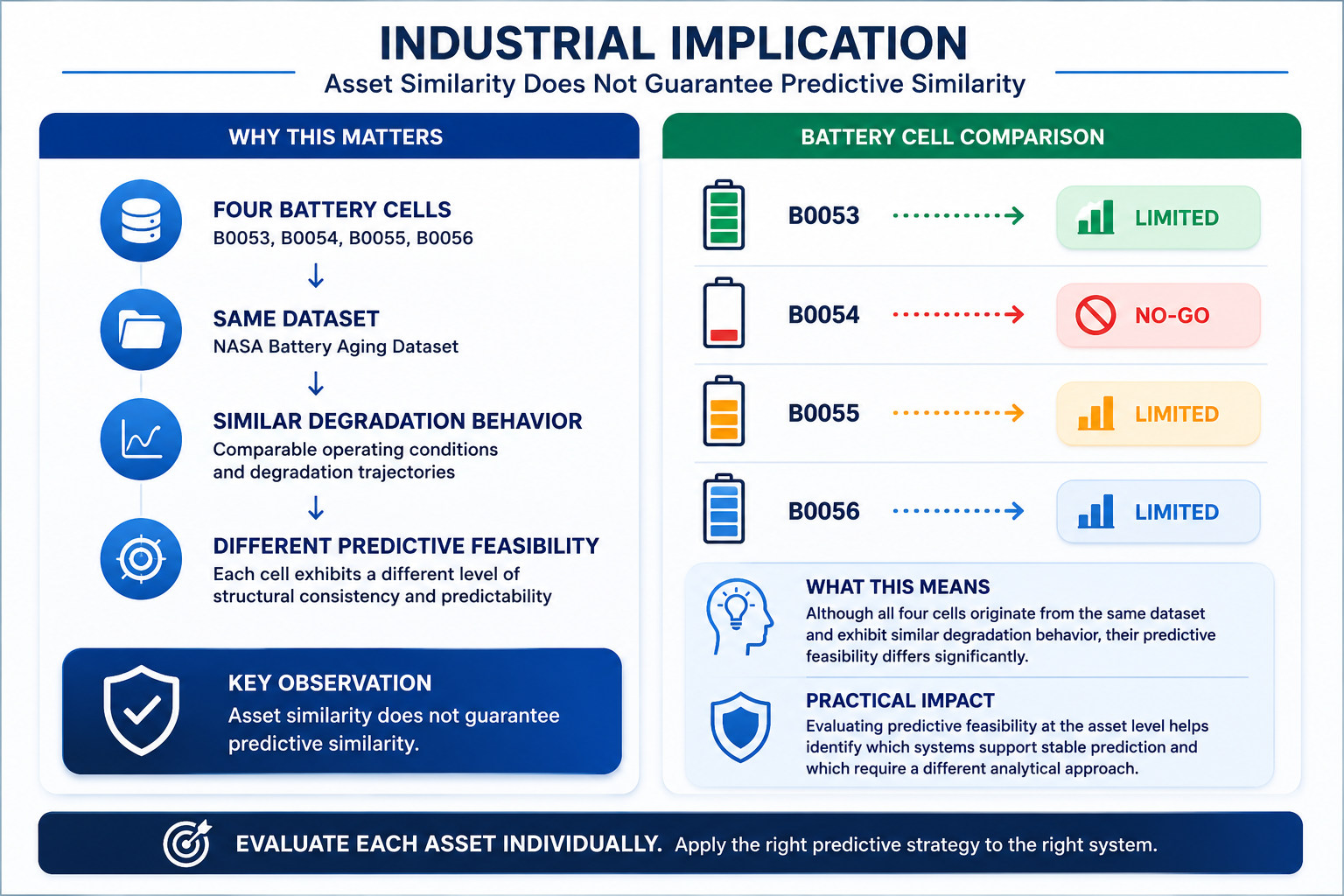
Industrial Implication
Although all four cells belong to the same dataset family and exhibit similar degradation behavior, their predictive feasibility differs significantly.
Asset similarity does not guarantee predictive similarity.
Evaluating predictive feasibility at the asset level helps identify which systems support stable prediction and which require a different analytical approach.
Why This Matters
Many predictive maintenance projects assume that similar assets support identical predictive workflows.
This case demonstrates that predictive feasibility must be evaluated individually.
Key Takeaway
Physical similarity does not guarantee predictive similarity.
Different assets may require different predictive strategies, even when they appear nearly identical.