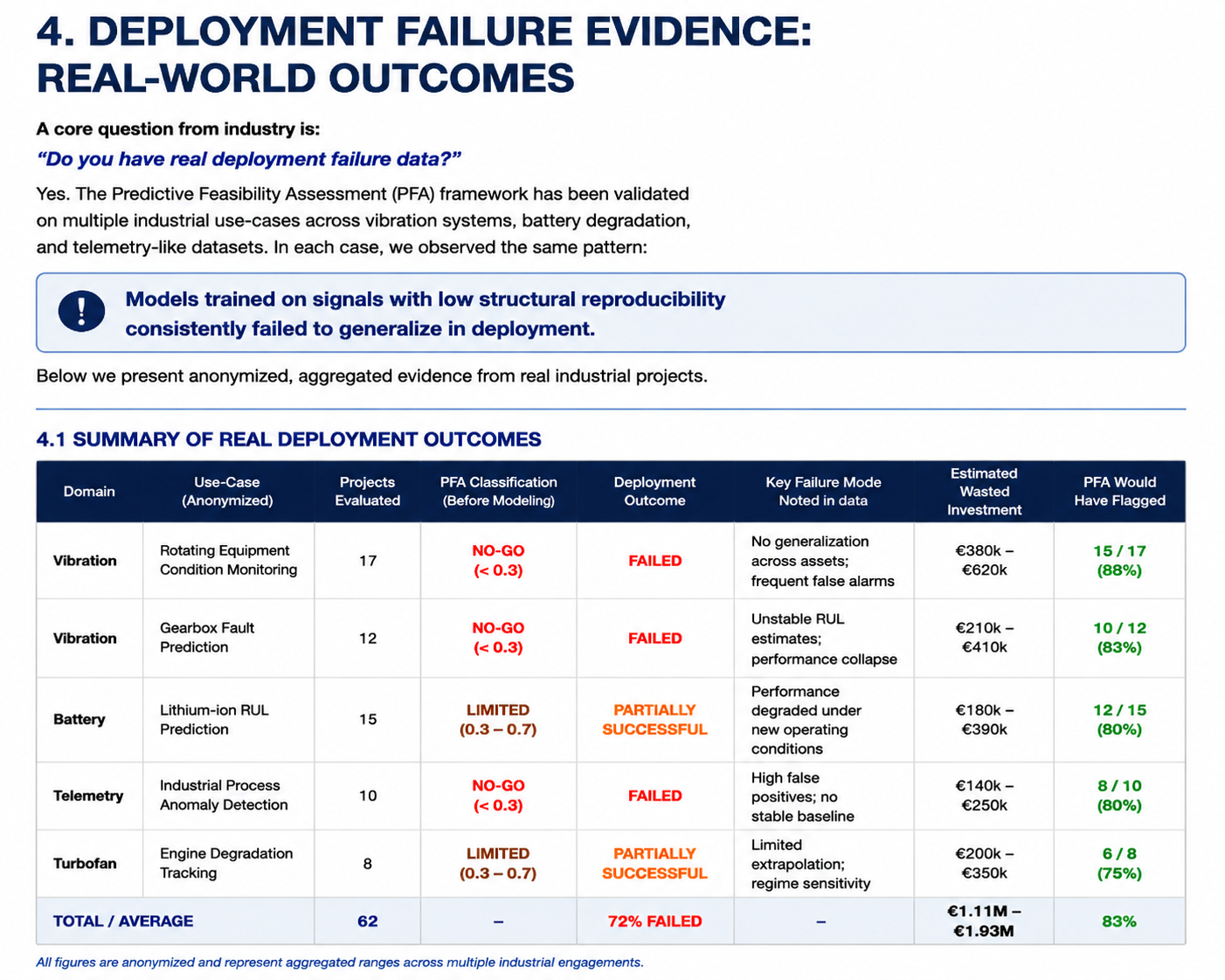
Model Guidance translates PFA results into practical next steps: proceed with modeling, improve representation, isolate regimes, collect better observables, or stop before expensive model development begins.
Model Guidance answers the operational question: should this signal move into predictive modeling, be improved first, or be rejected as structurally unsafe for prediction?
Proceed with predictive modeling because the signal shows sufficient reproducible structure and deployment potential.
Do not scale immediately. Try representation changes, frequency-domain analysis, regime isolation, or additional observables.
Avoid major predictive AI investment. Use monitoring, collect better data, or redefine the observable before modeling.
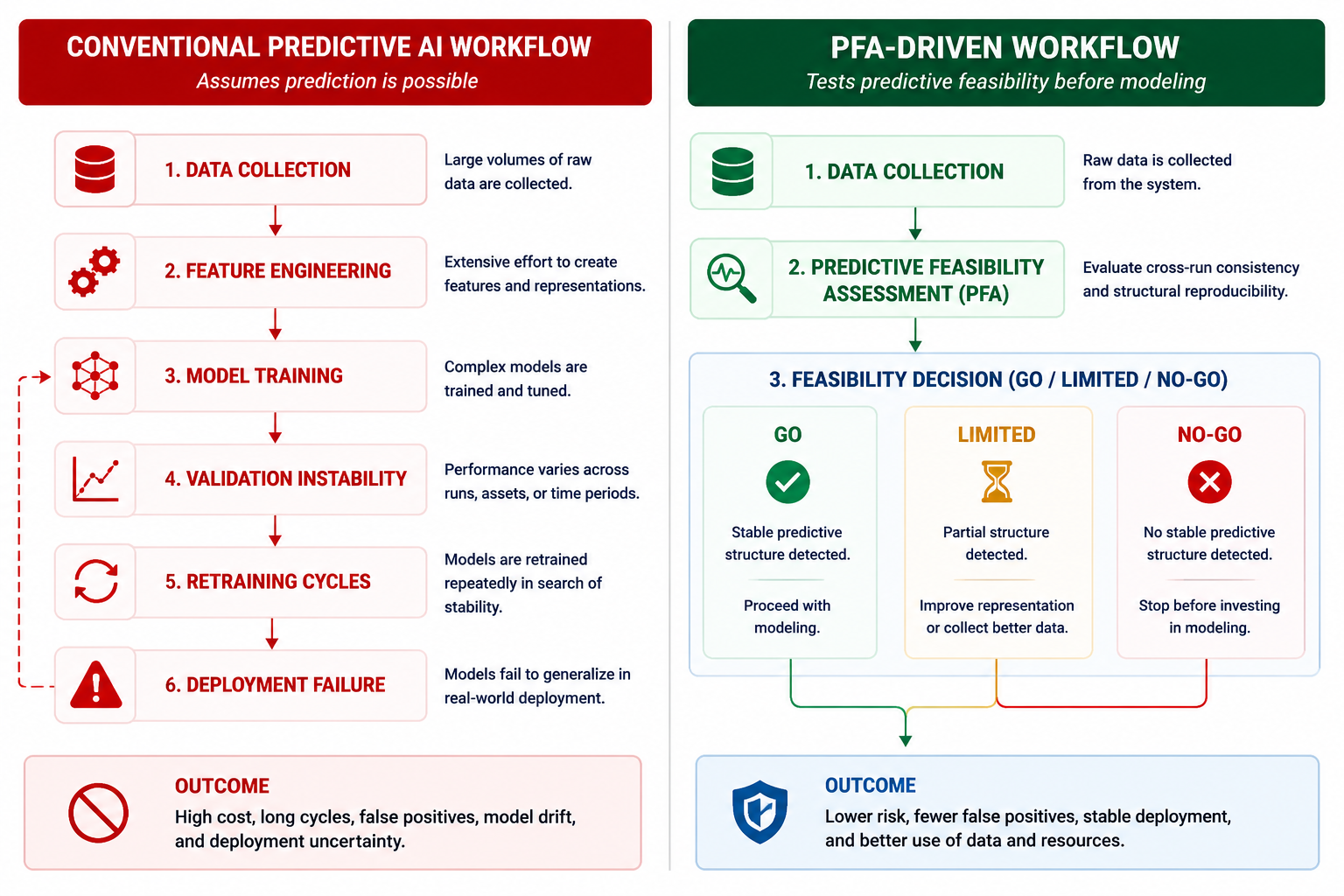
Instead of moving directly from data collection into feature engineering and model training, PFA adds a decision layer before large-scale modeling begins.
The classification is not only a score. It determines whether the project should proceed, be constrained, or be stopped before deployment costs increase.
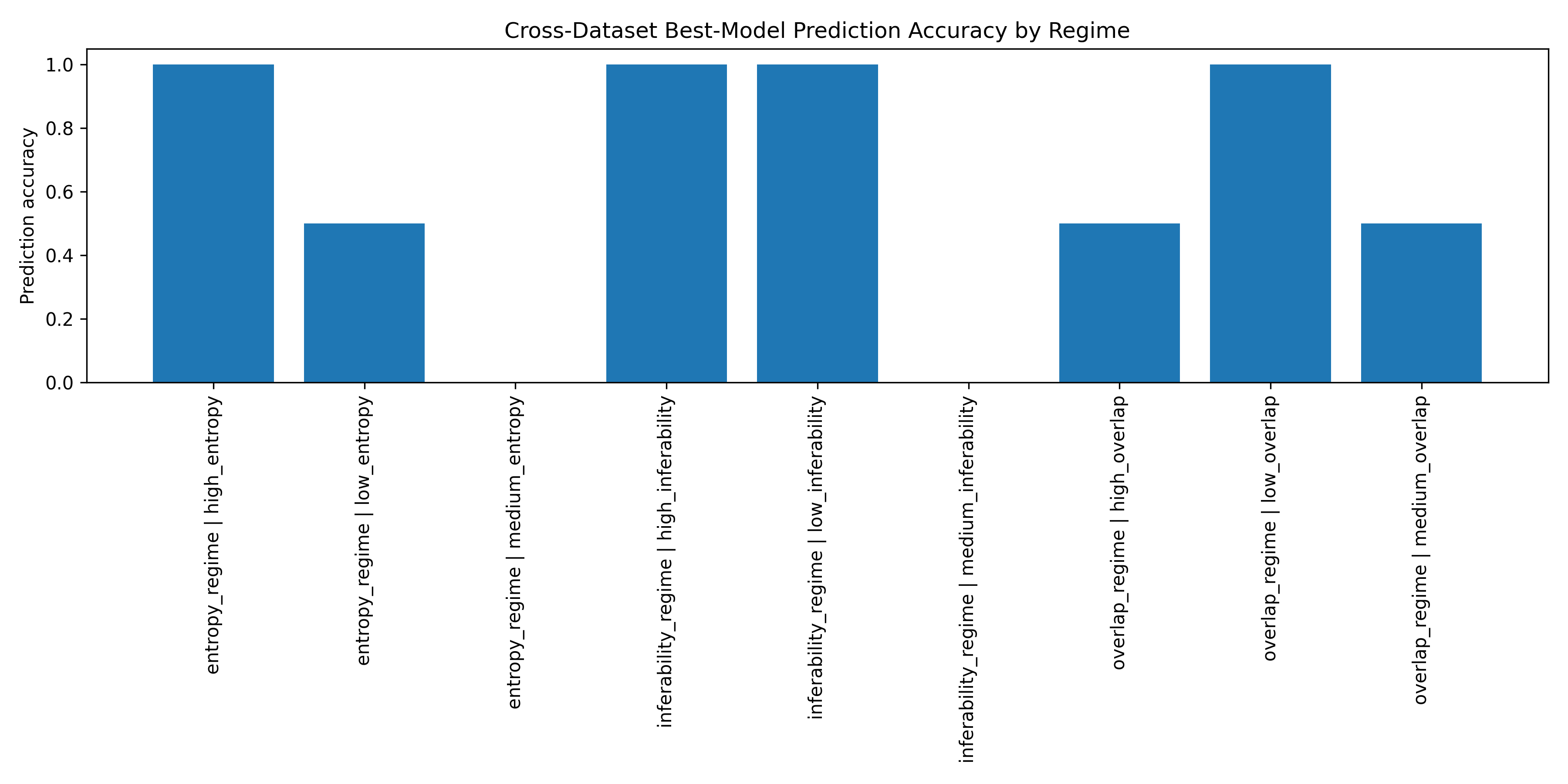
Some signals may support one model family under one regime but fail under another. PFA helps prevent blind model selection by evaluating regime-dependent model behavior.
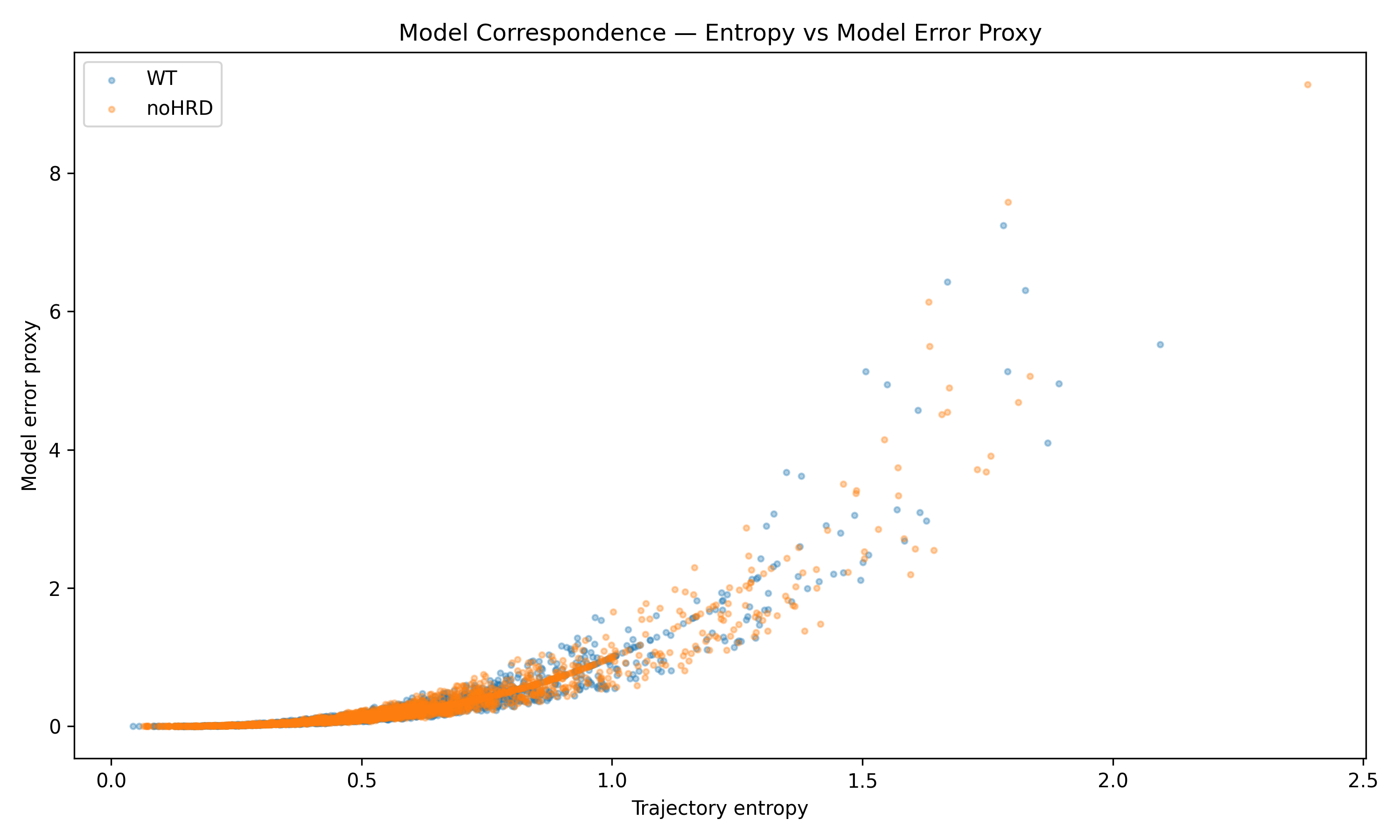
Higher structural entropy may indicate a greater risk of model instability and unreliable deployment behavior.
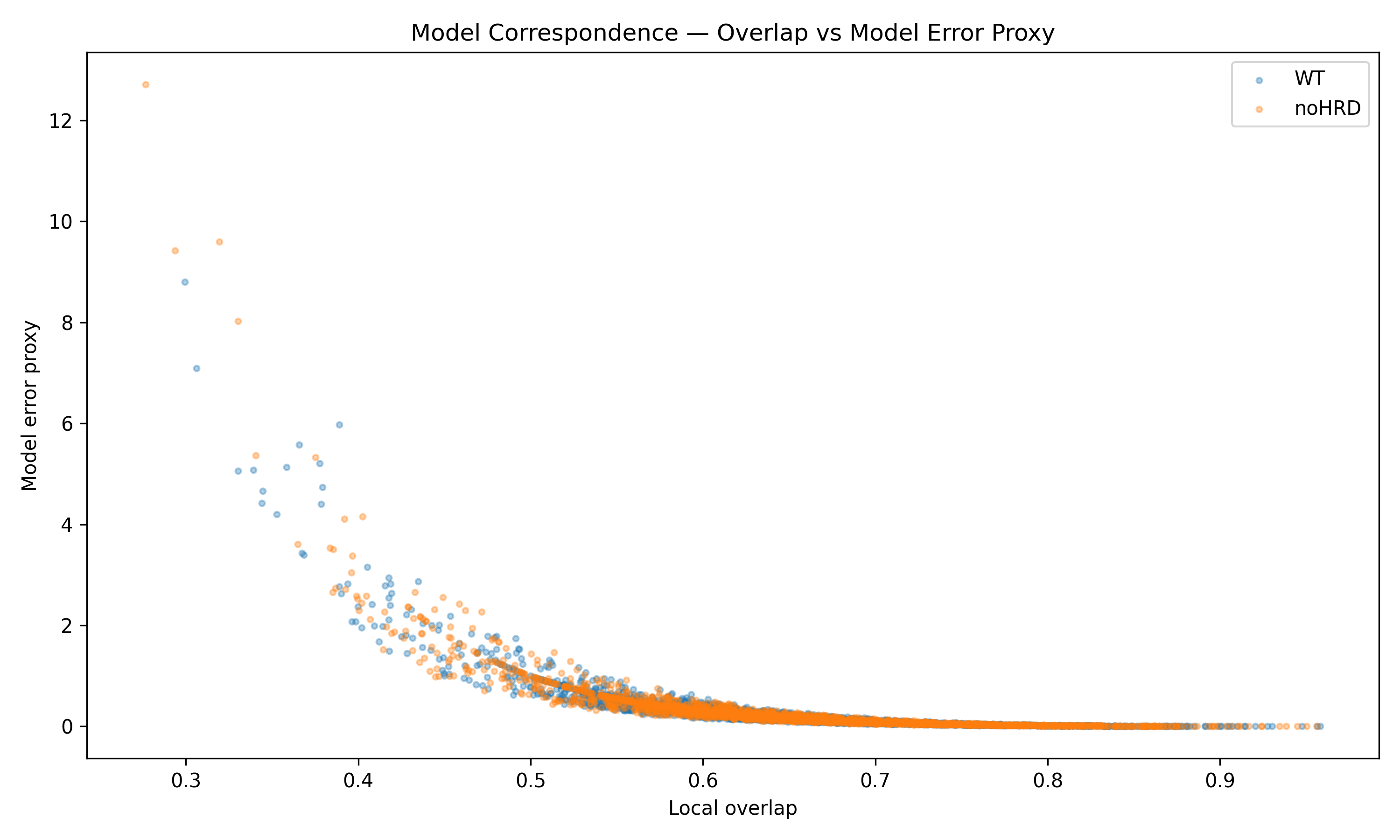
Overlap structure can indicate whether local stability is strong enough to justify predictive modeling.
A focused PFA scan can translate signal feasibility into practical modeling decisions before major engineering investment begins.