Model-Family Guidance
Not every signal should be modeled the same way.
Model-family guidance evaluates whether signal structure supports stable modeling before teams commit to a specific architecture, forecasting strategy, or AI deployment path.
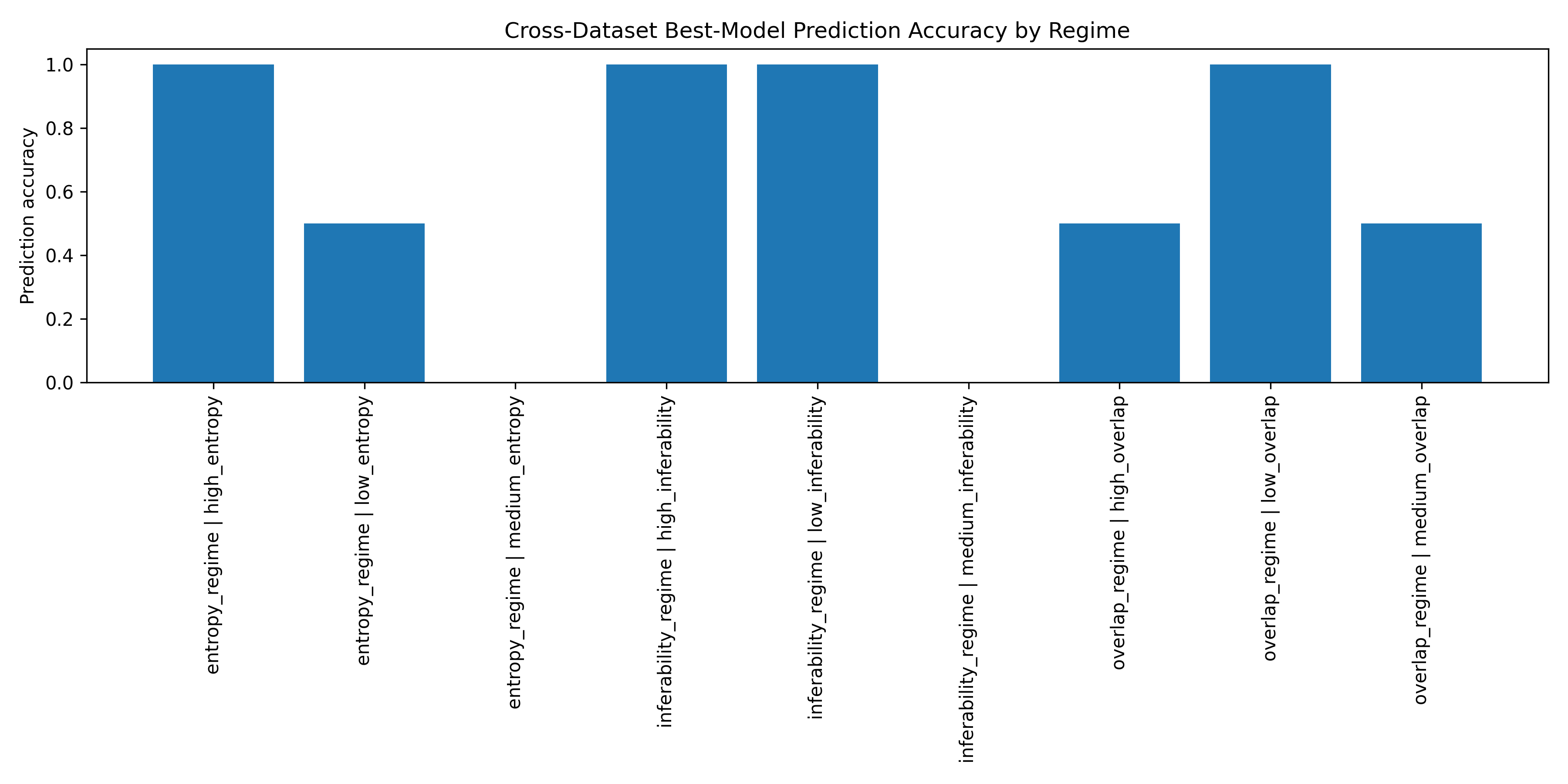
Model-family guidance evaluates whether signal structure supports stable modeling before teams commit to a specific architecture, forecasting strategy, or AI deployment path.
A model can fail not because the architecture is weak, but because the observable signal does not support stable predictive structure under the chosen representation or operating regime.
A model may appear promising during training but become unstable when its assumptions do not match the signal structure.
Different operating regimes may favor different model families, thresholds, or representations.
Prediction error can increase when the signal enters regions with high entropy, weak overlap, or poor cross-run reproducibility.
PFA connects structural features such as entropy, overlap, and inferability to expected model behavior. This allows model-risk guidance before full development begins.
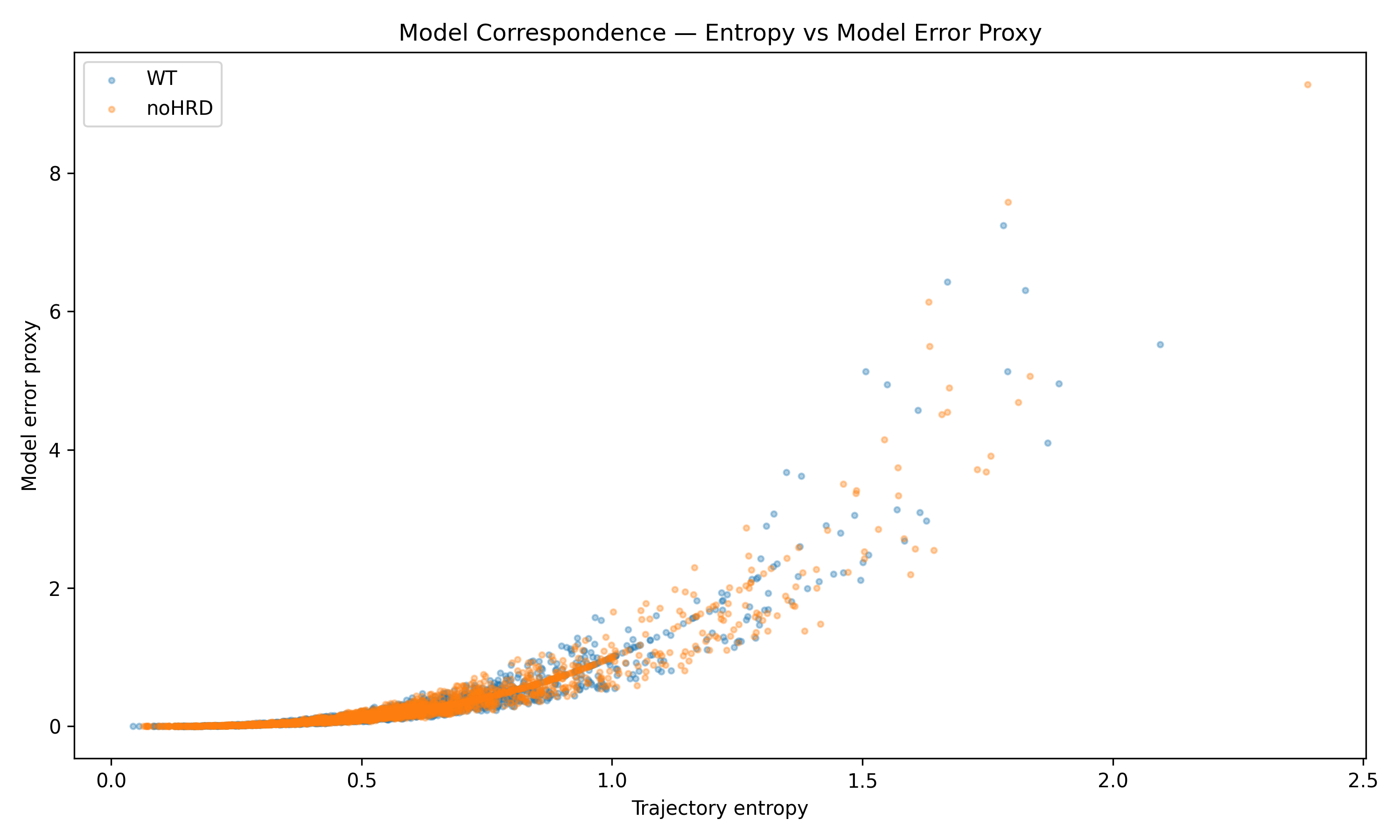
Higher structural entropy can indicate weaker stability and increased model error under deployment-like conditions.
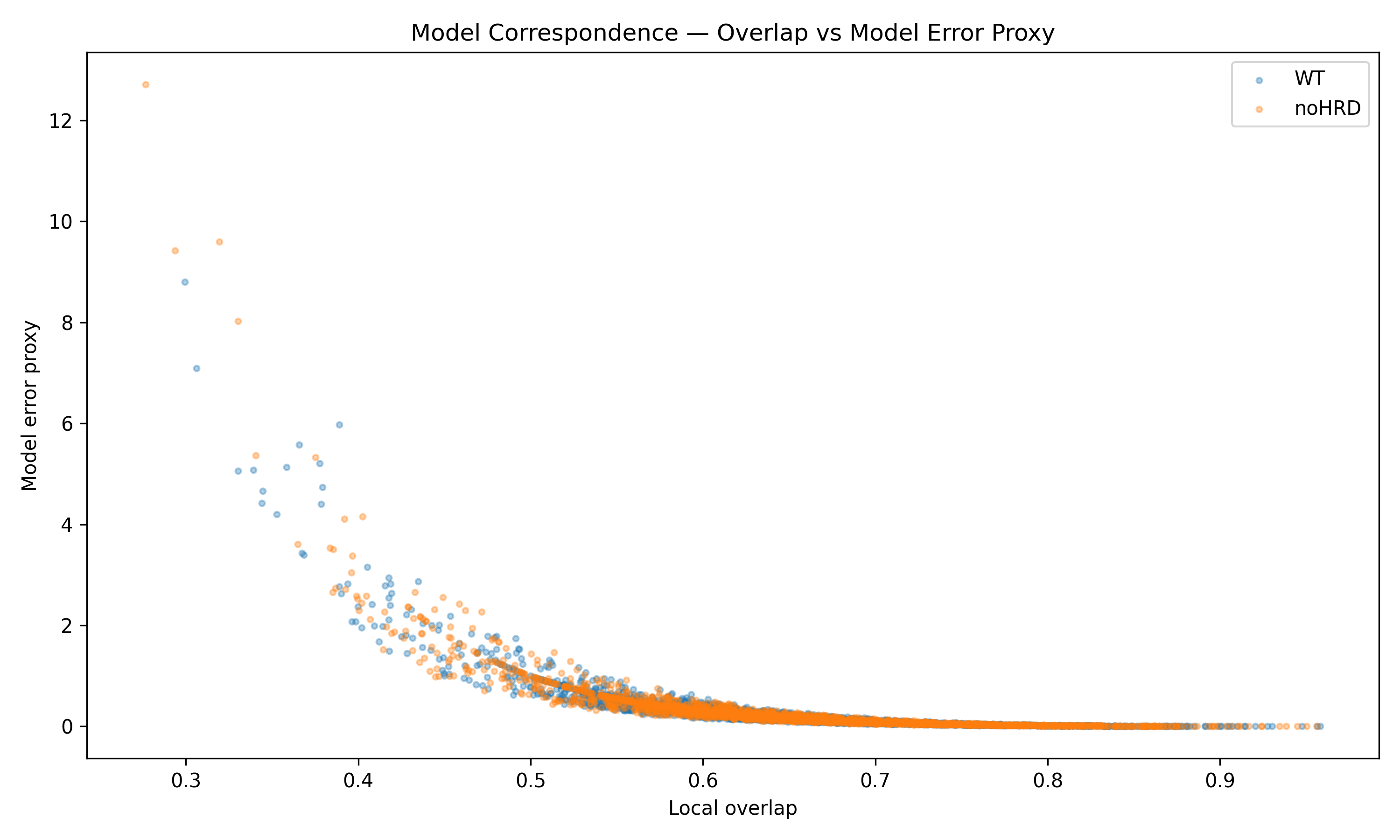
Overlap structure can act as an indicator of whether local regimes preserve enough stability for reliable modeling.
Model-family guidance does not select a model blindly. It evaluates whether structural regimes are likely to support certain model families more reliably than others.

This helps identify regimes where model behavior becomes unstable or where multiple model families produce inconsistent outcomes.

This helps determine whether one model family consistently dominates or whether results vary too strongly by regime.
A focused PFA scan can evaluate which modeling paths are structurally justified before costly model development begins.