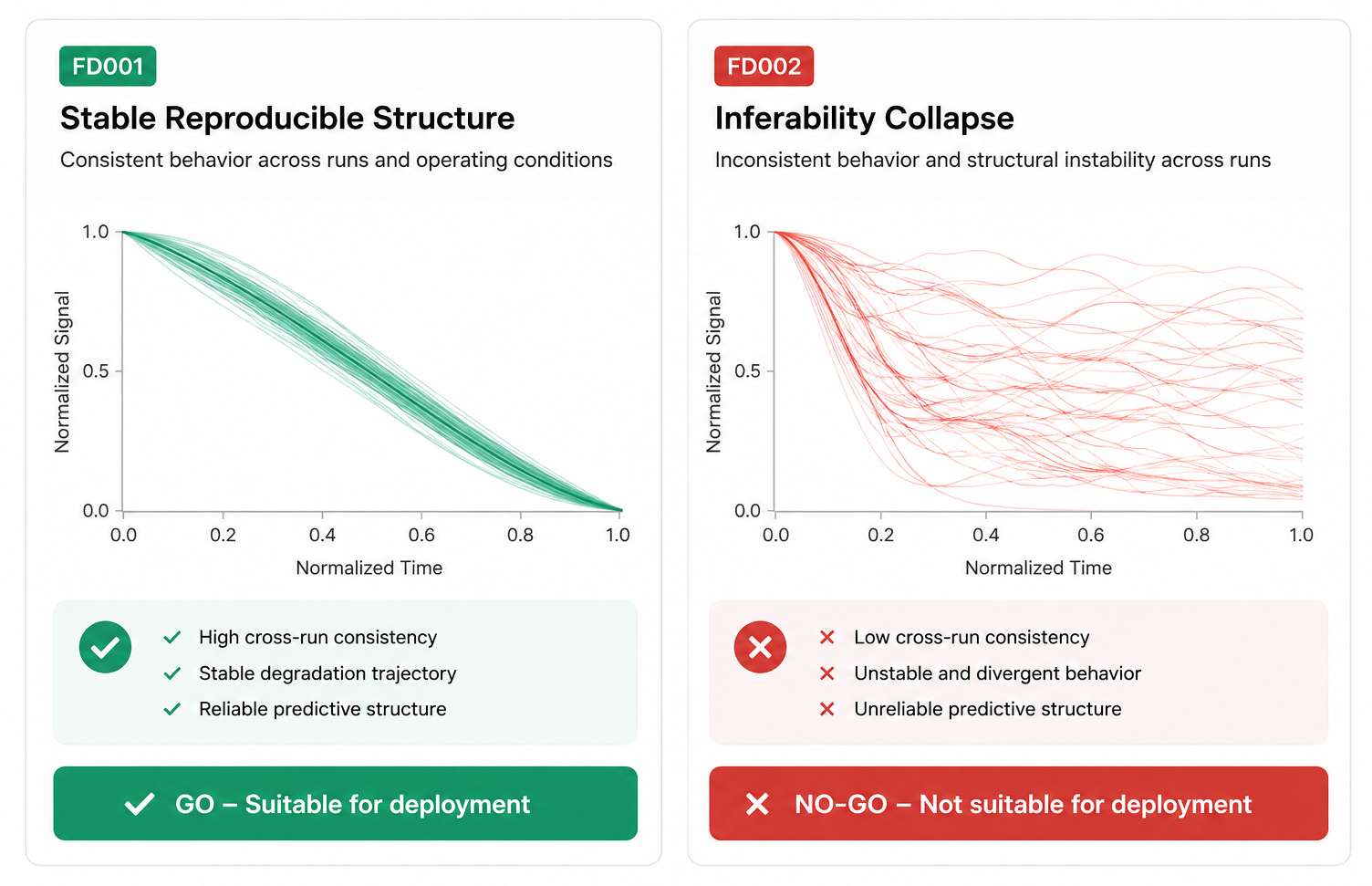
Structural AI deployment risk can be detected before large-scale deployment begins.
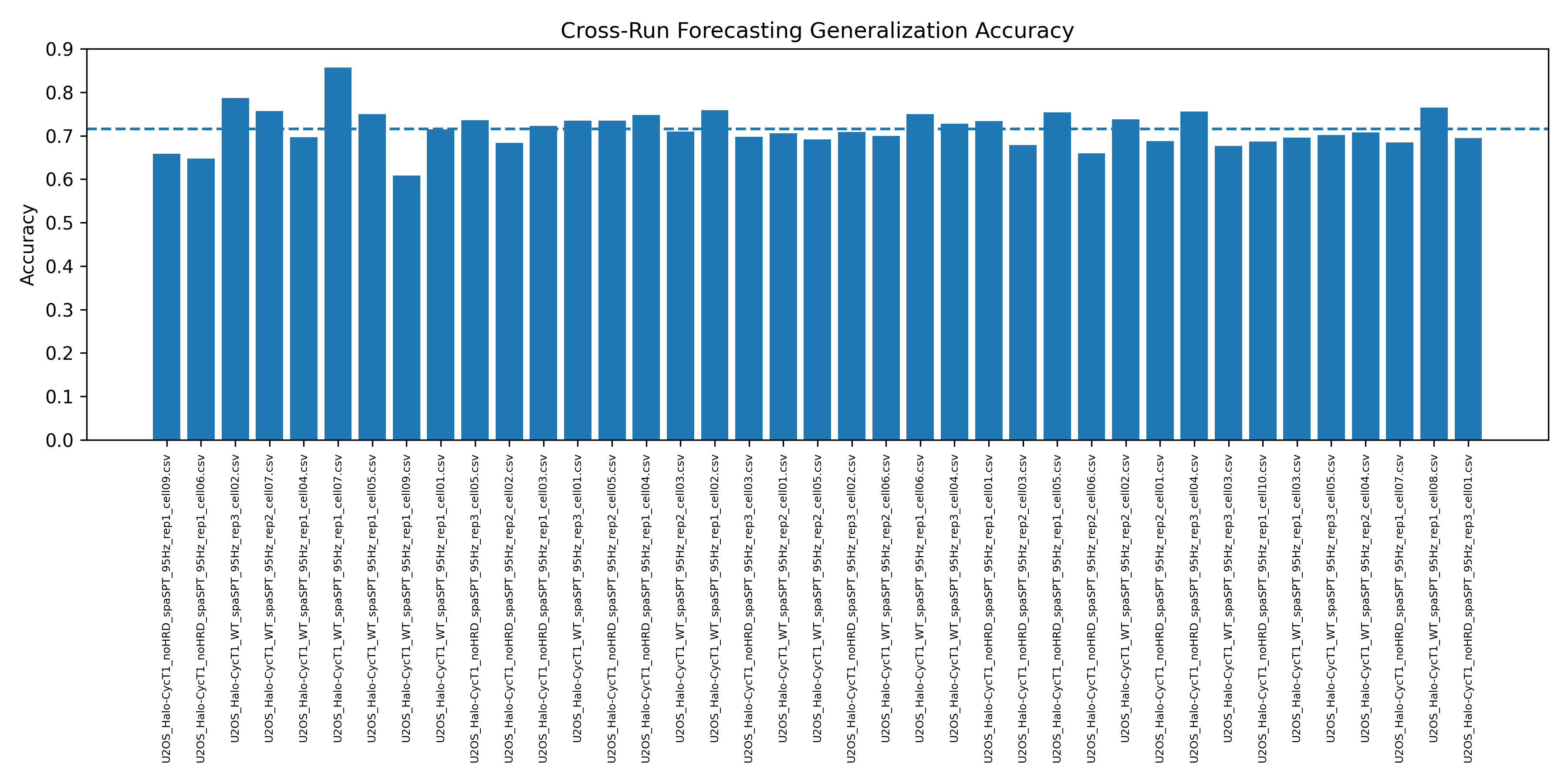
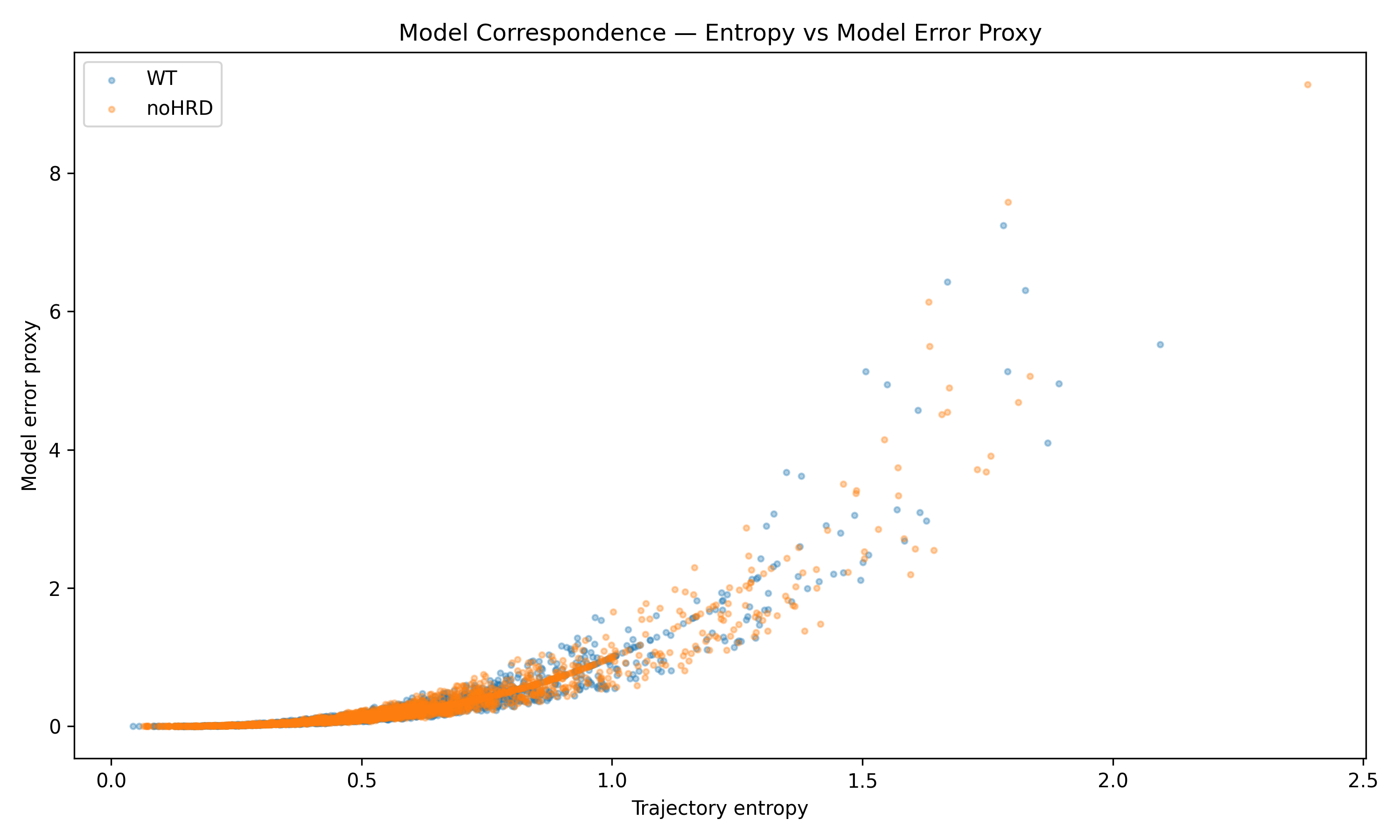
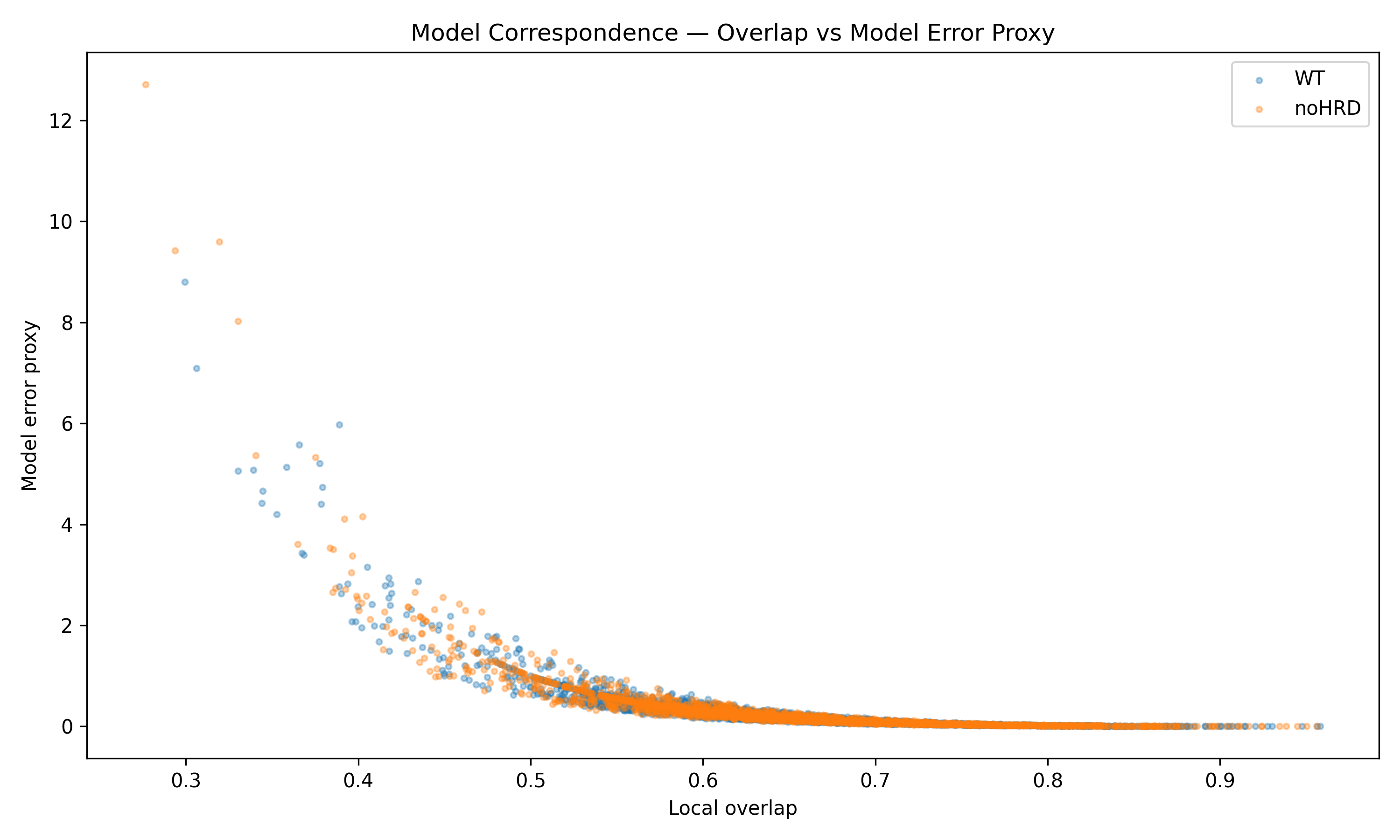
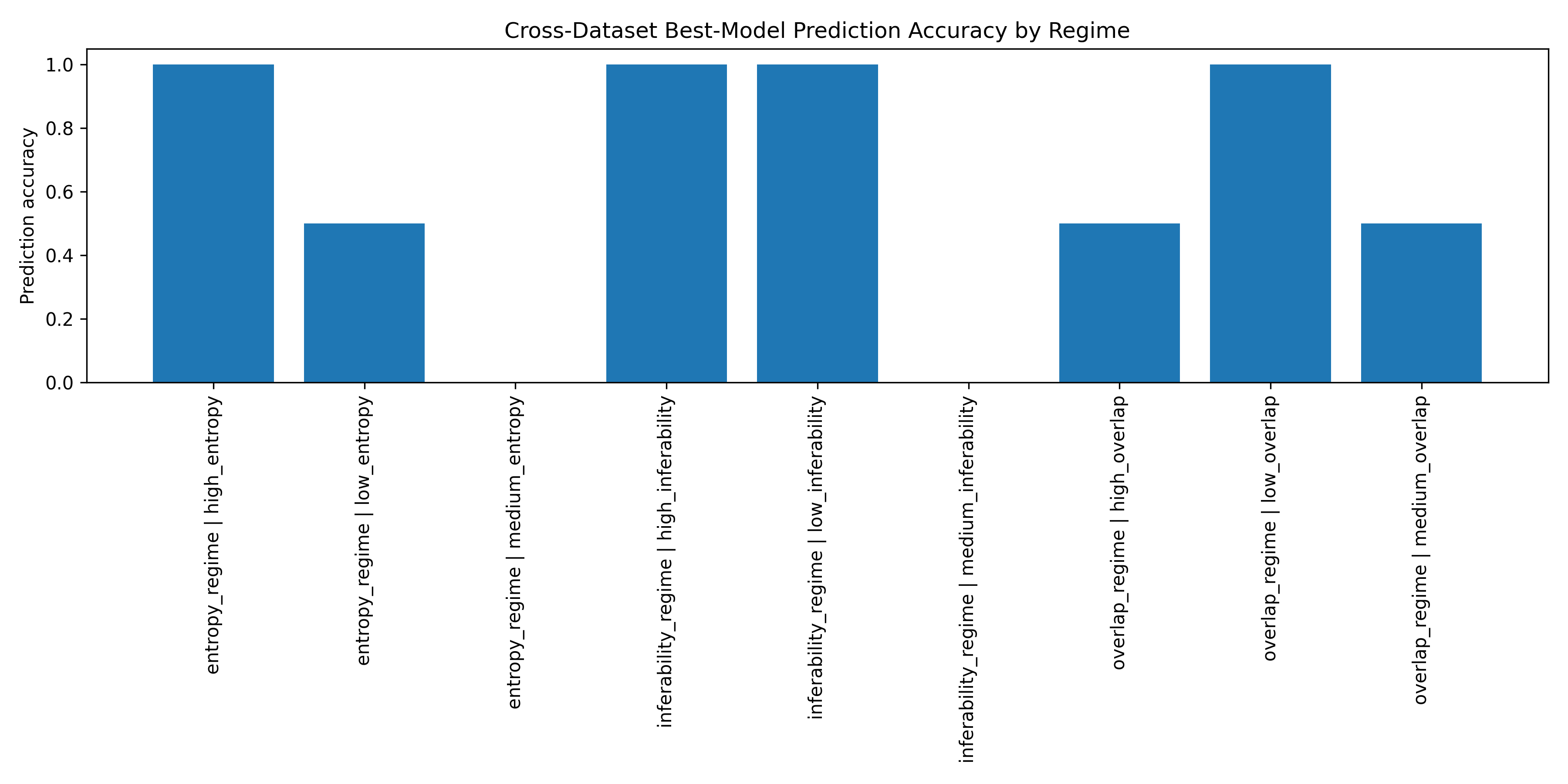
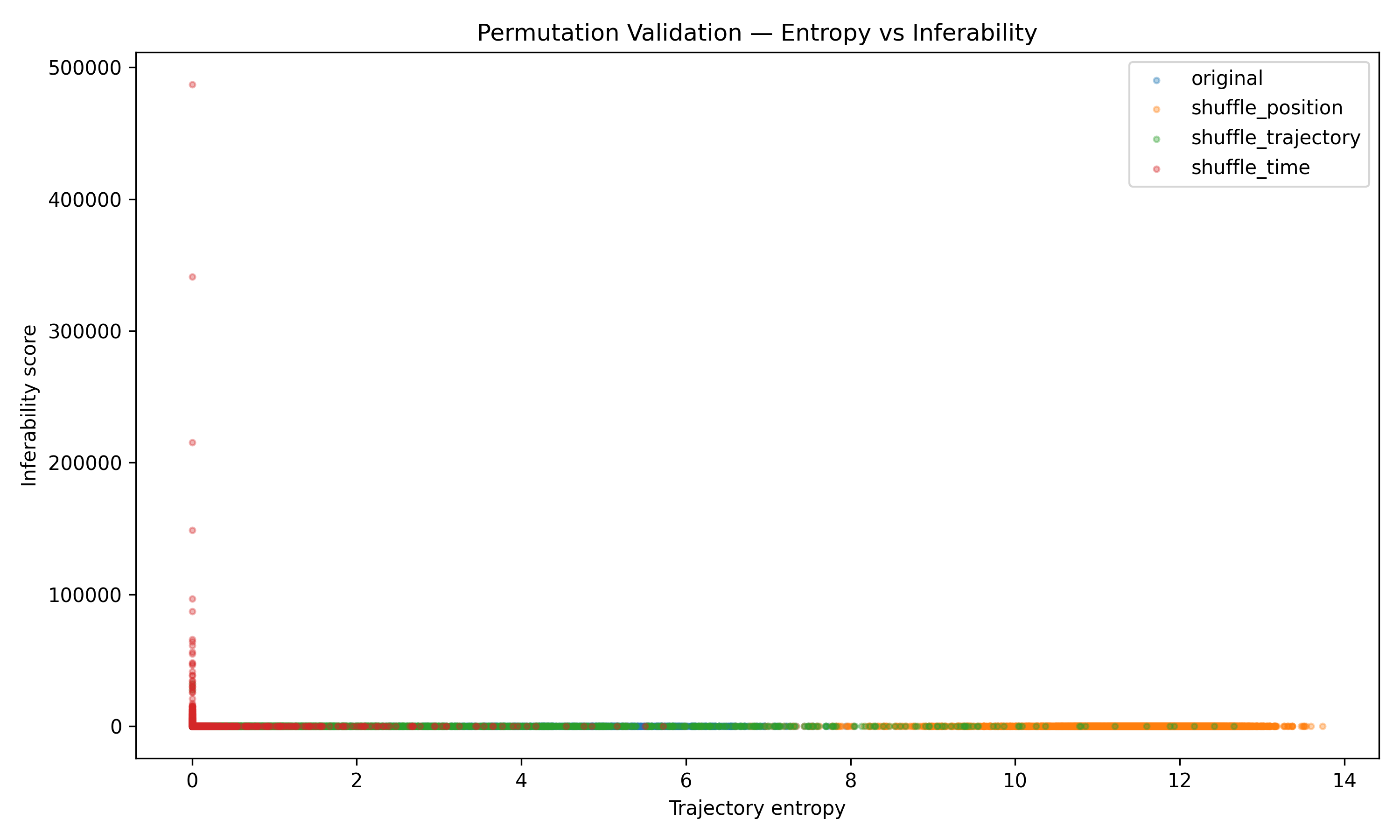
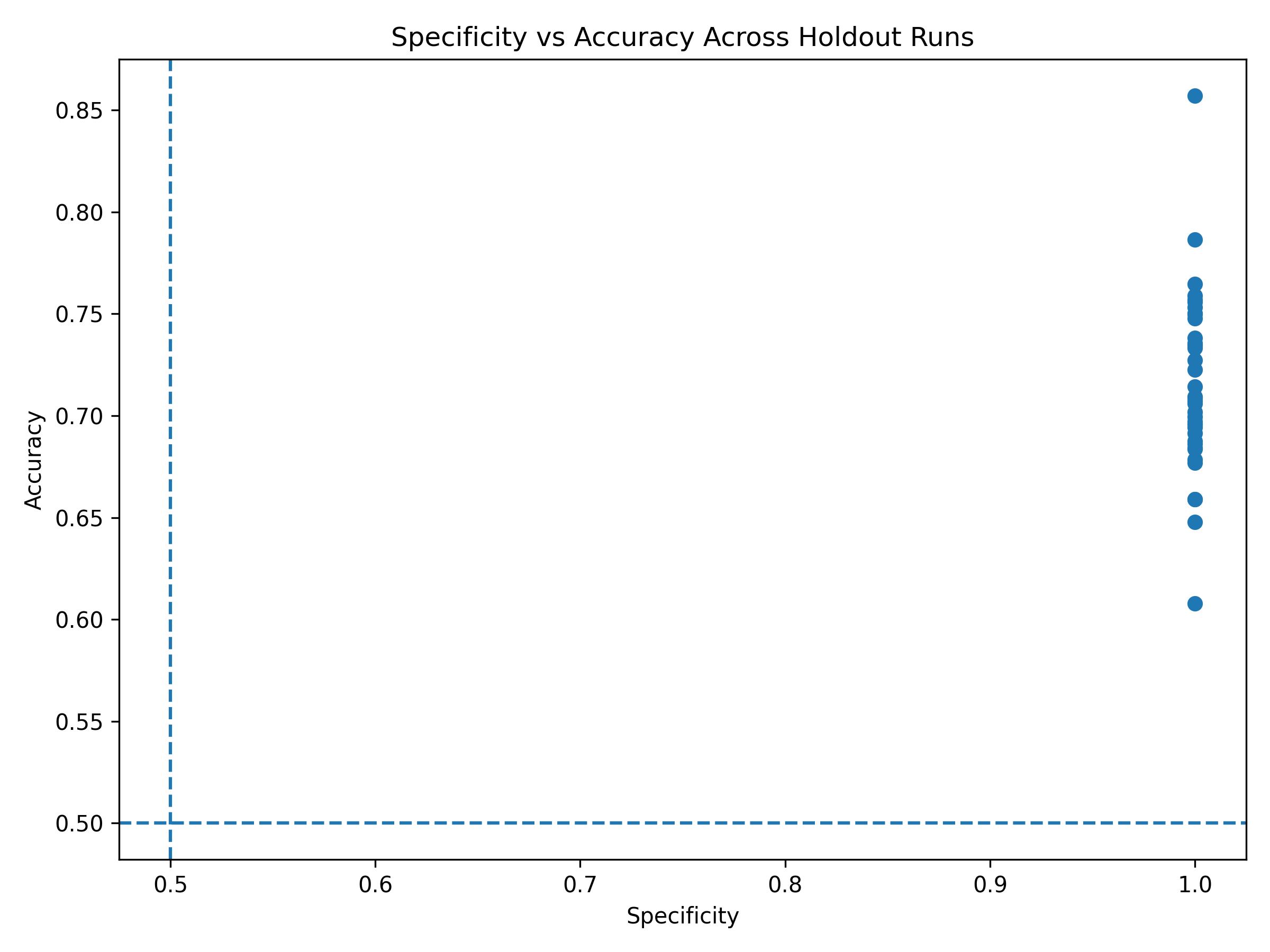
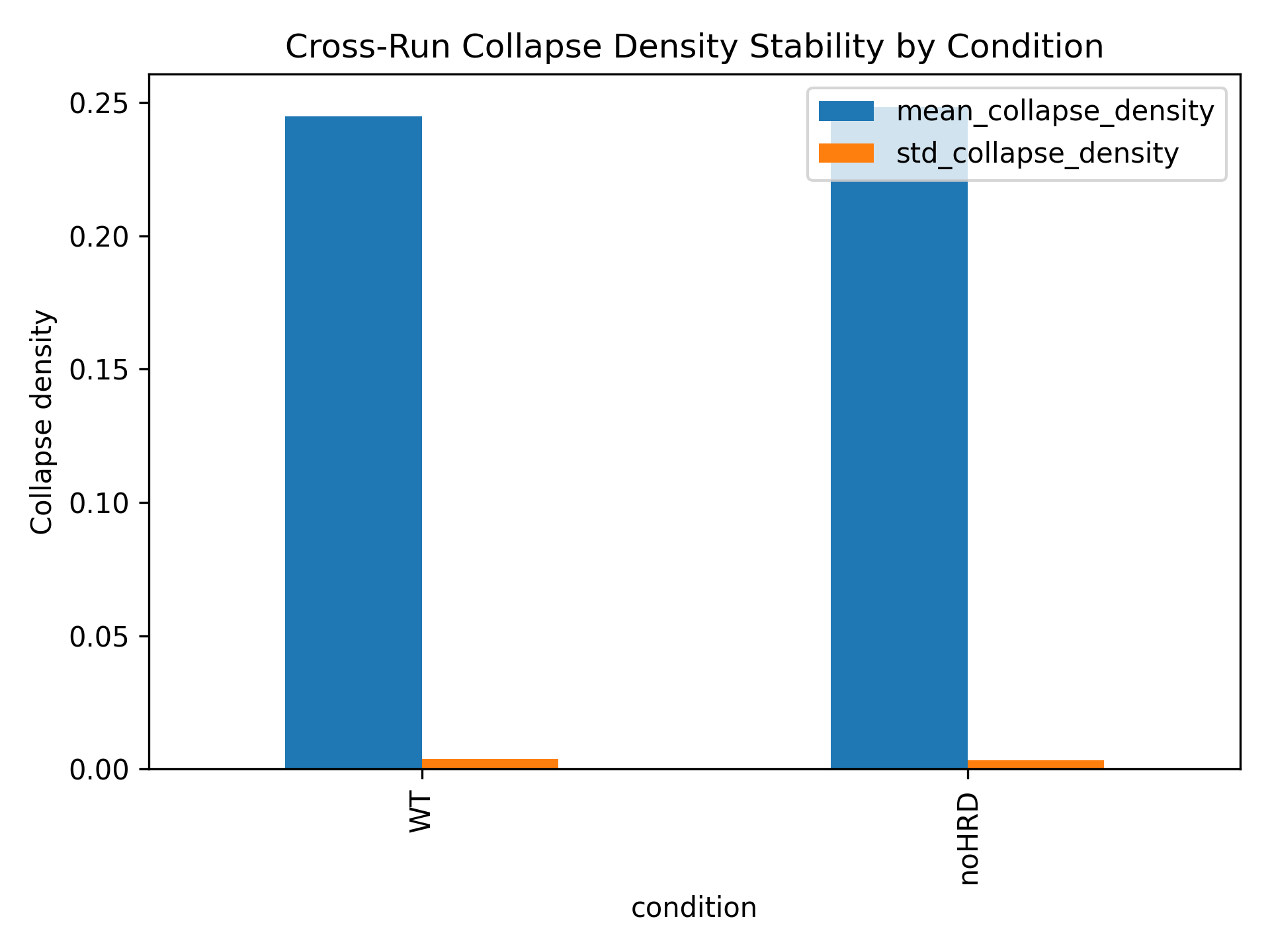
PFA evaluates whether predictive AI systems are structurally viable before model development. It measures signal reproducibility, deployment risk, transfer stability, false-positive sensitivity, and model-family robustness across real-world operational conditions.
Powered by the HR7 Historical Reference Framework, PFA is supported by a structured historical evidence foundation built from 121 independenty documented historical AI systems across multiple domains.
High confidence of stable deployment performance.
Why predictive AI projects often fail after deployment
Many predictive projects fail after deployment because predictive feasibility is never evaluated before model development begins.
Traditional workflows assume prediction is possible and proceed directly to model development.
PFA introduces a structural feasibility assessment before modeling starts, helping determine whether deployment success is realistically achievable before substantial resources are invested.
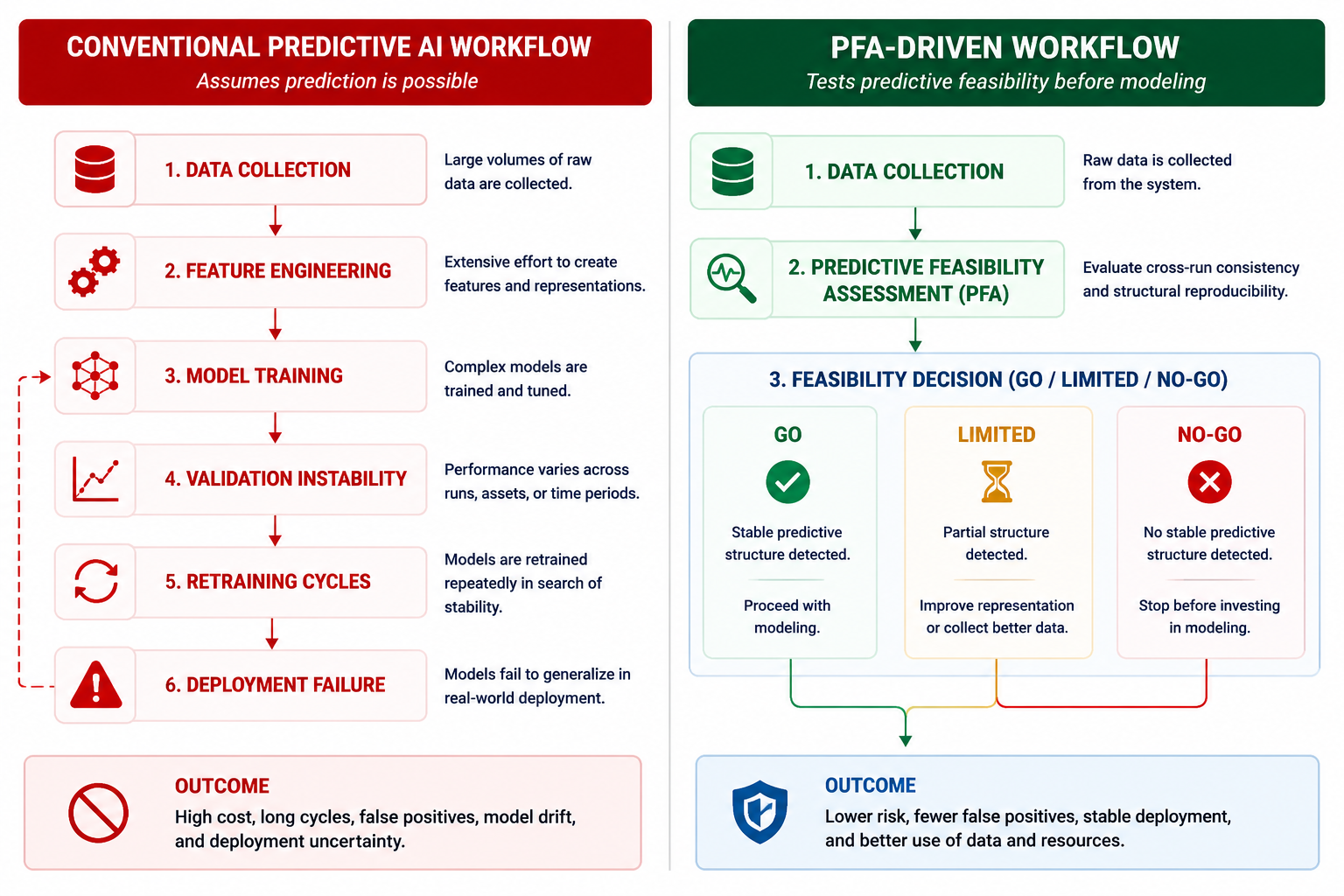
Conventional AI Workflow vs PFA-Driven Workflow
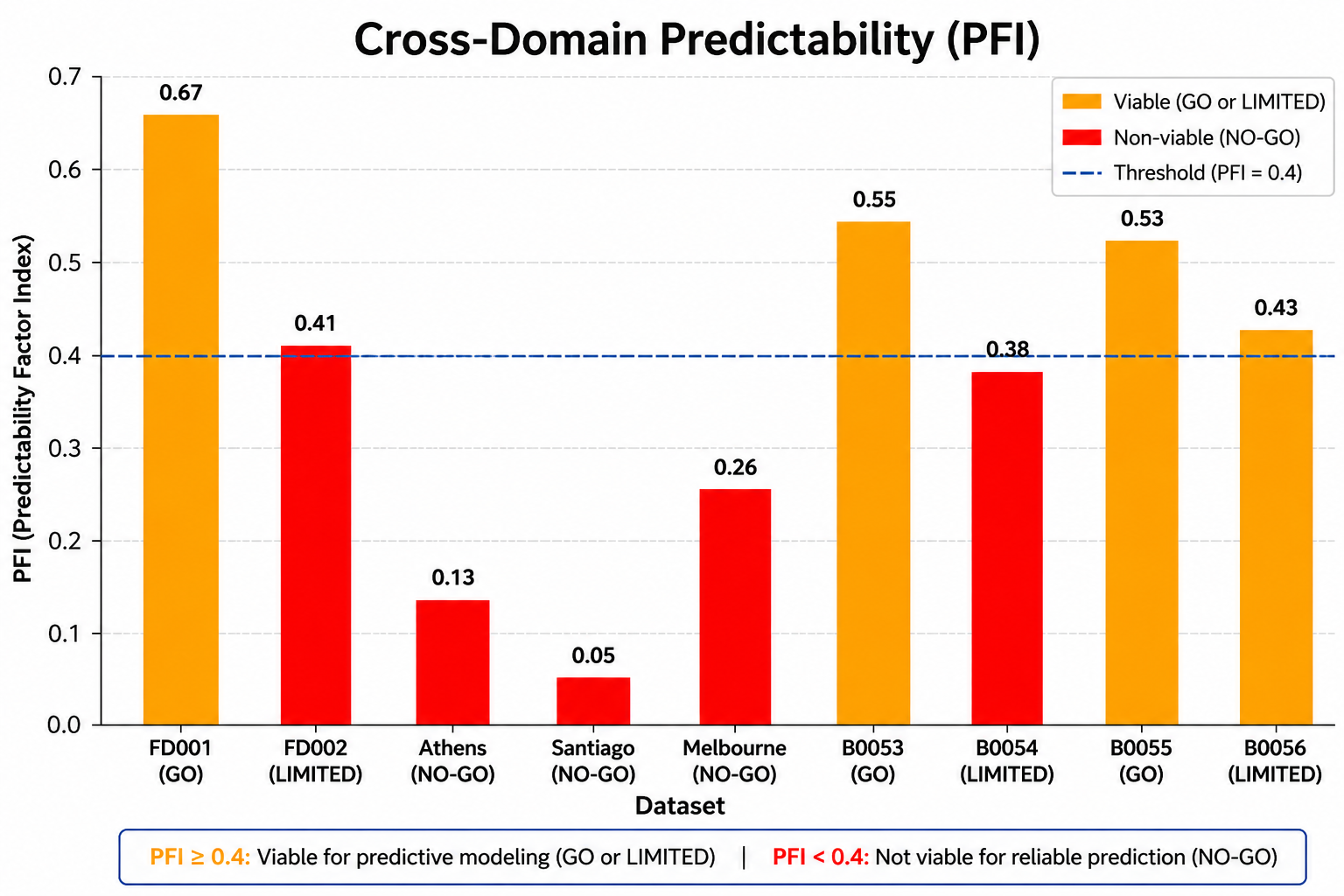
Many predictive projects assume that prediction is possible and move directly into feature engineering, model training, and deployment. PFA introduces a structural feasibility assessment before model development begins, allowing signals to be classified as GO, LIMITED, or NO-GO before substantial deployment investment is made.
Signal Feasibility
Determine whether the signal contains reproducible predictive structure.
Transfer Stability
Estimate robustness under changing operating conditions and unseen regimes.
Collapse Warning
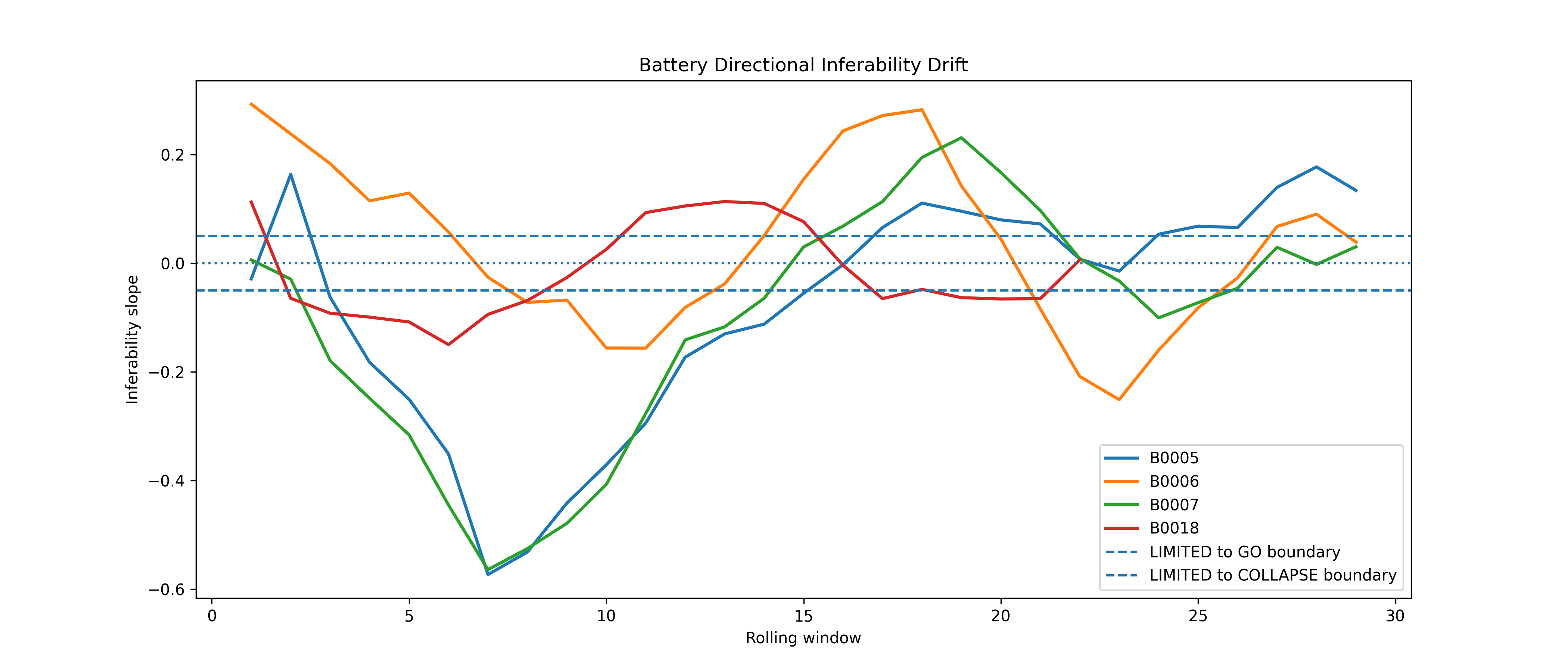
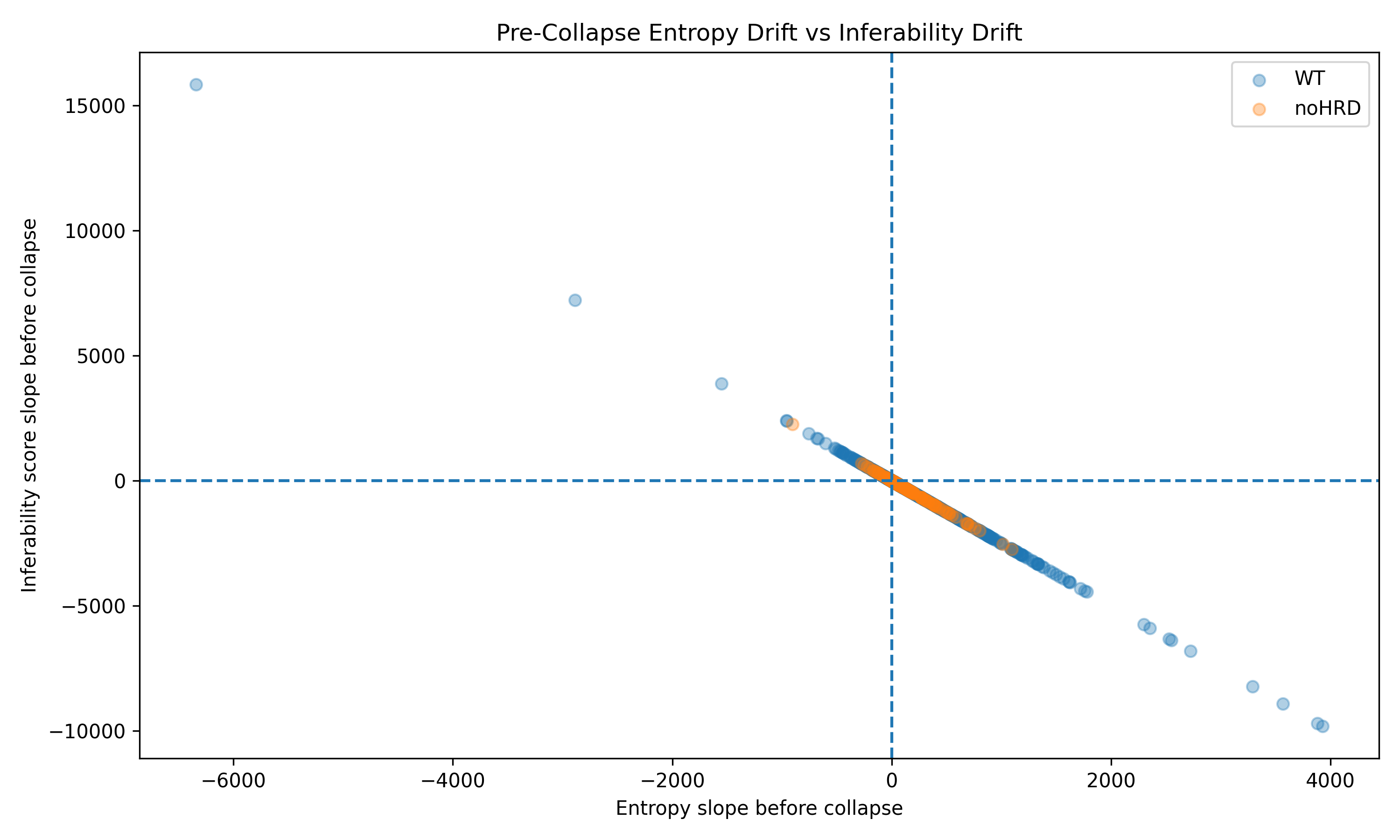
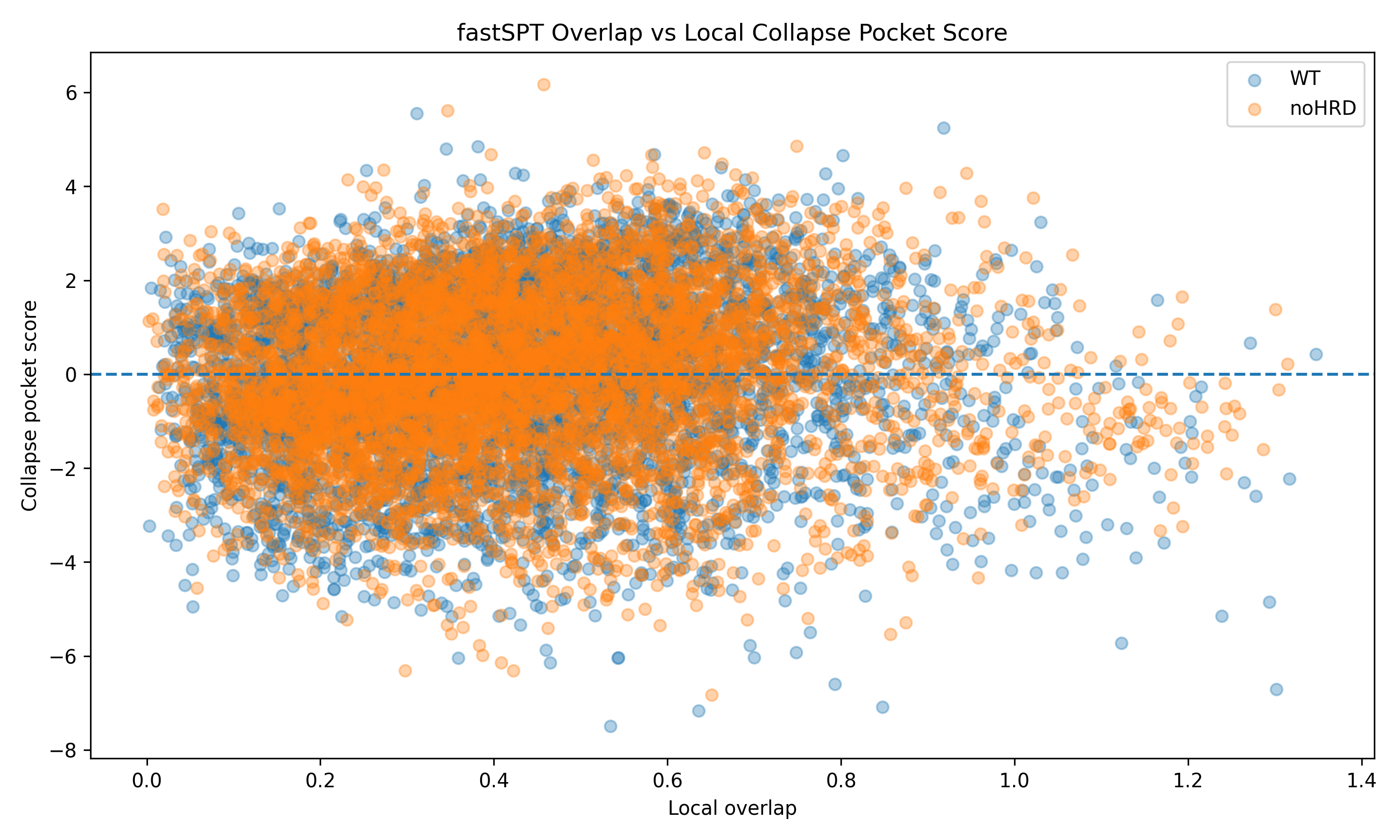
Identify pre-collapse drift, transition pockets, and instability regions.
Model Guidance
Translate feasibility results into practical next steps before model development begins.
The evidence foundation behind Predictive Feasibility Assessment
HR7 analyses documented AI systems to identify recurring structural conditions that influence deployment stability, generalization, transferability, and operational reliability. Built from a structured historical reference population of 121 independently documented historical AI systems, HR7 provides the evidence layer behind PFA.
Historical Evidence
A structured reference population of documented AI systems across multiple domains.
Structural Patterns
Identification of recurring deployment constraints, validation limitations, and transfer challenges.
Deployment Feasibility
HR7 supports PFA in determining whether current operational evidence justifies AI development.
Explore HR7 Framework →
Built as a pre-deployment decision layer for predictive AI
PFA is not a model-selection shortcut. It is a structural assessment layer designed to determine whether predictive modeling is justified before substantial engineering resources are invested.
40+ real-world validation datasets and runs evaluated View Validation Coverage →