Can instability be detected before prediction collapses?
Collapse warning evaluates whether structural instability appears before deployment performance fails. PFA looks for drift, transition pockets, entropy changes, and local collapse indicators before model failure becomes operational.
Predictive failure often begins before the model visibly fails
In unstable systems, collapse may start as a structural change in the signal rather than as an immediate model-performance drop. PFA uses collapse-warning indicators to identify when prediction becomes unsafe or unreliable.
Pre-collapse drift
Signal structure may begin drifting before accuracy visibly degrades. This can indicate that deployment stability is weakening.
Transition pockets
Local regions of instability may appear before global collapse, creating zones where prediction becomes unreliable.
Operational warning
Collapse warning turns hidden structural instability into an early deployment-risk signal.
Pre-Collapse Drift
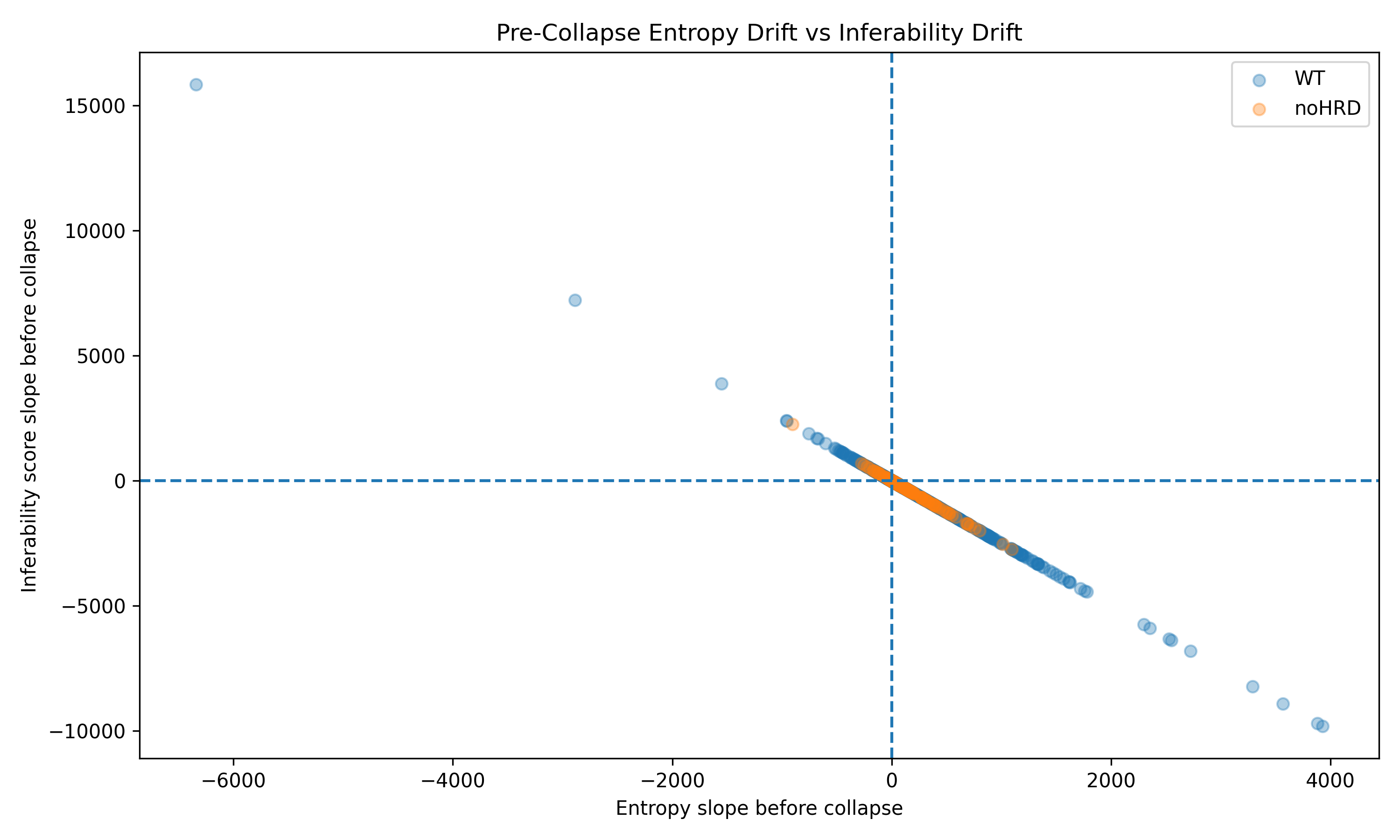
Entropy and inferability can drift before collapse becomes obvious
Collapse warning focuses on early structural movement: changes in entropy, overlap, inferability, and local instability before the deployed system visibly breaks.
Entropy drift versus inferability drift
This figure shows how structural drift can precede more obvious collapse-like behavior. It helps identify when a signal is entering a less reliable predictive regime.
Localized Collapse Pockets
Instability can emerge locally before global failure
A system does not always collapse everywhere at once. Local transition pockets can indicate regions where predictive structure is already weakening.
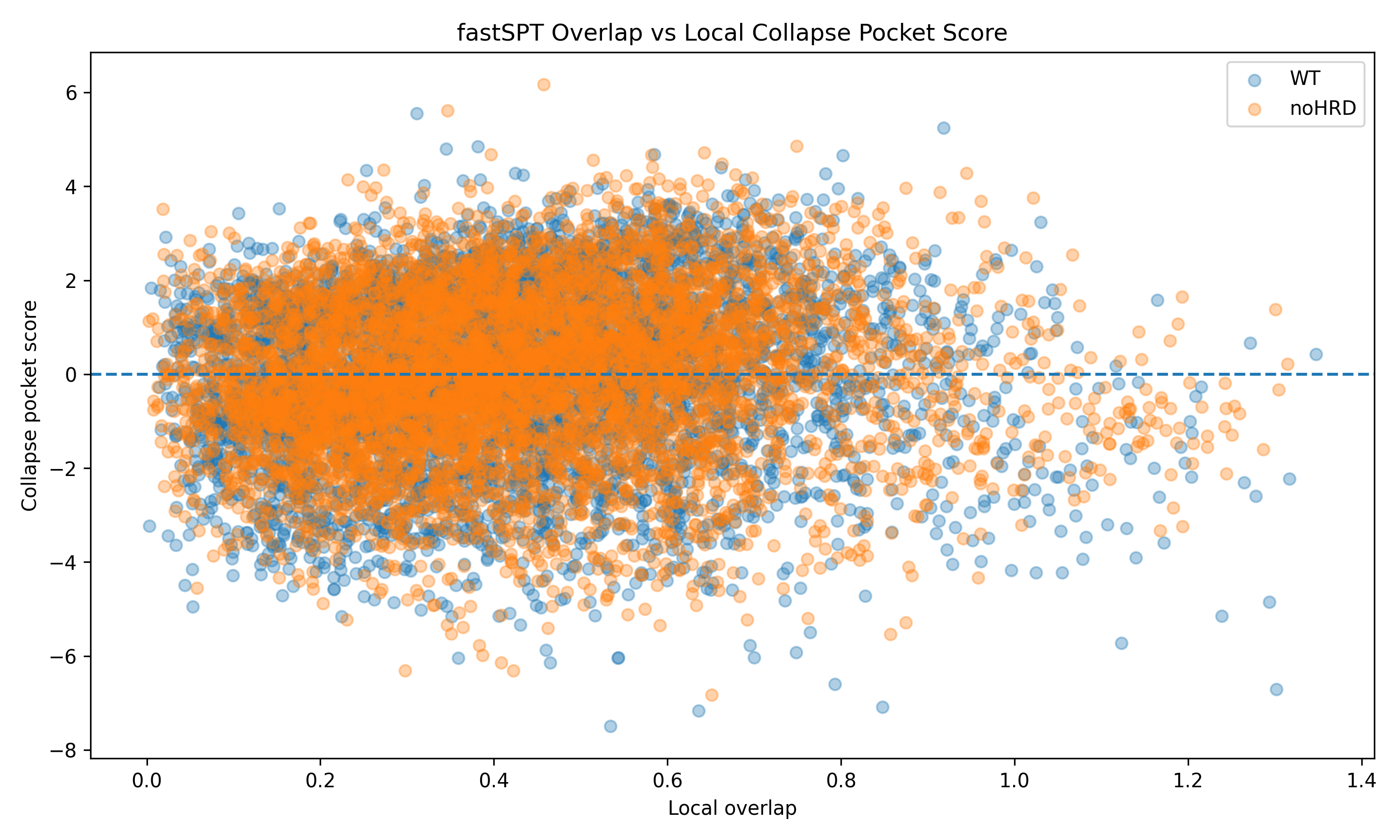
Overlap vs Local Collapse Pocket
Low or unstable overlap can indicate regions where predictive structure becomes less transferable or less reliable.
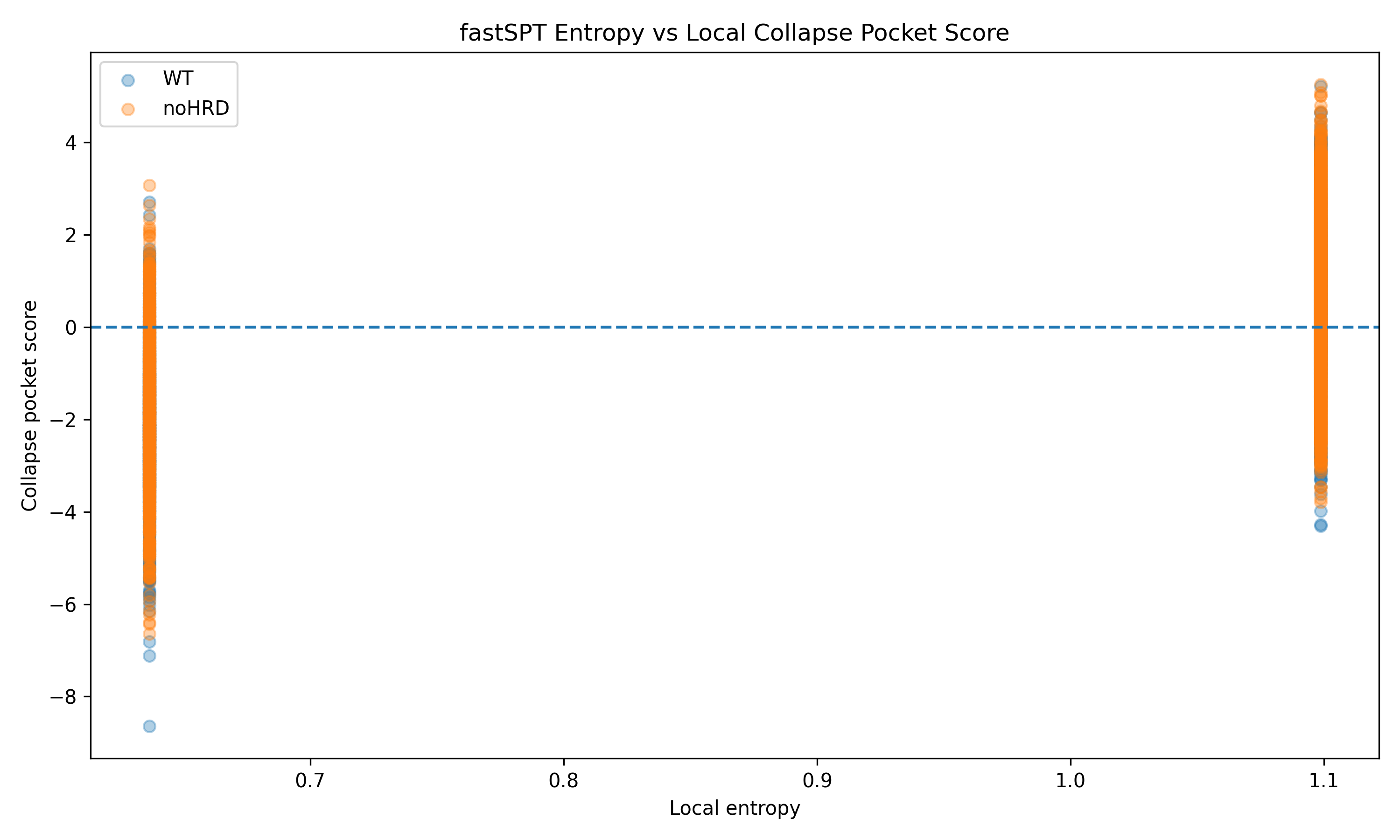
Entropy vs Local Collapse Pocket
Entropy-sensitive instability can reveal whether collapse behavior is emerging from local structural disorder.
Cross-Run Collapse Stability
Collapse warnings should be reproducible, not random
A useful collapse-warning signal should not appear as a random artifact. PFA checks whether collapse-related patterns remain stable across runs or replicates.
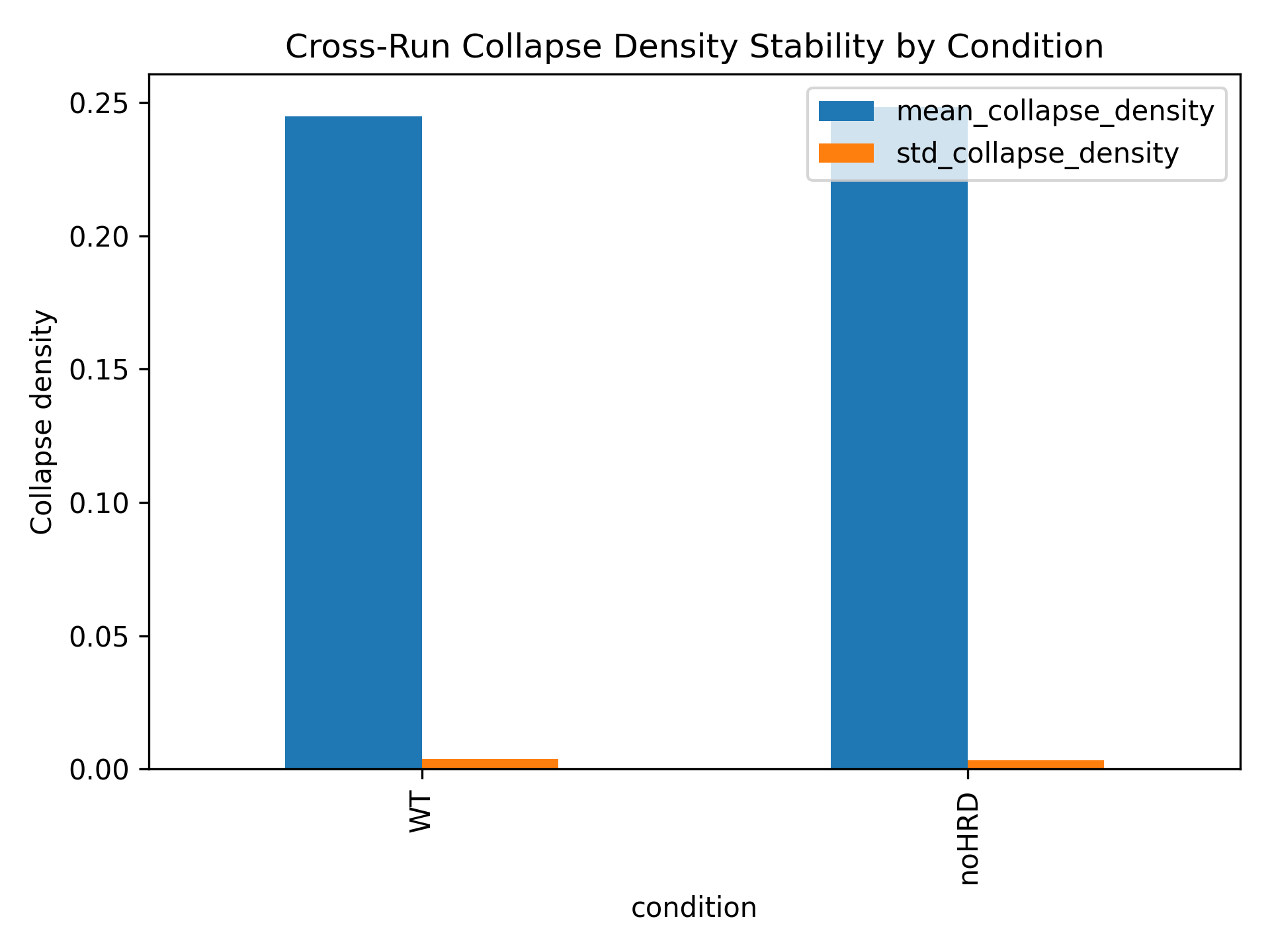
Cross-run collapse density stability
This validation layer evaluates whether collapse-related density patterns remain stable across independent runs, supporting a stronger deployment warning interpretation.
Why it matters
Collapse warning can reduce late-stage deployment failure
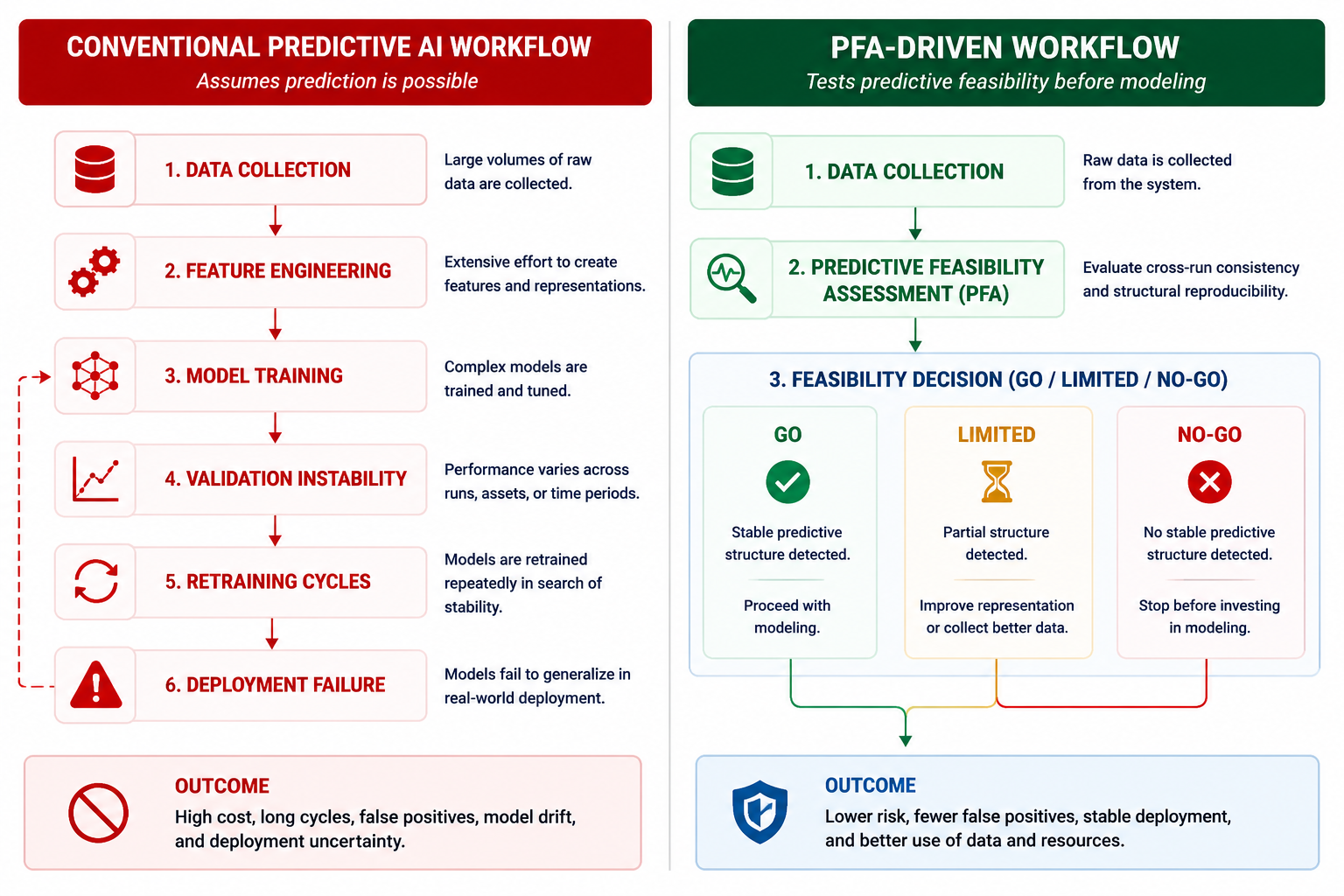
Without early instability detection, teams may only discover failure after deployment: model drift, false positives, retraining loops, or operational rejection.
From late failure to early warning
A conventional workflow often detects collapse after deployment. PFA introduces structural warning logic earlier, before large-scale modeling and operational investment.
What PFA evaluates
Collapse warning is an early instability detection layer
Whether entropy drift appears before predictive collapse