Signal feasibility evaluates whether an observable contains stable, reproducible predictive structure before model development begins. A signal can look active and still be structurally unsuitable for reliable prediction.
Prediction requires reproducible structure, not only visible activity
Many signals contain movement, variation, or degradation-like behavior. The key question is whether that structure remains consistent enough across runs, regimes, or assets to support reliable prediction.
Observable activity
A signal may contain visible changes, patterns, or fluctuations without containing stable predictive information.
Structural consistency
Prediction becomes more feasible when signal structure remains reproducible across comparable runs or conditions.
Deployment relevance
A signal should not only be predictable inside one dataset, but remain informative when deployed under new conditions.
Original Research Figures
FD001 versus FD002: stable structure versus inferability collapse
For the detailed signal-feasibility page, the original FD001 and FD002 figures are used instead of simplified homepage visuals.
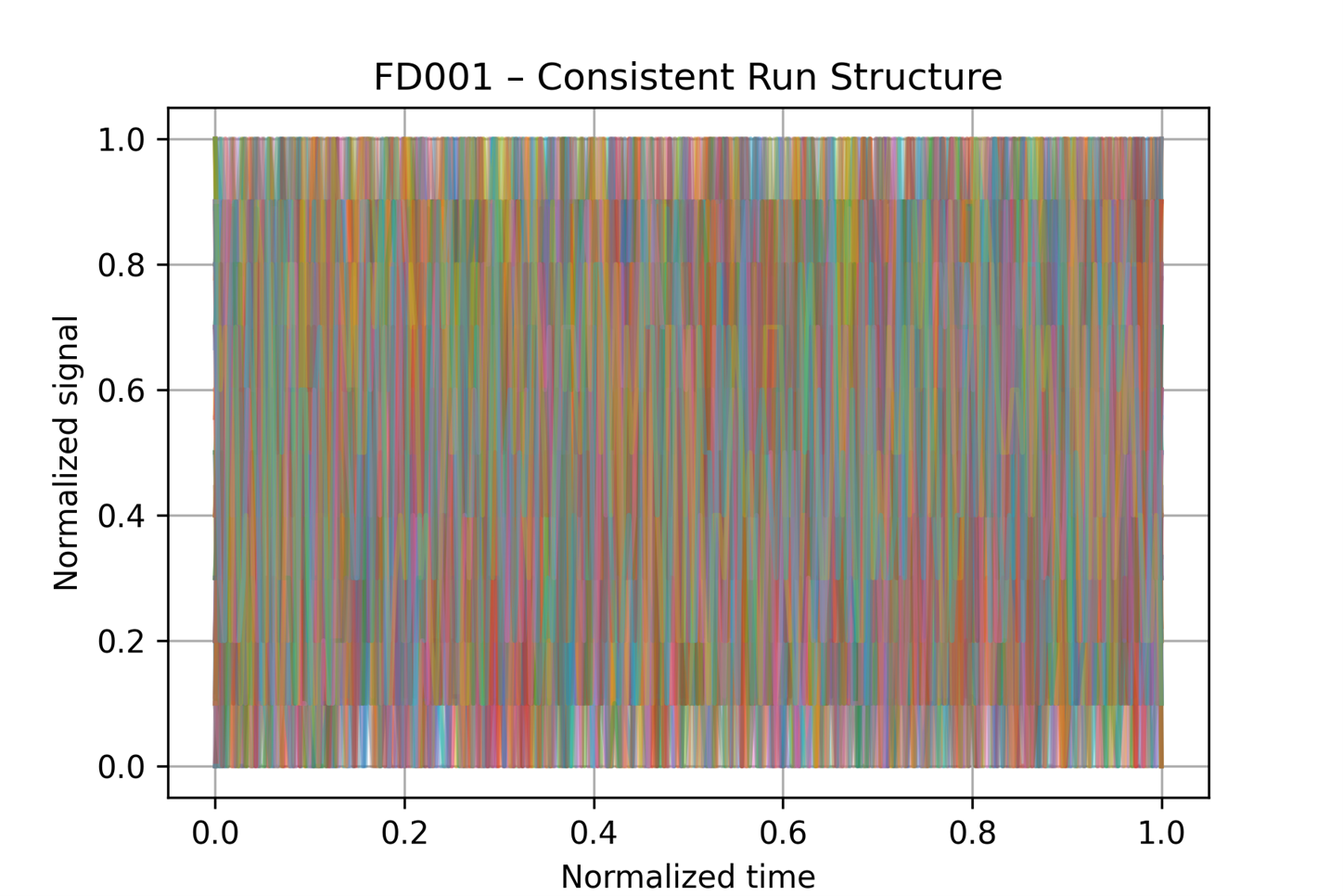
FD001 — GO-like structure
FD001 represents a more stable predictive regime. The signal structure remains sufficiently consistent to support predictive modeling and deployment-oriented interpretation.
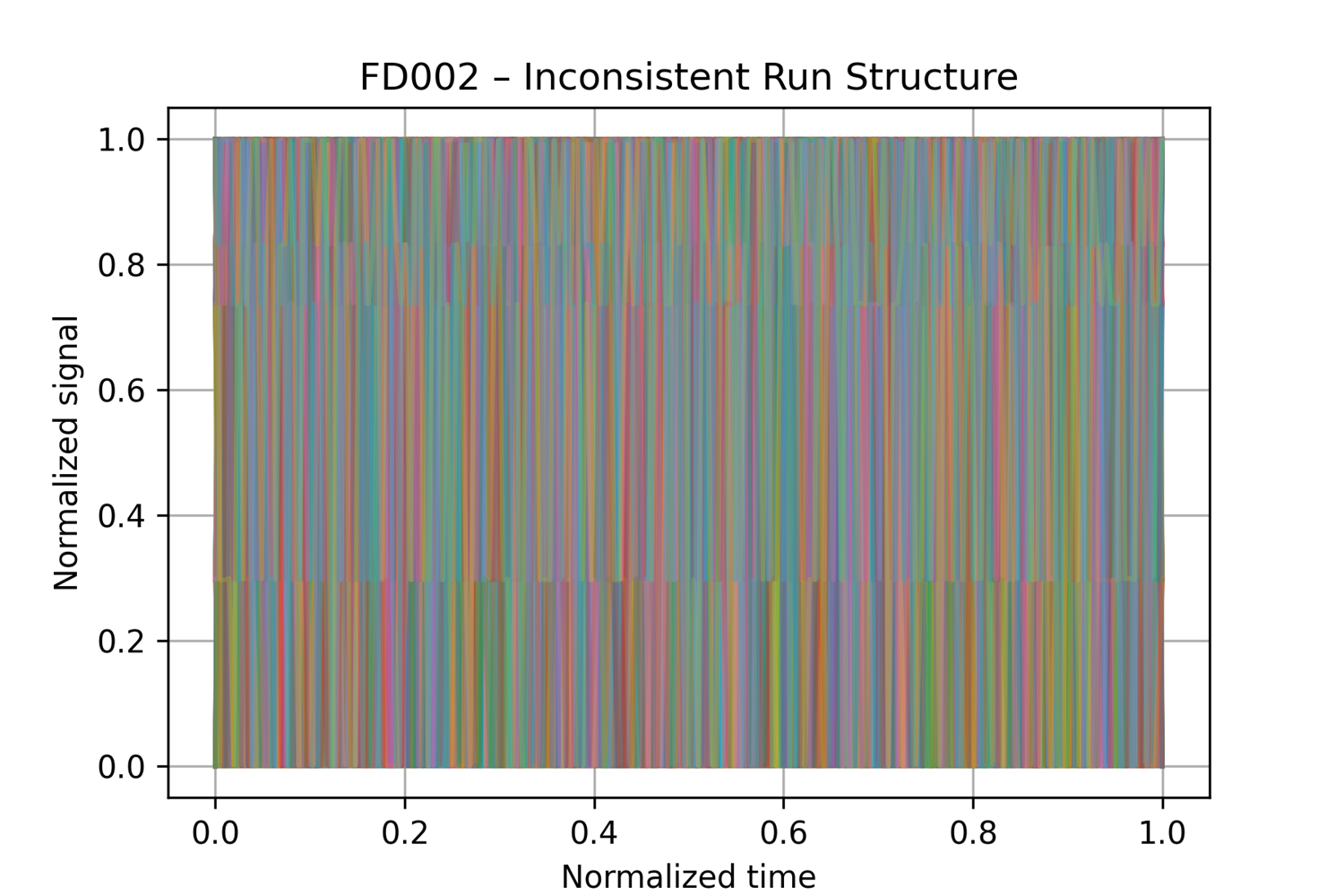
FD002 — NO-GO-like structure
FD002 contains visible signal activity, but the structure is less stable and less reproducible. This can lead to inferability collapse and unreliable deployment behavior.
Critical Distinction
Prediction stability alone does not prove predictive feasibility
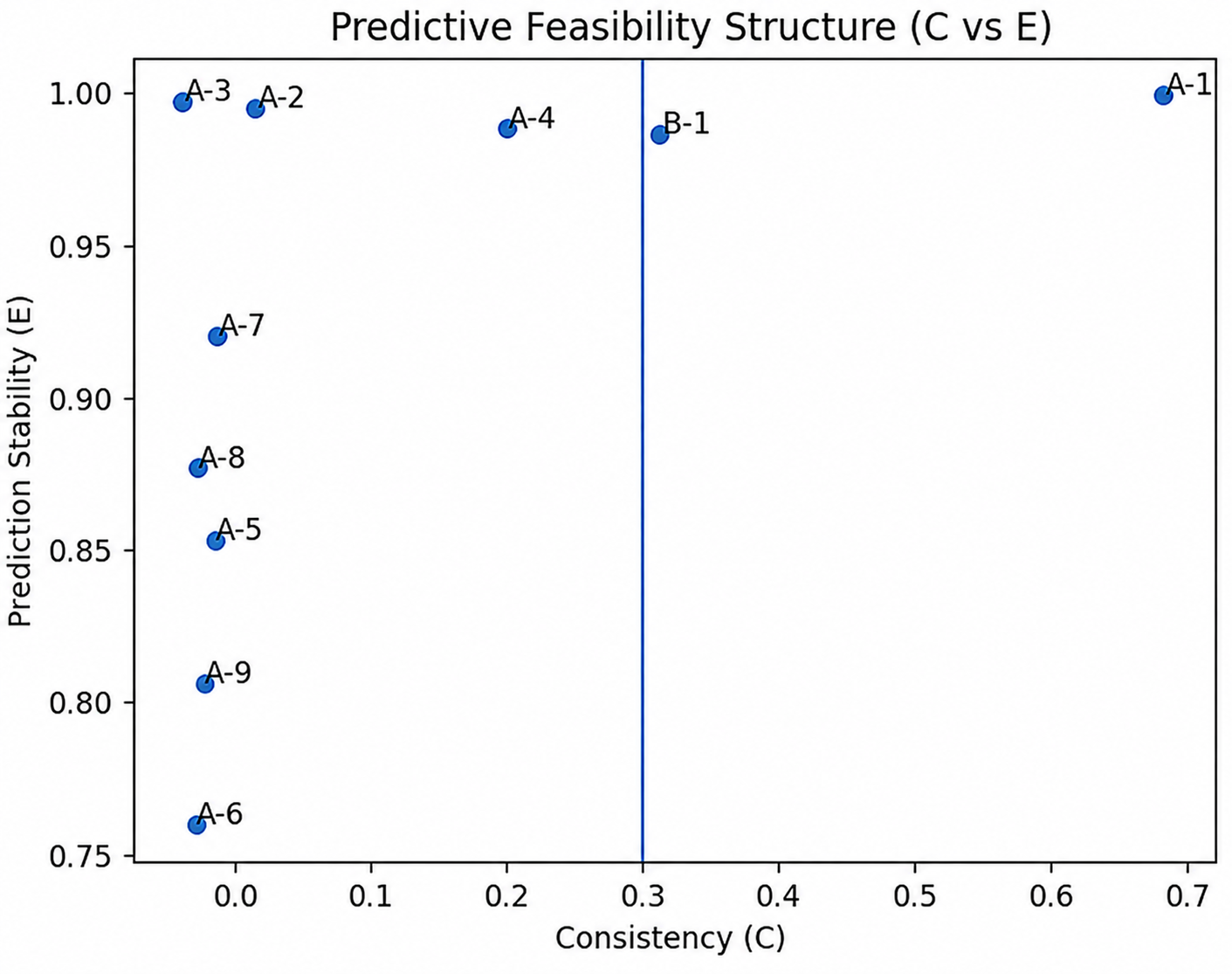
A signal can be easy to forecast locally while still being non-informative for future system behavior. PFA separates prediction stability from structural consistency.
Prediction stability versus structural consistency
This figure highlights the difference between signals that are merely predictable and signals that contain reproducible, deployment-relevant predictive structure.
Temporal Structure
Inferability can change over time
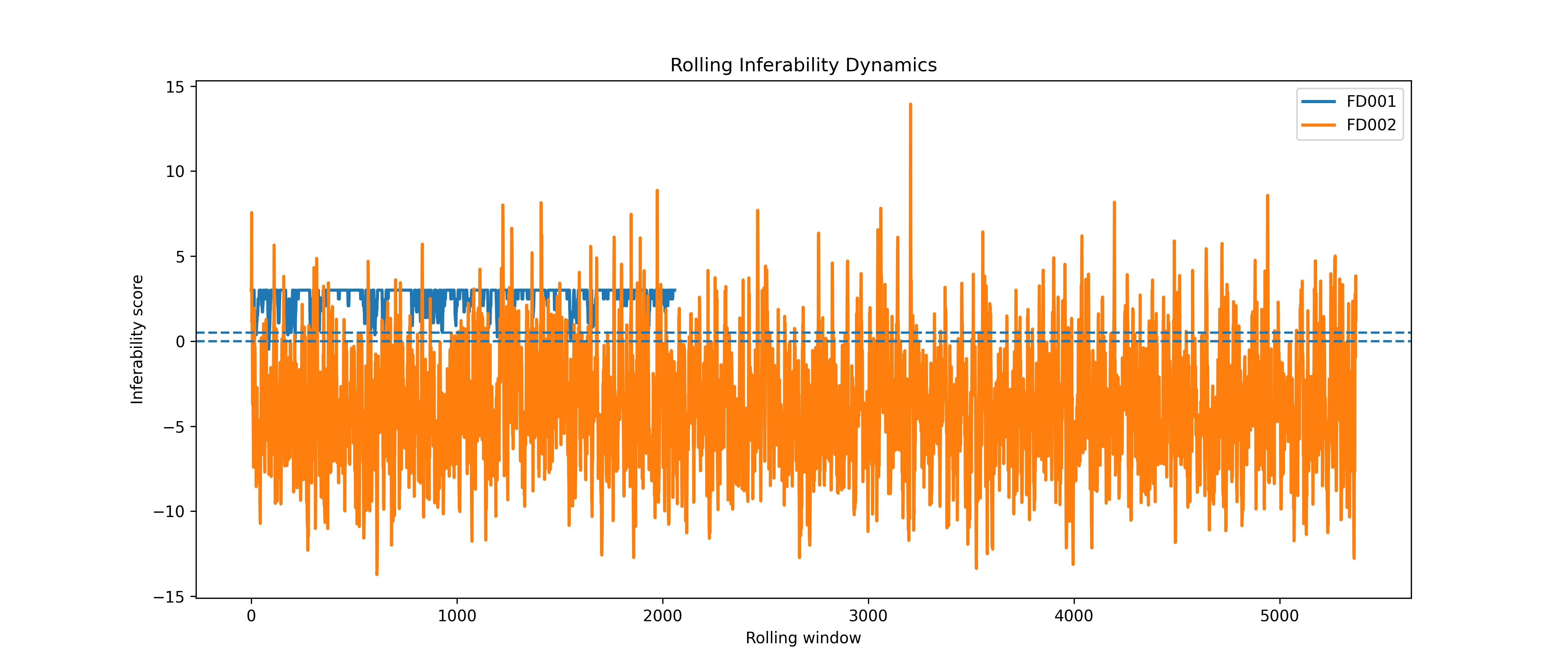
Signal feasibility is not always static. A signal may become more or less informative as degradation, regime transitions, or operating conditions evolve.
Rolling inferability comparison
Rolling inferability helps detect whether predictive structure remains stable, improves, or collapses over time. This is important for identifying when a signal becomes unsafe for direct predictive deployment.
Cross-Domain Evidence
Signal feasibility is a domain-independent decision layer
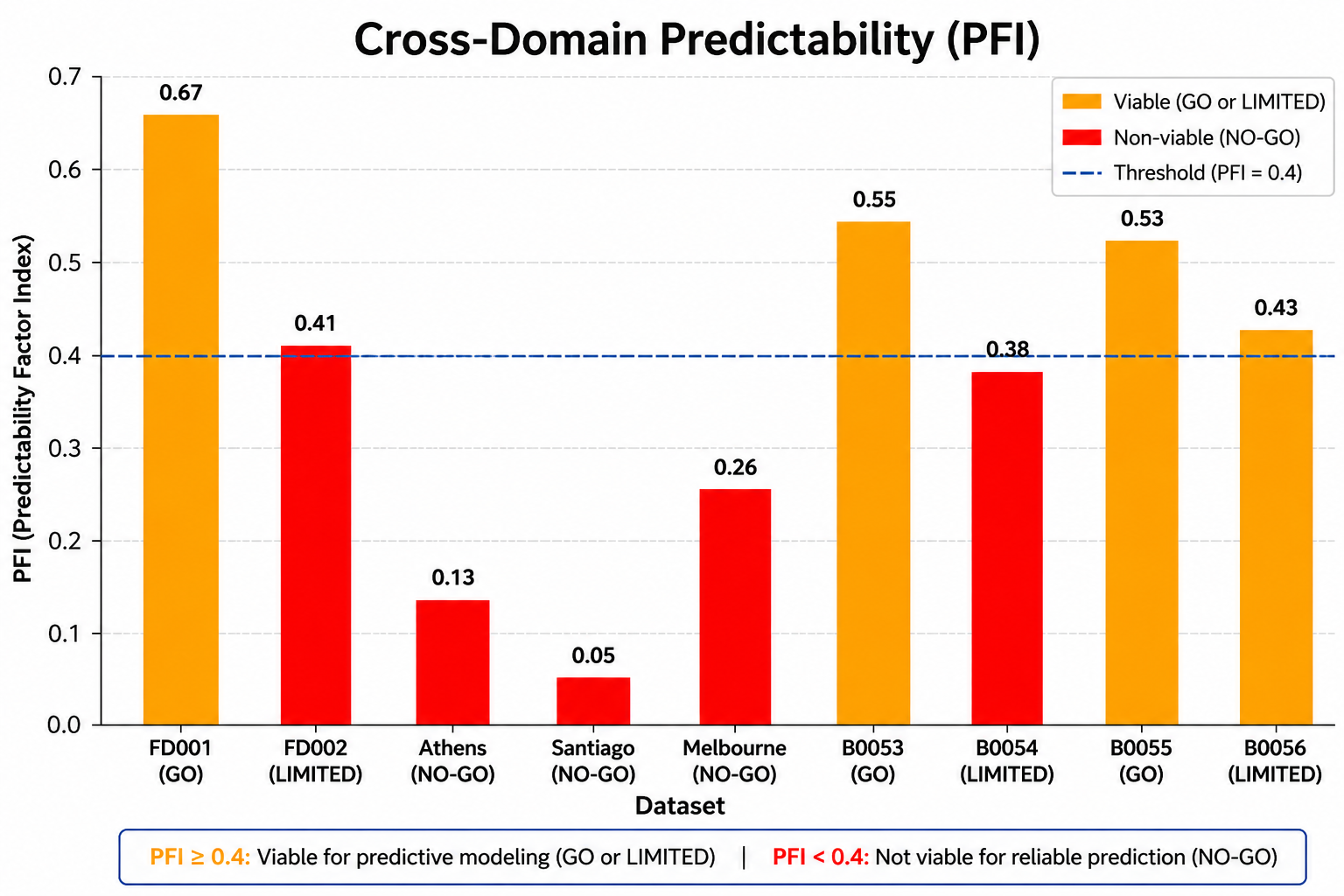
The same feasibility logic can be applied across industrial and scientific time-series domains, including turbofan degradation, vibration systems, battery degradation, and trajectory-based datasets.
Cross-domain predictive feasibility map
The PFI map summarizes where signals fall across GO, LIMITED, and NO-GO regions. This supports early decisions about whether modeling should proceed, be constrained, or be stopped.
What PFA evaluates
Signal feasibility is the first deployment gate
Whether the signal contains reproducible predictive structure
Whether prediction stability reflects useful information or only local predictability
Whether structure remains stable across runs, regimes, or assets
Whether inferability collapses before deployment
Whether representation changes could recover partial predictive structure
Whether the signal should be classified as GO, LIMITED, or NO-GO
Need to evaluate signal feasibility?
A focused PFA scan can determine whether your observable supports reliable predictive modeling before major model-development investment begins.