REAL-WORLD VALIDATION vibration systems • battery degradation • fastSPT diffusion • transfer stress • cross-run forecasting
Predictive Feasibility Assessment

Structural AI deployment risk can be detected before large-scale deployment begins.

PFA evaluates whether predictive AI systems are structurally viable before model development. It measures signal reproducibility, deployment risk, transfer stability, false-positive sensitivity, and model-family robustness across real-world operational conditions.

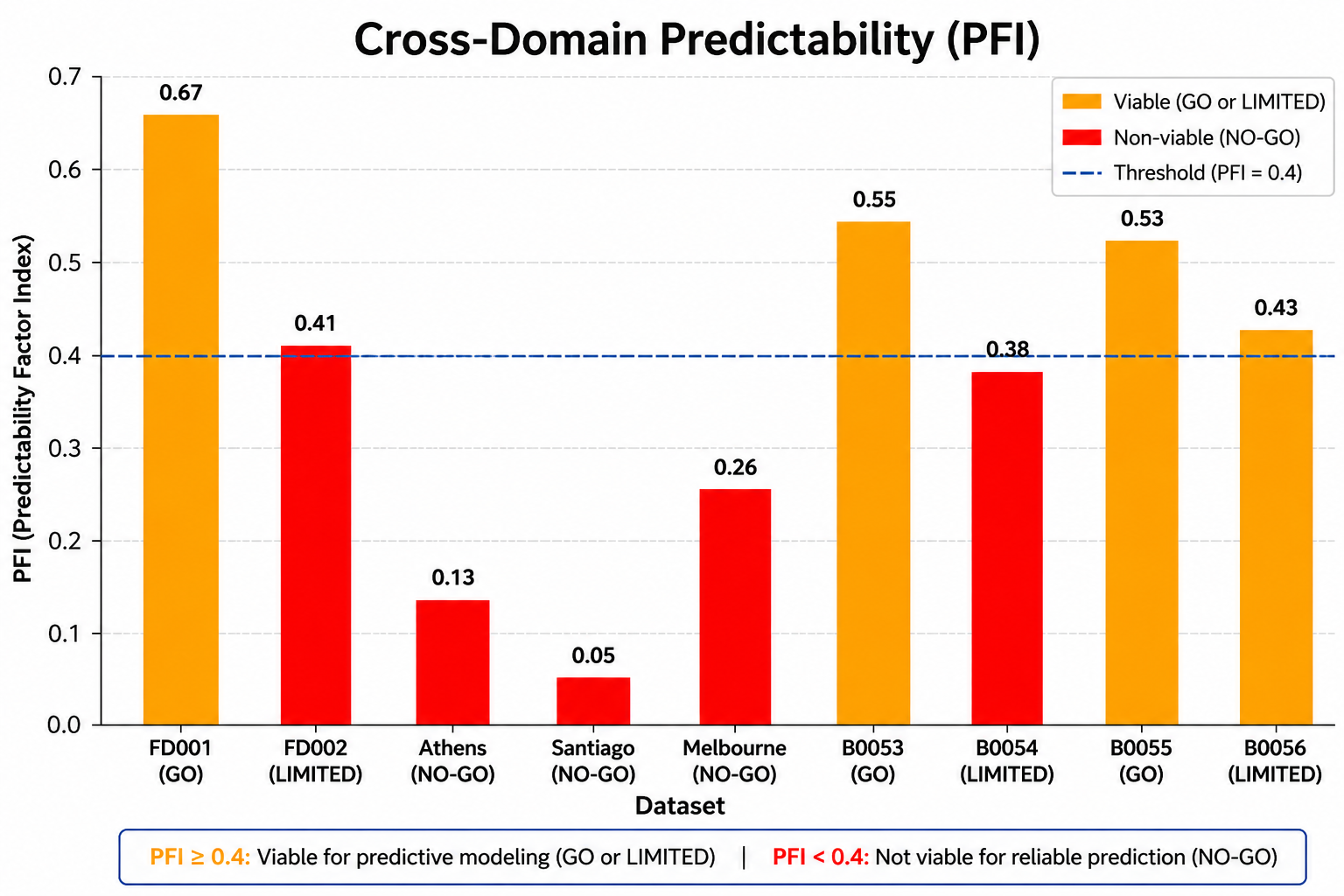
CROSS-DOMAIN VALIDATION — PFI MAP
Cross Domain Predictive Feasibility Map
PREDICTIVE FEASIBILITY SCORE
0.82
GO

High confidence of stable deployment performance.

Signal Feasibility

Determine whether the signal contains reproducible predictive structure.

Transfer Stability

Estimate robustness under changing operating conditions and unseen regimes.

Collapse Warning

Identify pre-collapse drift, transition pockets, and instability regions.

Model Guidance

Translate feasibility results into practical next steps before model development begins.

Framework Authority

Built as a pre-deployment decision layer for predictive AI

PFA is not a model-selection shortcut. It is a structural assessment layer designed to determine whether predictive modeling is justified before substantial engineering resources are invested.

40+ real-world validation datasets and runs evaluated
100k+trajectory windows and signal segments analyzed
8validation layers including forecasting and permutation tests
5industrial and scientific signal classes tested
30+forecasting, threshold, and robustness tests executed
Validation Layer

Real-world structural validation before modeling

PFA evaluates whether observable structure remains reproducible across runs, domains, operating regimes, and model families. The goal is not only to detect failure after it happens, but to identify whether stable prediction is structurally supported before deployment investment begins.

GO vs NO-GO Example

Stable predictive structure versus inferability collapse

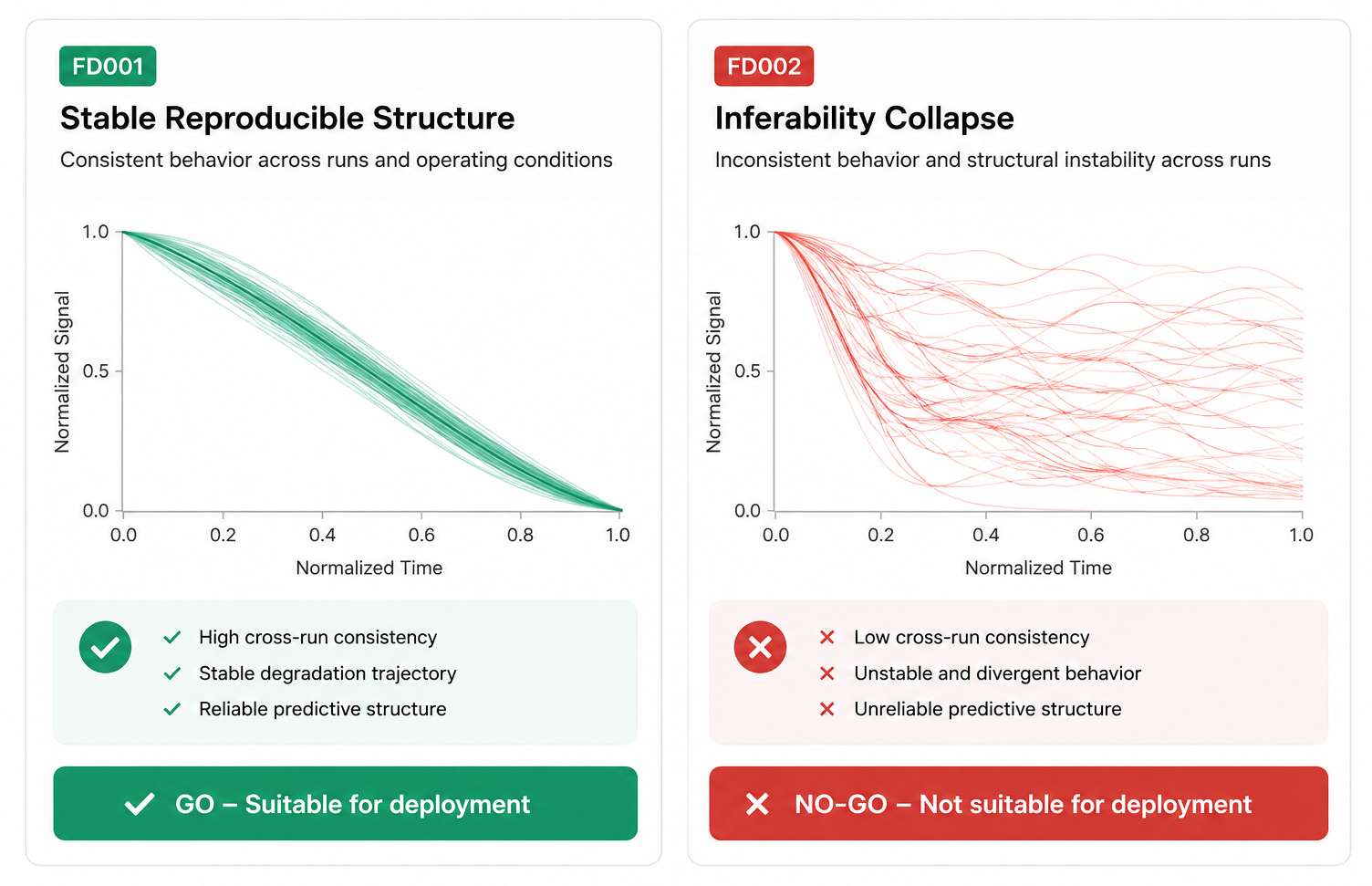
The clearest separation inside the framework emerges when comparing systems that preserve stable reproducible structure across runs against systems that collapse under operational variability. FD001 represents a GO-like regime with consistent predictive structure, while FD002 represents a NO-GO-like regime where signal activity remains visible but predictive structure becomes unreliable.

FD001 versus FD002 stable structure and inferability collapse

FD001 vs FD002 — From Stable Deployment Structure to Predictive Collapse

This simplified homepage figure summarizes the same validation logic as the technical FD001 and FD002 plots: stable cross-run consistency supports deployment feasibility, while inconsistent run structure indicates inferability collapse and elevated deployment risk.


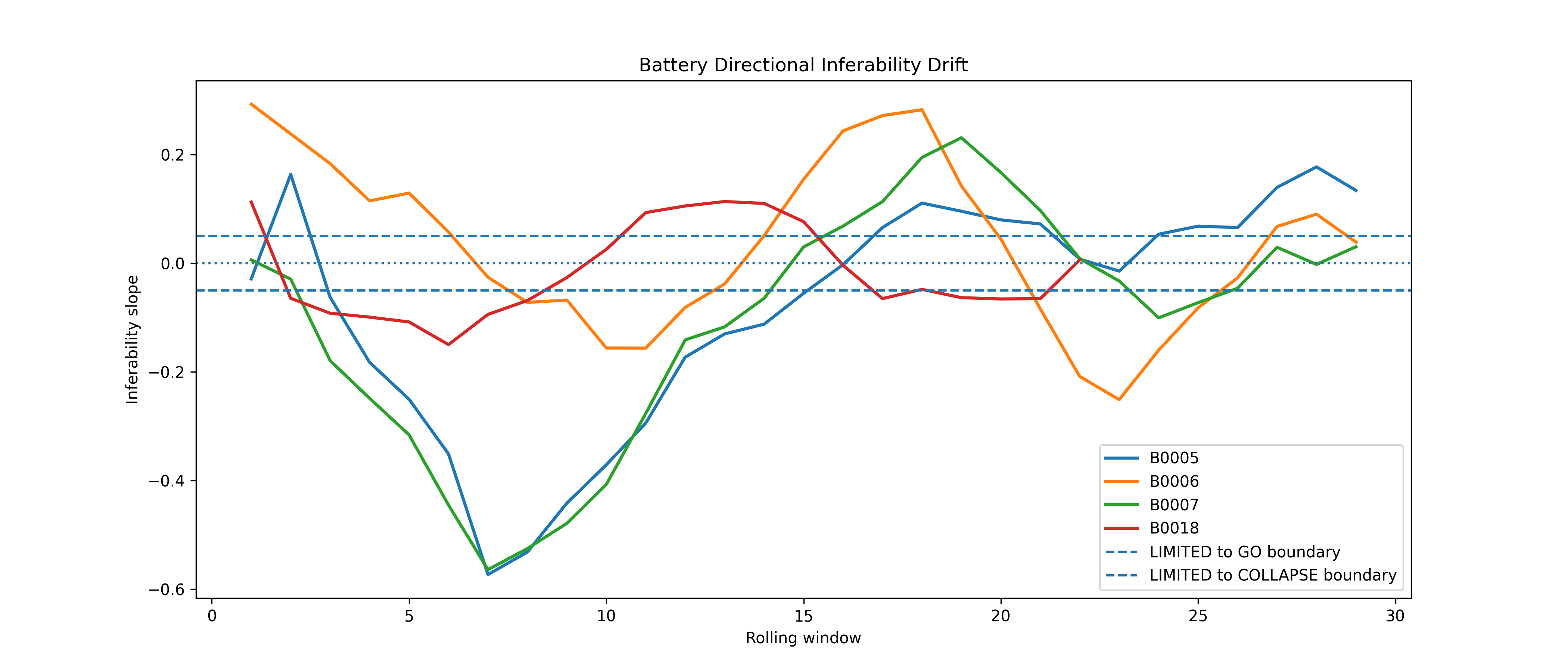
Battery directional inferability drift

Directional Inferability Drift

Tracks whether inferability moves toward recovery, stability, or collapse over longitudinal degradation trajectories.

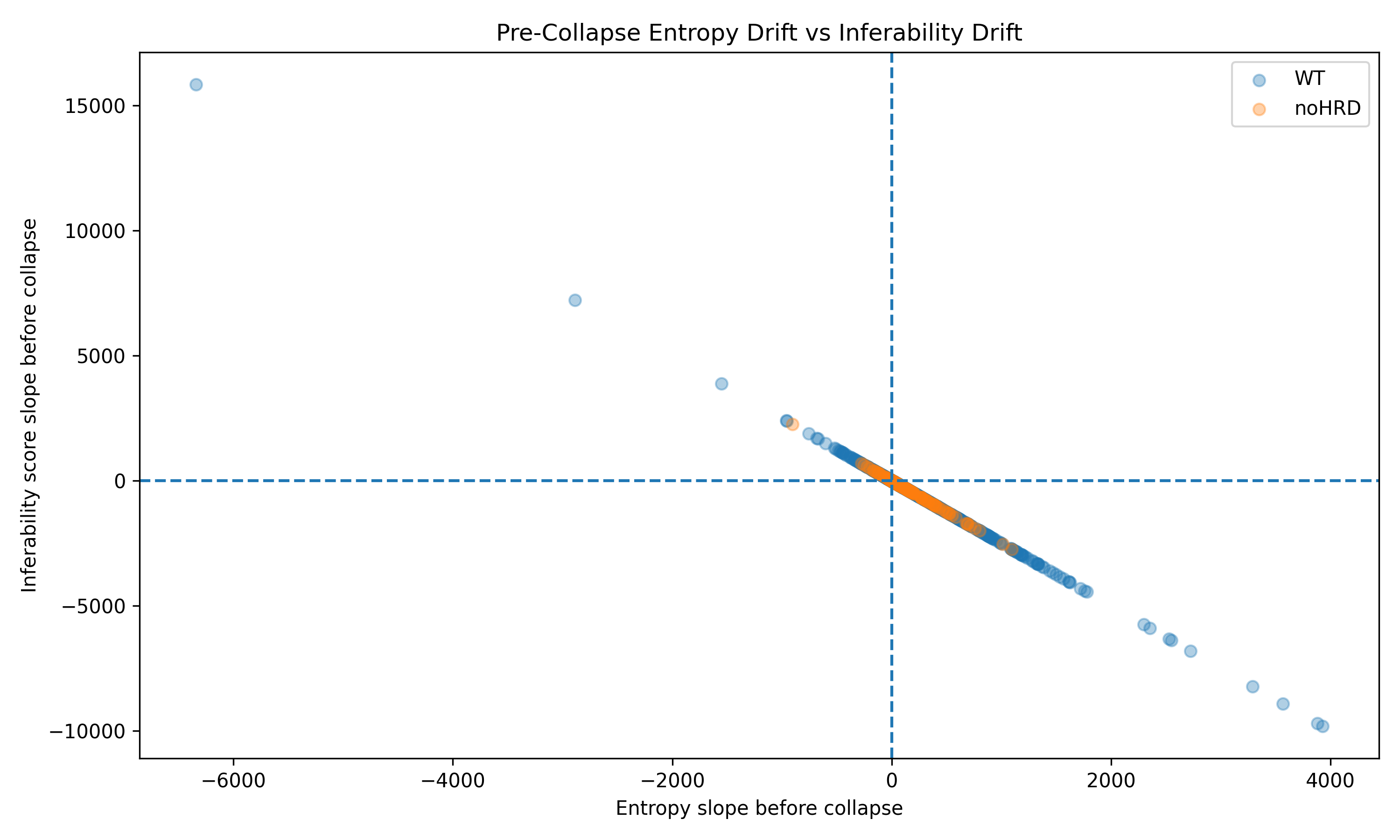
Entropy drift versus inferability drift

Pre-collapse Drift

Shows how entropy drift and inferability loss can emerge before collapse-like behavior becomes visible.


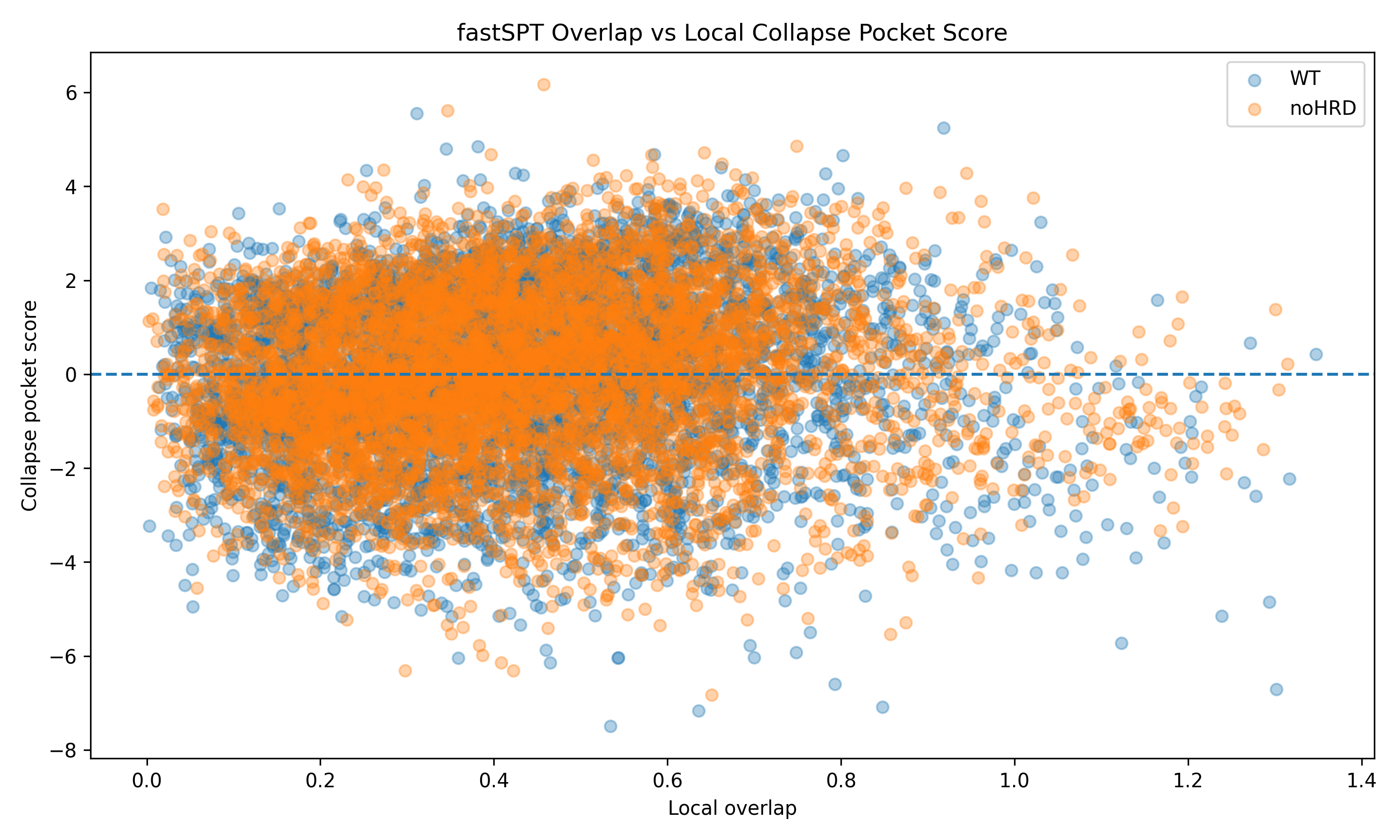
Overlap versus local collapse pocket score

Localized Collapse Pockets

This figure is shown wider because local collapse structure is one of the clearest indicators that instability is not purely random. It highlights how overlap and local ambiguity can create transition regions before broader failure becomes visible.

Workflow Comparison

Why predictive AI projects often fail after deployment

Many predictive projects fail after deployment because predictive feasibility is never evaluated before model development begins. PFA adds a structural decision layer before large-scale modeling, retraining, and deployment investment.

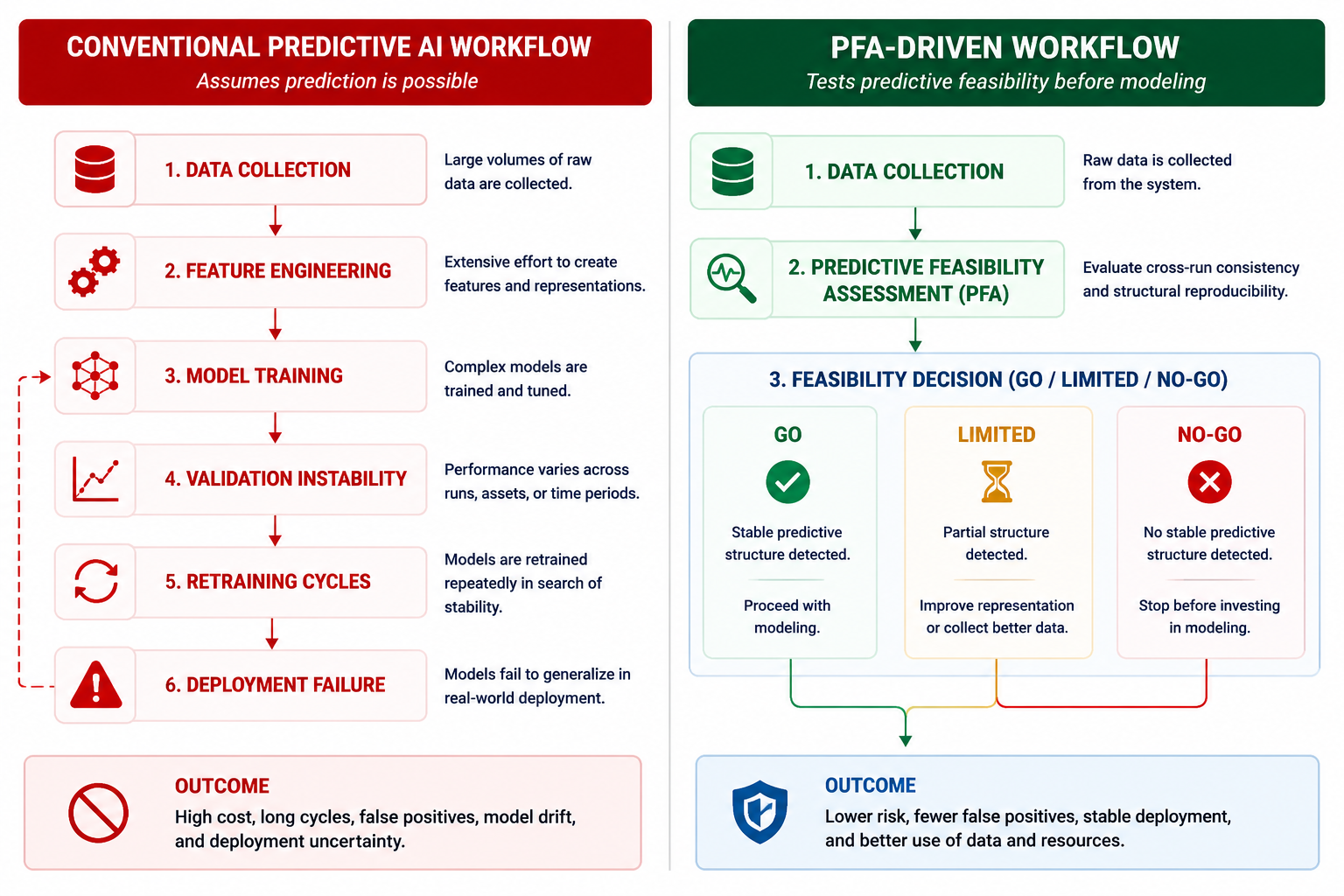
Conventional AI Workflow versus PFA Workflow Comparison

Conventional AI Workflow vs PFA-Driven Workflow

Many predictive projects assume that prediction is possible and move directly into feature engineering, model training, and deployment. PFA introduces a structural feasibility assessment before model development begins, allowing signals to be classified as GO, LIMITED, or NO-GO before substantial deployment investment is made.

Deployment Stability

Predictive AI often fails after deployment — not during training

What PFA evaluates

Instead of asking only which model performs best on a validation split, PFA asks whether the signal can support stable prediction under real operational changes. This includes cross-run reproducibility, transfer degradation, false-positive risk, threshold sensitivity, and model-family mismatch.

  • Cross-run reproducibility
  • Transfer degradation under unseen conditions
  • False-positive and alarm-fatigue risk
  • Threshold sensitivity and warning stability
  • Model-family mismatch before deployment
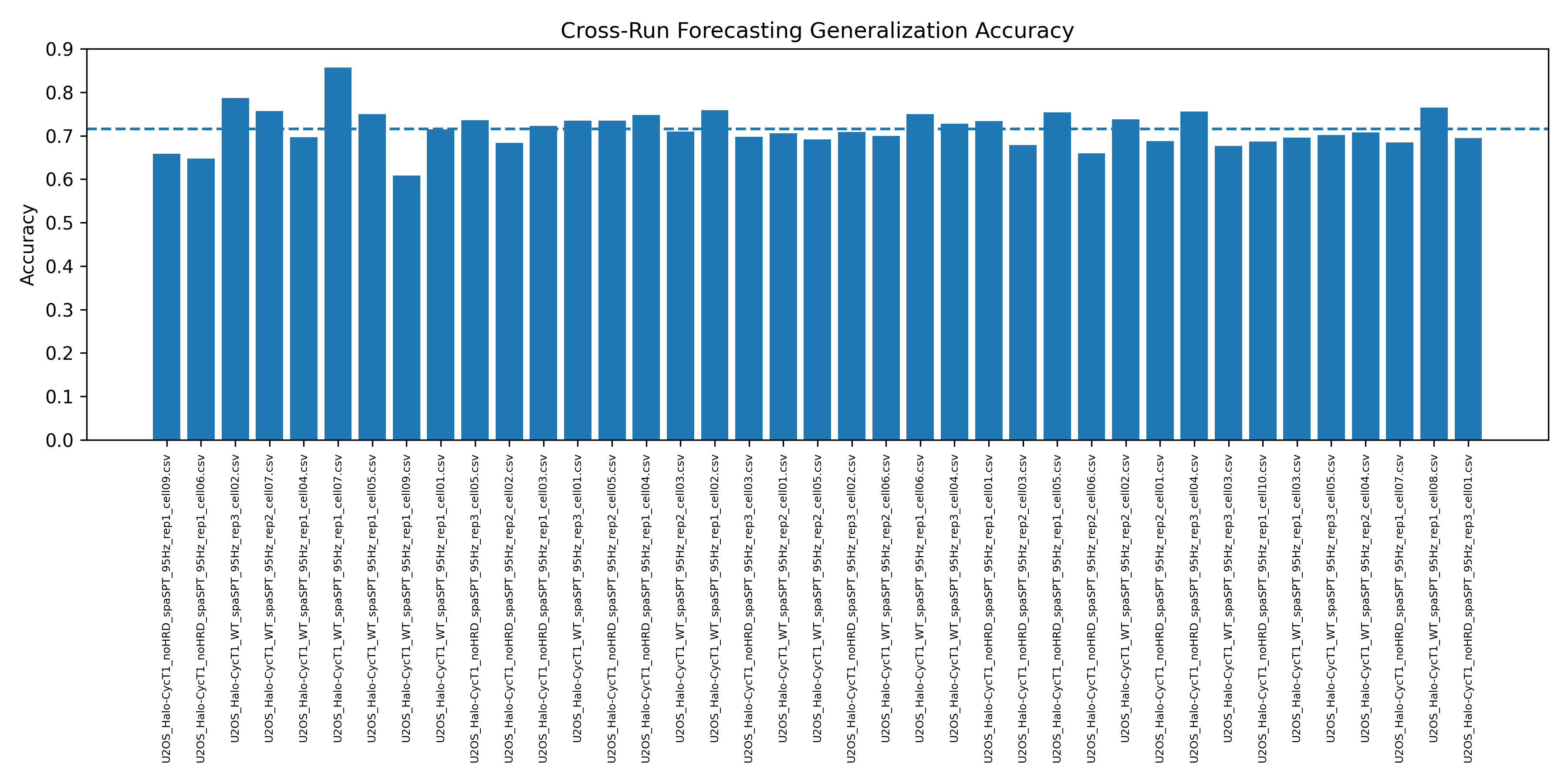
Cross-run forecasting generalization accuracy

Cross-run Forecasting Generalization Accuracy

This figure is shown full-width because it is one of the key deployment-readiness indicators: it shows whether transition-related dynamics remain partially reproducible across unseen runs.

Advanced Validation

Signal structure can indicate expected model instability

The advanced validation layer connects inferability, entropy, and overlap to expected model error and model-family sensitivity. This turns feasibility assessment into a practical pre-model decision layer.

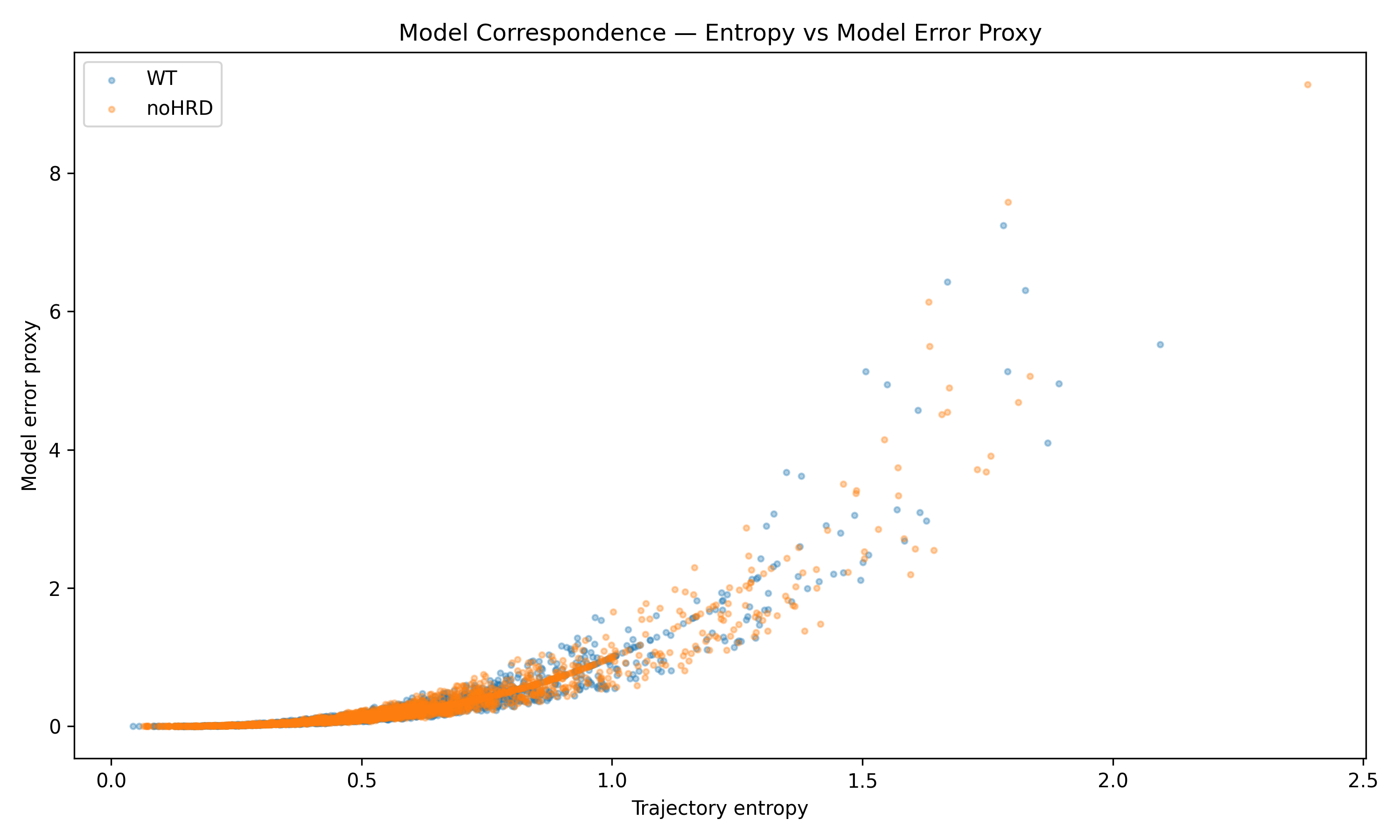
Entropy versus model error

Entropy vs Model Error

Higher structural entropy is associated with increased expected model instability.

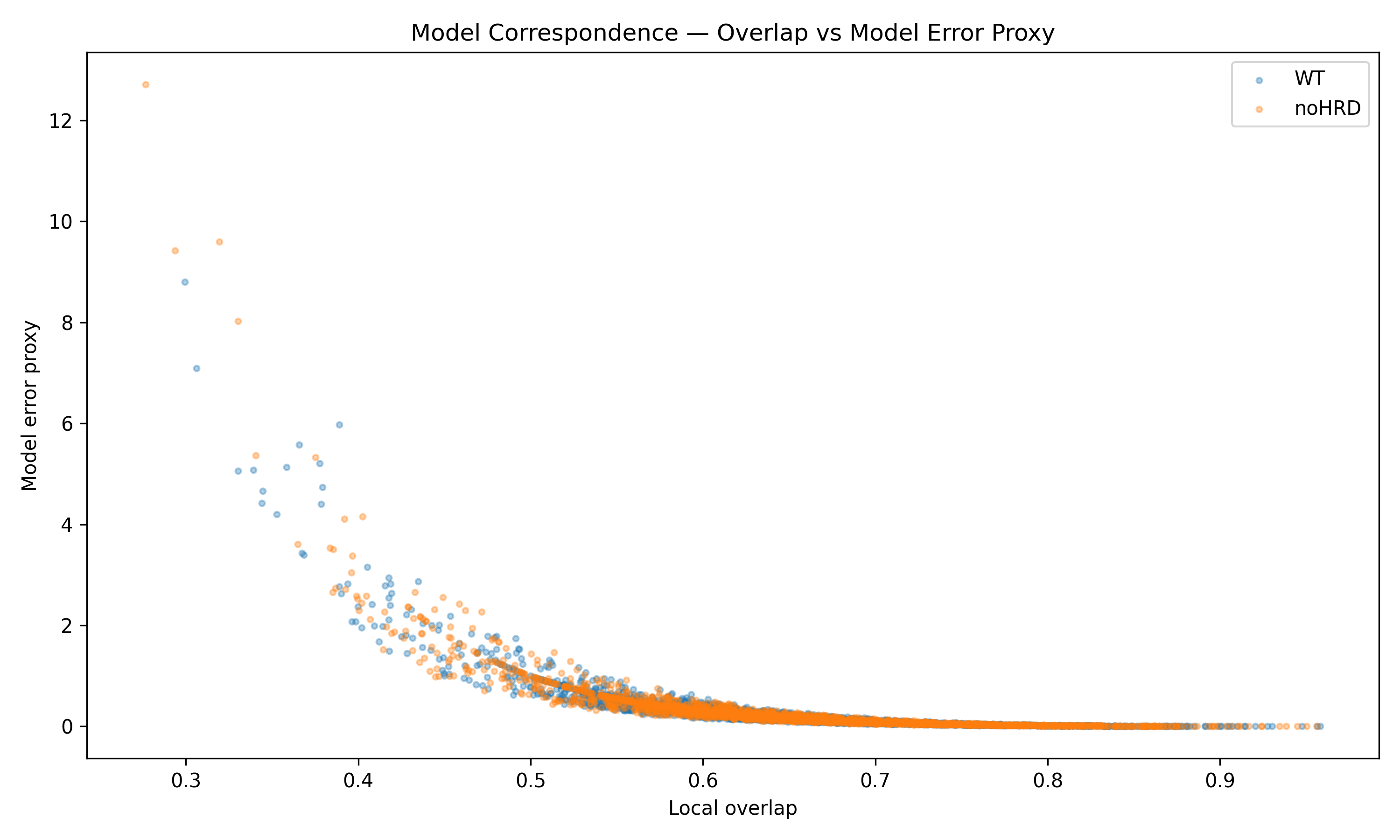
Overlap versus model error

Overlap vs Model Error

Overlap structure acts as an indicator of local stability and reduced model error.


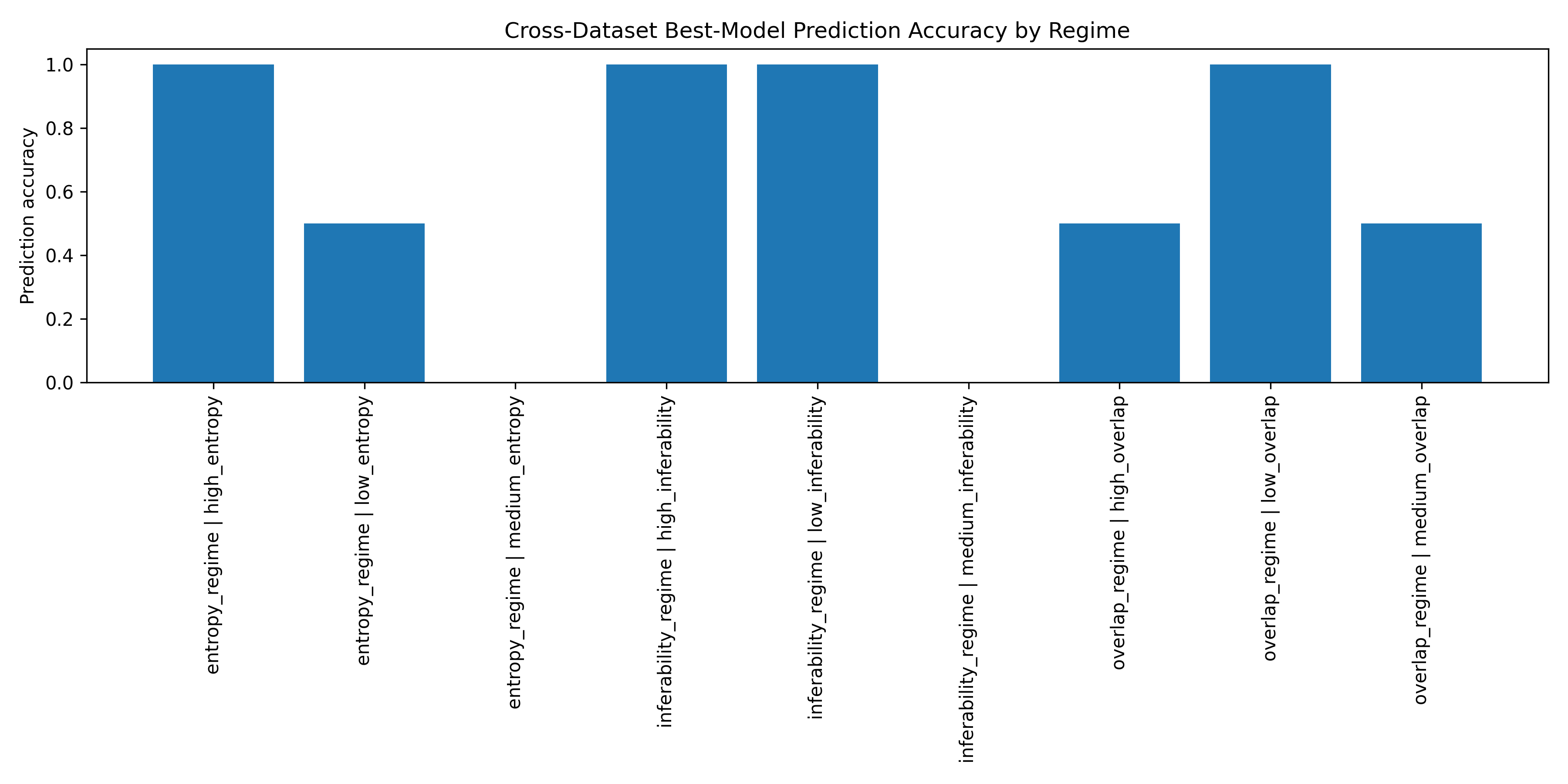
Model ranking by regime

Model Ranking by Regime

Different structural regimes can favor different model families before full deployment begins. This extends PFA from feasibility screening toward model-family risk guidance.

Feasibility Scan

What a PFA assessment provides

01

GO / LIMITED / NO-GO

Clear feasibility classification per signal, regime, representation, or operational condition.

02

Deployment Risk

Interpretation of whether the signal is likely to generalize or collapse under real deployment.

03

Recovery Guidance

Identification of whether predictive structure may be recoverable through representation, filtering, or regime isolation.

Assessment Process

How Does a Predictive Feasibility Assessment Work?

Understand what happens after you submit a request, what is evaluated, what outcomes are possible, and what deliverables you receive.

From Initial Review to Final Assessment

The Predictive Feasibility Assessment process evaluates signal reproducibility, recoverable structure, deployment risk, and predictive viability before substantial engineering effort is invested.


View Assessment Process →
Evidence

Forecasting, permutation validation, and false-positive reduction

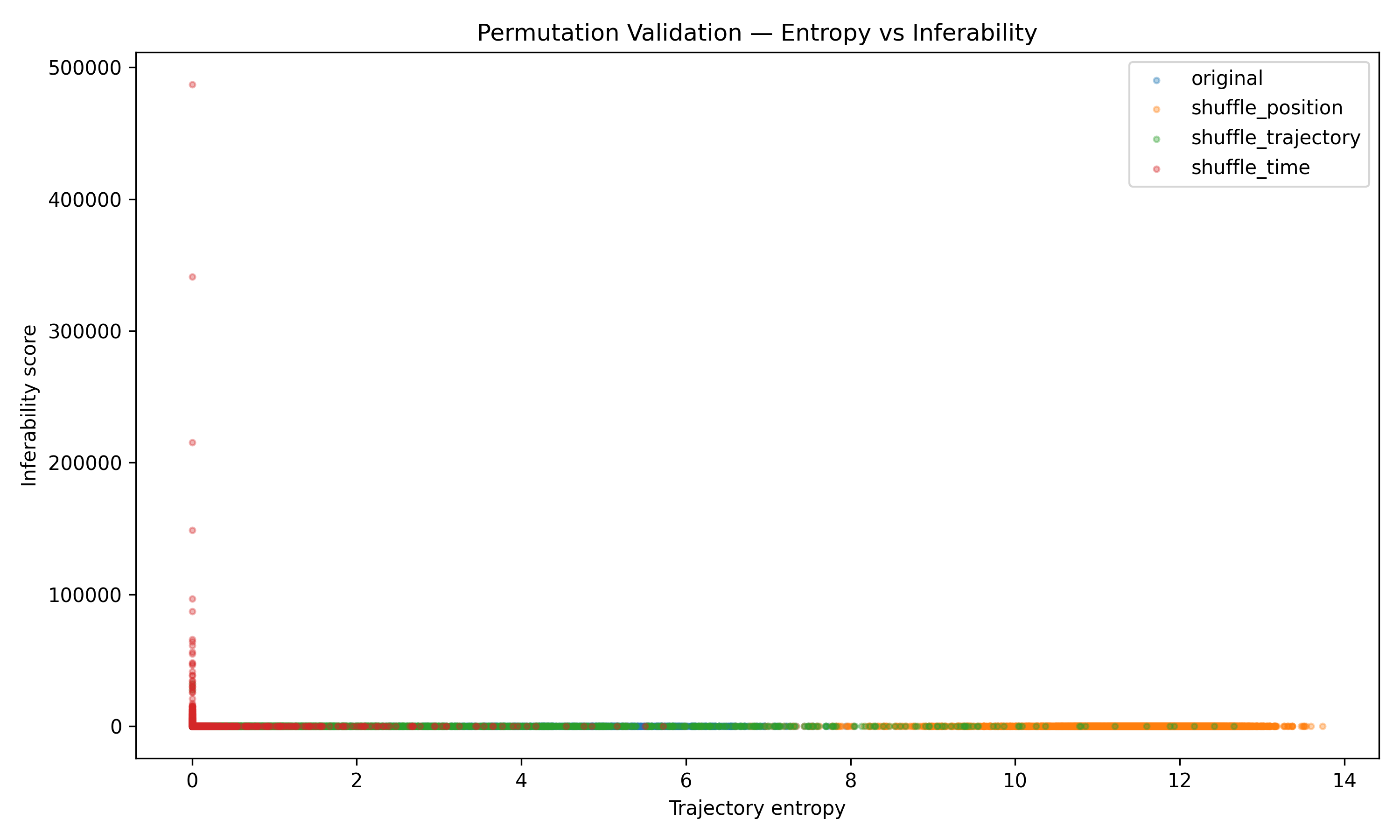
Permutation entropy versus inferability

Permutation Validation

Tests whether observed structure depends on genuine temporal organization rather than random statistical artifacts.

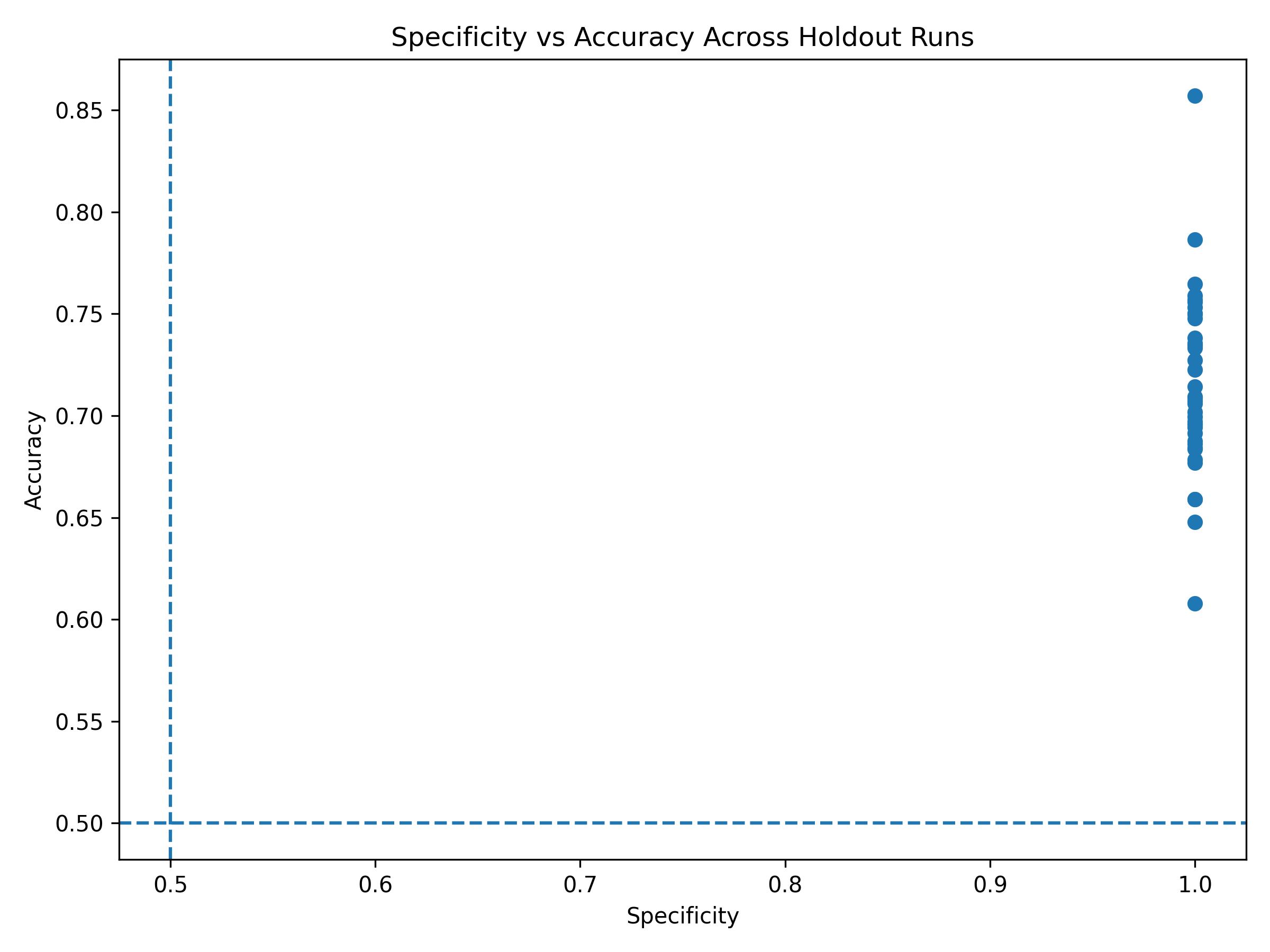
Specificity and accuracy across holdout runs

Holdout Generalization

Evaluates whether transition structure remains partially reproducible across unseen runs.

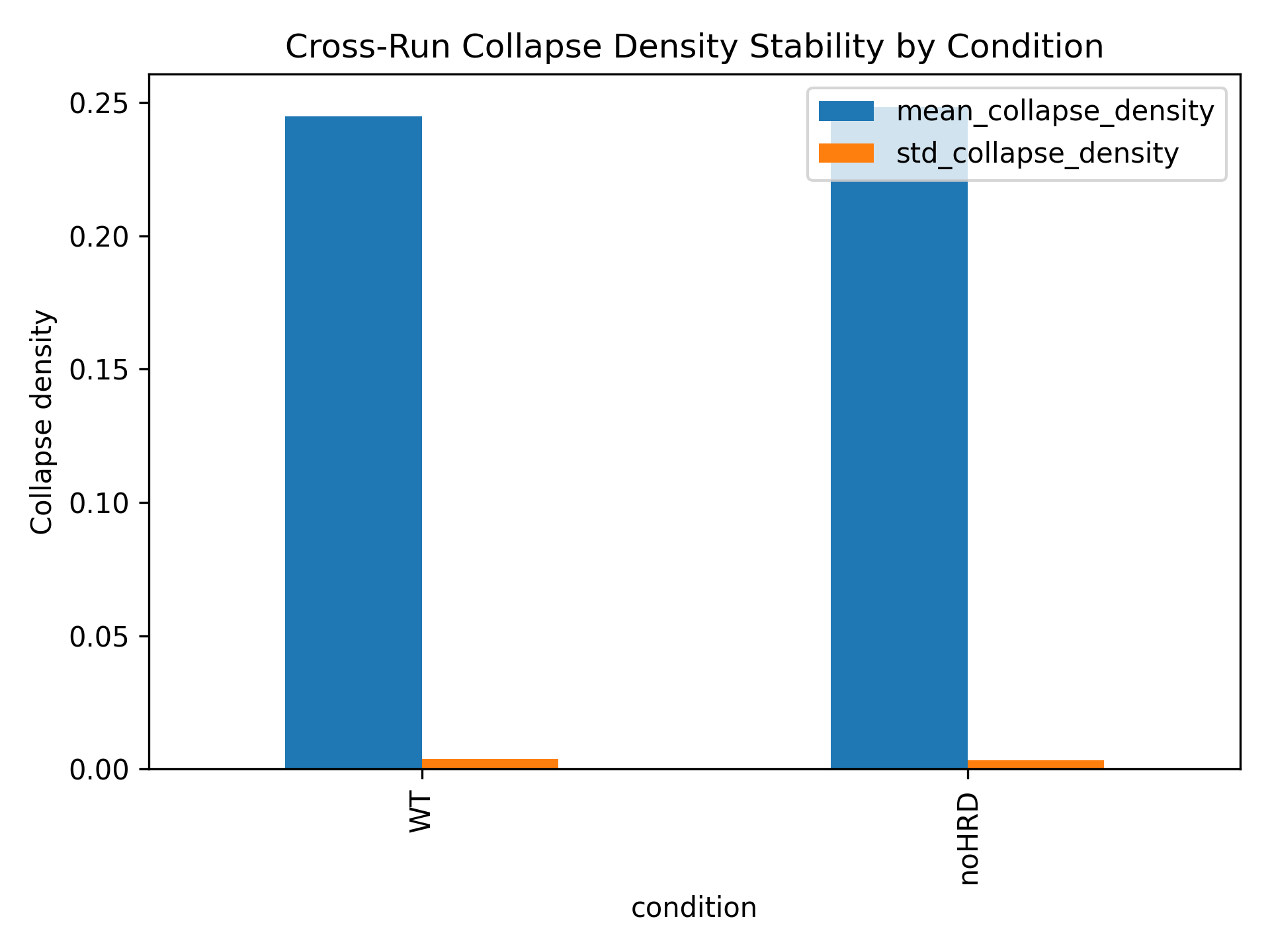
Cross-run collapse density stability

Cross-run Stability

Checks whether collapse-related dynamics remain stable across replicates, cells, and independent runs.

Deployment Readiness Assessment

Could your system support stable deployment?

A quick operational self-assessment designed to identify possible deployment instability before major AI investment or scaling begins.

Deployment Readiness Assessment

Interactive Deployment Stability Assessment

Evaluate deployment drift, false-positive sensitivity, retraining instability, transfer degradation, and cross-condition reproducibility before large-scale deployment begins.


Start Deployment Readiness Assessment →

Interested in evaluating your data?

Determine whether your signals can support stable prediction before investing in model development, deployment infrastructure, or large-scale AI projects.

Request Assessment →